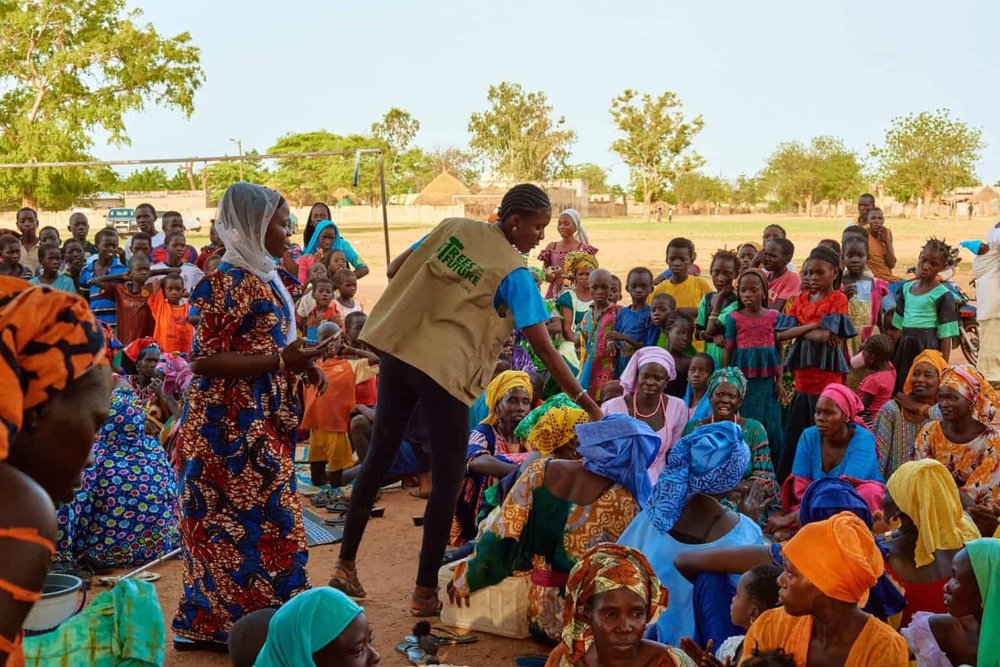
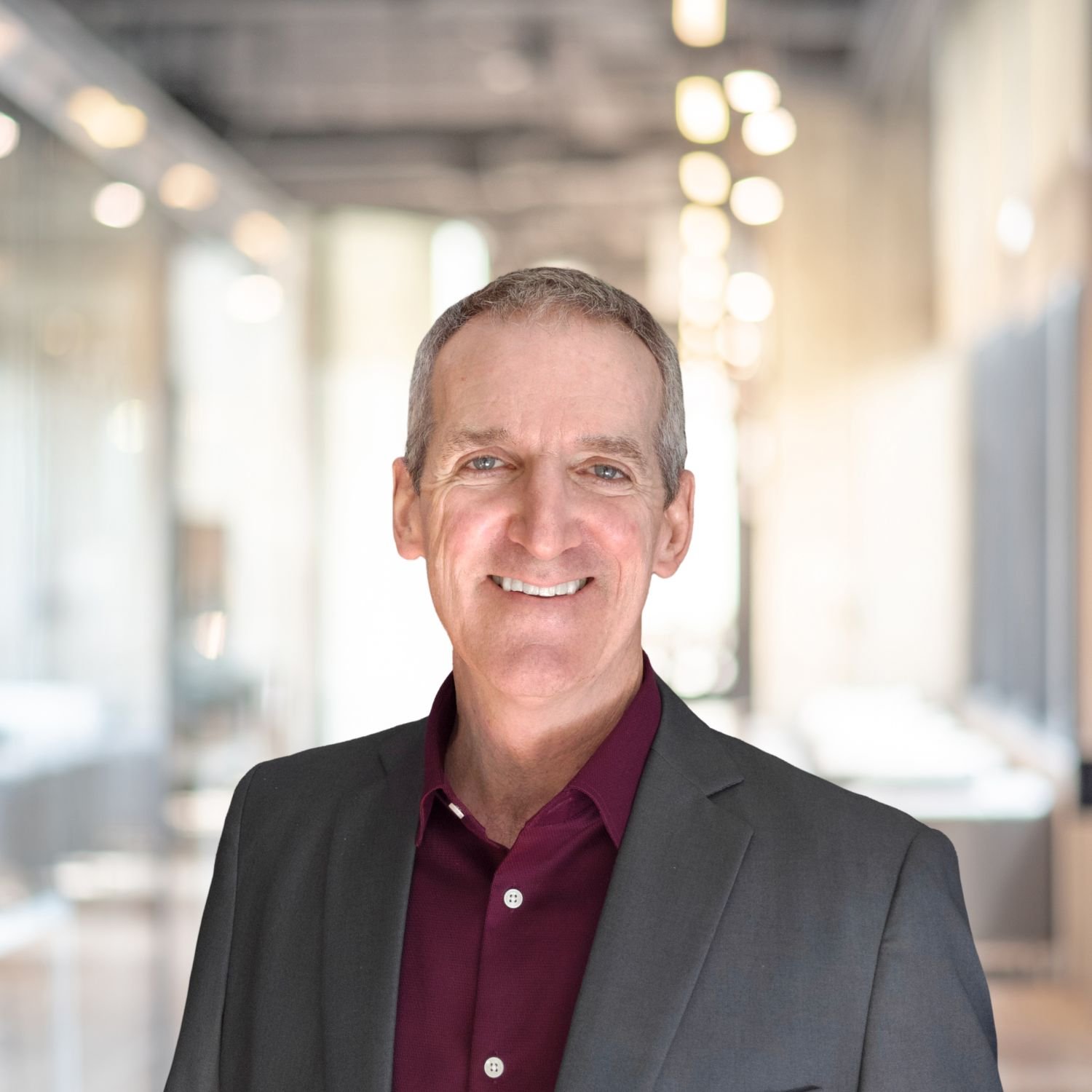
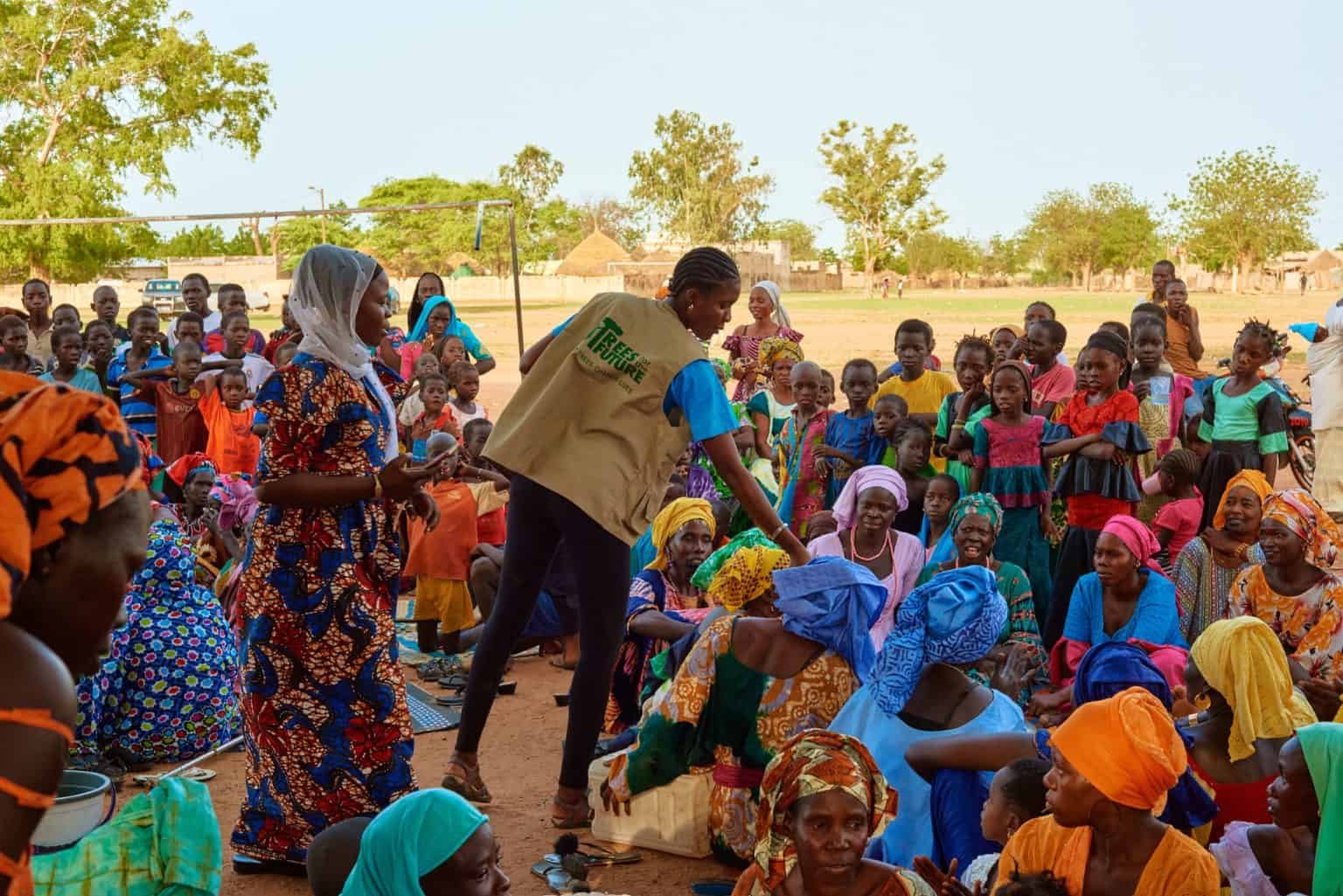
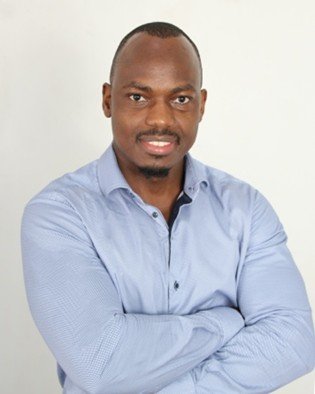
Trees for the Future: “Our mission is to assist farmers to restore land and unlock prosperity.”


Exclusive interview with Tim McClellan, CEO, Trees for the Future, a gold sponsor at the upcoming Carbon Markets Africa Summit.  

Greetings. I’m Tim McClellan. I’m the CEO of Trees for the Future. I’ve been in this role about 3 1/2 years, and I joined an organization that’s 35 years old. It’s dedicated to the service of smallholder farmers in Africa.

Our purpose is to assist them in building agroforestry systems and we help them to do that on degraded lands that they have typically inherited through many generations.

What does Trees for the Future do?
Our mission at TREES is to assist farmers to restore land and unlock prosperity. In doing so, we expect them to grow into what we call thriving climate changers. They are the people in the world most vulnerable to the changes of climate change.

With our assistance and with their hard work and ambition, they are also the people who can be one of the most powerful agents of change in mitigating climate change.

With our programs, we want them to benefit through increased income and increased food security. We also want their lands to be restored in such a way that there’s increased biodiversity.

And this is an and it’s not a purpose, one of their crops is carbon – because of the way we support them to change their land use, they are great sequesters or mitigators of carbon dioxide in the atmosphere.

And in that way, great partners with all of us to stem the challenges of climate change.

What is the Forest Garden Approach?
About 10 years ago we consolidated around this approach, and we’ve now instituted about 70,000 of what we call forest gardens.

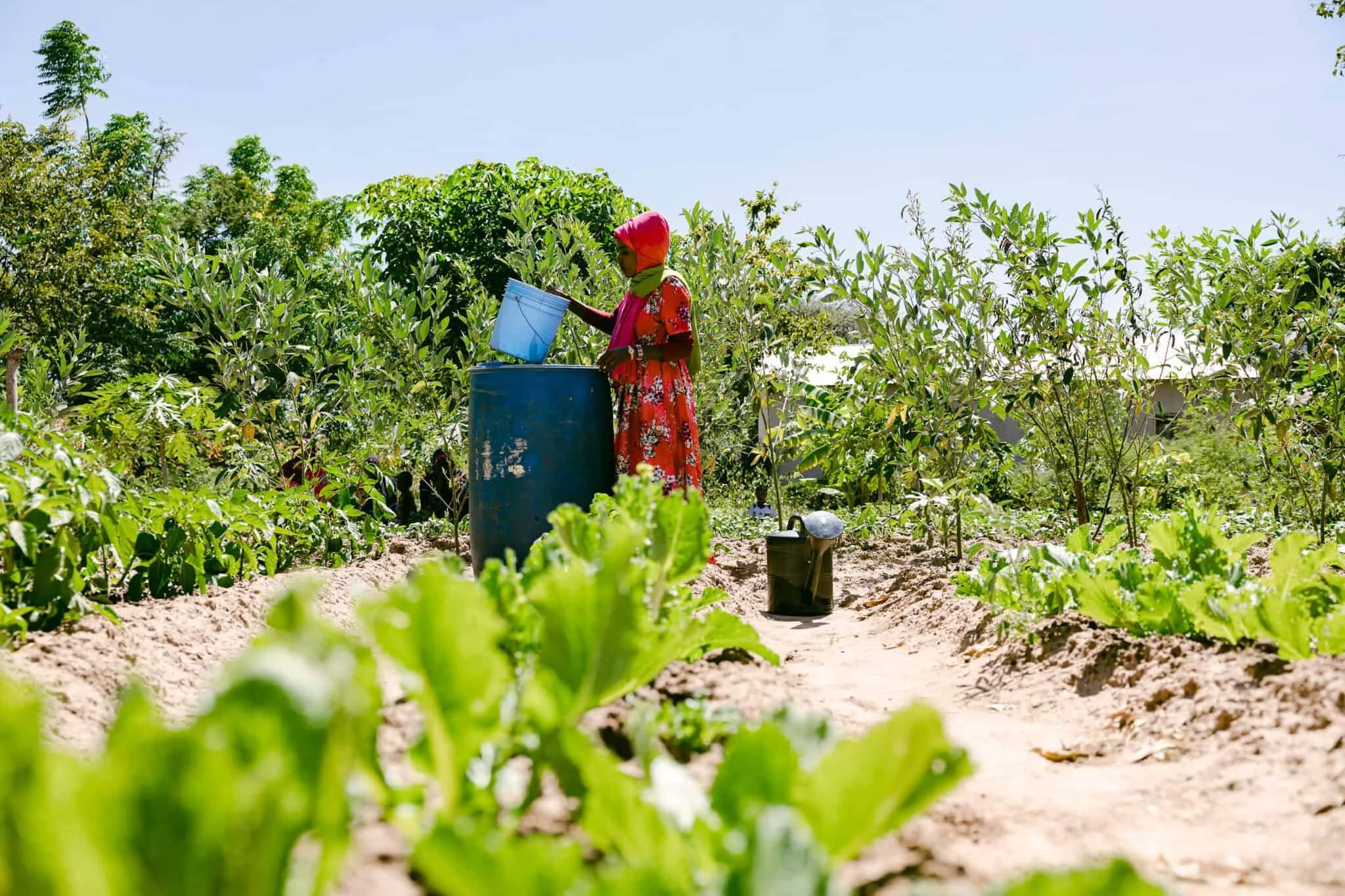
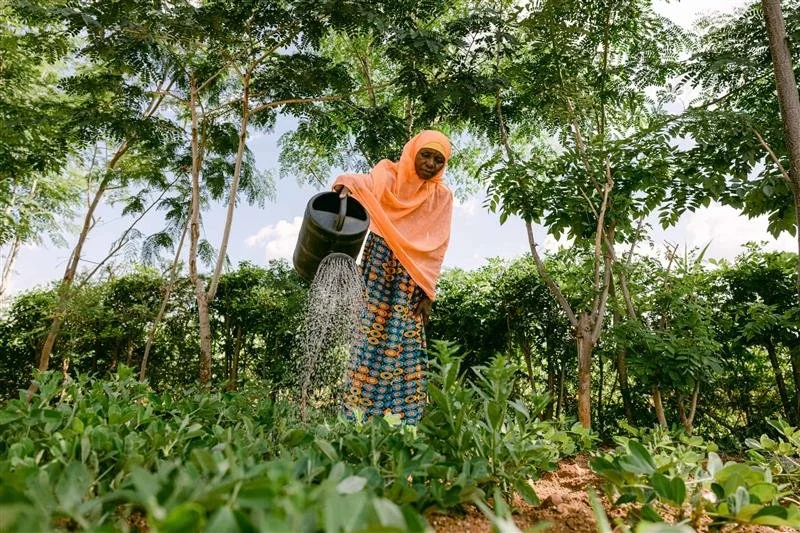
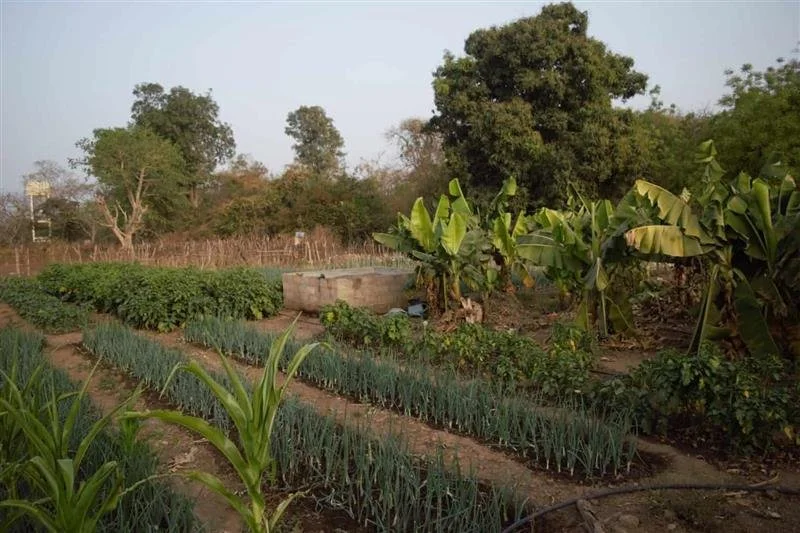
The forest garden first and foremost is a portion of the property that the farmer agrees to take out of annual mono crop production and shift into a multi strata agroforestry system.

And the first initiative is usually to surround the property that they wish to put into production, usually between an acre and a hectare of land and that perimeter that we ask them to make is a live fence. It’s a tightly spaced, densely packed set of trees around the full perimeter of the property.

It’s first and foremost a barrier, particularly to animals, so there’s typically a thorny species on the outside.

There’s a nitrogen fixing species on the inside that’s good for soil amelioration, but also good for Fodder and fuel.

The wall itself initiates what our overall purpose is with the farmer, which is to proliferate new enterprises. Once the barrier is well established, then you can accelerate that process.

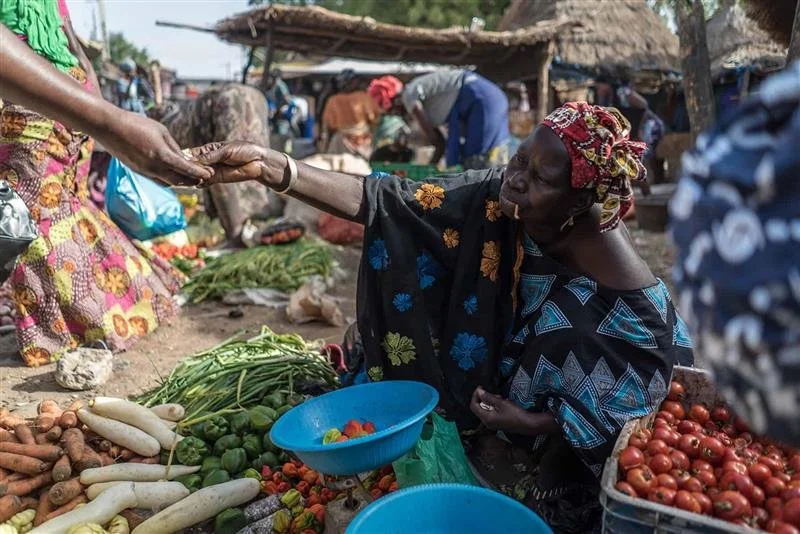
We typically encourage farmers to engage in vegetable gardening, both for their own use and for local markets.

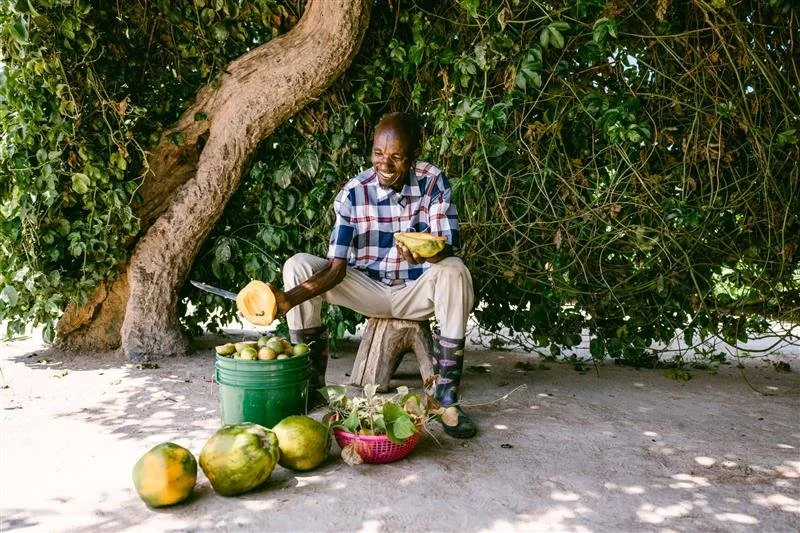
Fruit trees are introduced based on the market dynamics and what’s most suitable for sale, either locally, regionally or hopefully internationally with many of our farmers.

So the idea is to add this diversified approach to their overall resilience strategy and it’s first and foremost before carbon, an approach to make their day-to-day income from the farm, much more reliable and diversified.

Where does carbon fit in?
The carbon comes about because there are so many densely packed trees on the property. It’s actually a great carbon play also.

And so, what the carbon becomes for them is an additional crop and their share of the carbon sales, which we’re able to arrange in international markets on their behalf, becomes a payment every three years. That’s an additional crop for them of very high value.

Obviously for any land use program, we like other projects in this area have to deal with the issue of permanence. Our approach to that is I think foundational in the way we set up the agreement with the farmer.

So, we enter into a long-term agreement with them as part of our free prior informed consent activity.

We first and foremost have to help them understand what all this is about. So how is carbon created? How does that add up on their farm? What types of practices are likely to maximize carbon, and how is that likely to affect them? And how it fits in with other strategies that they have for the land, be that selling fruits, selling timber.

Balancing all of those needs. It’s the holistic approach, I think, that allows the farmer to count on lots of different sources of income and benefit, both for subsistence and also for new income.

That means we’re looking to invite the farmer into a generational impact that is consistent with the long-term nature of a carbon project. We typically are currently operating under standards for 40 years.

It’s our ambition that the farmer and his or her descendants are getting so much out of the farm, both from a carbon perspective, but from a product and enterprise perspective that it’s just a great business for them.

It’s an intensive model, so we work with the farmers in an intensive way for four or five years and in a lighter touch thereafter, all for the purpose of creating a sustained impact.

How do small holder farmers and carbon fit together?
If you think about Africa with 30 million smallholder farmers, many of them are still making difficult decisions, whether to stay on farms that are increasingly difficult to manage in the face of climate change impacts, droughts, floods, pests, or move to the city.

We think that there’s a great opportunity to restore over 600 million acres of degraded land, treat the resilience needs of this many millions of farmers and their families, and stabilize food systems for the duration of what’s going to be a difficult time period in the next several 100 years with respect to climate change.

We need to have better answers for farmers, and I think Africa brings both the opportunity for cost-effective offsetting for other companies and countries that are looking to support climate response and it fits very well with the needs for capital here in in Africa to deploy for the betterment of both land and people.

What is the role for Africa?
I think what we’ve experienced in the last five years or so is the various jurisdictions on the continent trying to assess and develop their regulatory environments so that they’re suitable and aligned with the global compacts that we’ve made through the UN and through the Paris Agreement and subsequent efforts.

These are hard things and frankly the standards are shifting all the time on the jurisdiction so I think what you can see is that the countries that have gone furthest the fastest and been nimble

in getting their legislation in place and getting their policies set up are reaping the benefits already.

And then I think the second piece is Governance around projects. I’ve worked my entire life in global development, and I think my experience so far in the carbon markets is that the requirements for transparency for traditional kind of monitoring and evaluation and learning now MRV in the carbon markets.

It’s simply at the very highest standard, and it will continue to become that much more rigorous.

Projects, regardless of where they are, not just in Africa, it could be in Iowa or Brazil, you know, they just need to meet up with the market requirements and we need to proliferate the number of projects that are a counterfactual to the noise that we’ve seen in the market so far with various gaps in transparency, gaps in integrity. You know the new projects coming online need to be determined to show that this can be done, it can be done well with reliability and and good integrity.

Where is TREES working?
For TREES, our initial carbon investment has been in Kenya. We’ve situated that investment on the Eastern Shore of Lake Victoria.

We have a global ambition to have a landscape scale intervention with farmers who are partnering with us surrounding the lake.

So we want to move as soon as we can into other countries where we’re already operating, that being Uganda and Tanzania with carbon initiatives.

We’re also invested in West Africa and Senegal and Mali. We would also love to move our carbon initiatives there.

And we have ambition to be useful throughout the continent, where that makes sense for countries that are progressing on their strategies and our own skills.

And at some point, we hope that others will take up our techniques and amplify them further.

We don’t feel like we have to be everywhere and do everything. We foresee a day where our methods become replicable and become taken up by others, and we would find great joy in that.

Why is TREES at CMAS 2025?
I am so looking forward to CMAS and having a really strong presence at the conference.

We feel it is a huge opportunity for learning. You have investors, you have other project developers, you have standards agencies, specialists, vendors of all types.

So you have the right ecosystem in the room to really accelerate everybody’s partnership and learning on the continent.

And secondly, I think we have a particular role to play.

We really are a farmer first organization that wandered into carbon because it seemed to make sense because of the way our overall programs were situated.

We really haven’t adjusted our projects in terms of how we do them much to make them into carbon projects.

We’ve had to build the pieces around that. You know our forest garden approach has had to be supplemented with the MRV and all the technical aspects of being in the carbon market.

But Ayub, who’s a member of our team, you know one of our farmer partners from Migori in Kenya, is going to be joining us.

And I think that’s been very important for us to really center some of the discussions around the farmer’s voice, the community’s voice.

If we’re not serving Ayub and his community members, we have no reason to exist, carbon or not.

So we’re keen to bring that perspective that is maybe unique and and additive to the overall plenary activity

What do you want to gain from CMAS 2025?
I’m most excited to be in this room with so many other practitioners – it’s a really important time for the carbon market.

We are seeing some resistance to the market in various sectors. We’re also seeing successes.

So, I think maintaining the momentum, maintain the momentum for the African market as a great place to develop projects and to fund projects, I’d love to be a part of making that be true through our conference and through our readouts to the broader community.

We have a special place in Africa in the global response, and it’s time now to make that emphatically our message collectively.

Final thoughts before CMAS 2025?
I’m Tim from Trees for the Future. I’ll be there with several colleagues. We are so eager to meet all of the many partners, investors, colleagues, practitioners and can’t wait to be with you all.

UNDP partners with Carbon Markets Africa Summit: “Preparing governments to become carbon market ready”

“Carbon markets can unlock billions in finance for the continent”

“How is it possible that in 2025, when we are able to send people to the moon, when we are able to create driverless vehicles, we’ve not been able to solve the problem of cooking energy in Africa’s rural areas?” asks Maxwell Gomera, Resident Representative of UNDP South Africa and Director of the Africa Sustainable Finance Hub.

He continues: “This is something that is within our means. And as the United Nations Development Programme (UNDP) Africa Sustainable Finance Hub, we are now working with governments across Africa on how to solve such problems. High-integrity carbon markets can offer Africa a powerful tool to mobilise finance required to advance climate action and ensure fair benefits while driving sustainable and inclusive development.”

Carbon markets unlocking billions
“Africa no longer waits for promises to be kept—we act,” Mr Gomera adds. “Carbon markets can unlock billions in finance, strengthen our institutions, and accelerate both Agenda 2063 and the Paris Agreement’s 1.5°C goal. At UNDP’s Africa Sustainable Finance Hub, we believe in a unified continent ready to harness this opportunity, own its solutions, and lead the global transformation towards resilience and prosperity.”

The UNDP is the official host partner of the upcoming Carbon Markets Africa Summit CMAS), taking place in Johannesburg from 22 to 23 October, gathering the continent’s entire carbon markets value chain, from successful early carbon market movers, climate-finance-ready projects and regulatory bodies to global institutional development organisations and investors.


“We cannot continue talking about Africa’s potential. We must make that potential a reality,” says UNDP’s Maxwell Gomera. “The Carbon Markets Africa Summit matters, because we bring together like-minded people to strengthen the ecosystem around a problem that we all share and provide solutions. Our message is: Tomorrow is worth fighting for.”

The UNDP is making important contributions to the Carbon Markets Africa Summit programme:

CARBON 101
As part of the CARBON 101 pre-summit masterclass on 21 October, UNDP Carbon Market Programme Specialist Bernardin Uzayisaba will facilitate a session on “Why carbon markets matter – and why Africa’s timing is critical.” There is already a lot of interest in this masterclass by delegates who will gain a foundational understanding of global carbon markets—both voluntary and compliance—and their evolving mechanisms: what they are and how they work. In addition, he will explore the global architecture shaped by Article 6 of the Paris Agreement and Africa’s emerging role in a system that’s rapidly evolving.

Day 1: Keynote session
– Maxwell Gomera, Resident Representative of UNDP South Africa and Director of the Africa Sustainable Finance Hub will deliver a keynote address in the CMAS opening session on 22 October.

Sandra Lindström, Head of International Climate Cooperation, Swedish Energy Agency, a UNDP partner, is another keynote speaker in this session, as she explains: “Sweden has been active in carbon markets for over two decades and we believe that Article 6 of the Paris Agreement has an important role to play in enabling increased global climate ambition. Our long-standing partnerships in Africa are being ramped up to include cooperation on emissions trading with strong sustainable development contributions”. 

Turning policy into action
As African countries transition from climate ambition to implementation, regulatory clarity is emerging as the cornerstone of carbon market development. UNDP Carbon Market Programme Specialist Bernardin will moderate the discussion on “Africa’s carbon market frameworks: Turning policy into action” in this session, which will explore how national frameworks are evolving post-COP29, what integration of Article 6 looks like on the ground, and how public-private collaboration can drive effective execution.

NBS & AFOLU discussion
In the sector-focused dialogue on nature-based solutions and AFOLU, Mr Uzayisaba will also join the expert panel discussion to explore carbon methodologies, investment models, policy frameworks, and the role of communities in delivering high-integrity, land-based carbon outcomes.

African companies entering carbon markets
On Day 2, Tomas Sales, Special Advisor for UNDP Africa Sustainable Finance Hub, will co-lead the workshop on “How African companies can enter the carbon market.”
This workshop is designed for African corporates and SMEs looking to understand the business case for engaging in carbon markets.

[Read the full interview with UNDP’s Maxwell Gomera here.]

VUKA Group 
Carbon Markets Africa Summit
is organised by VUKA Group, which has more than 20 years’ experience in serving the business community across Africa. The United Nations Development Programme (UNDP) is the official host organisation.

Other partners and sponsors for this inaugural event include the following:
Strategic institutional partners: AUDA NEPAD and UNEP.
Diamond sponsor: TASC
Gold sponsors: FSD Africa, SGS and Trees for the Future

Event dates and location:

Dates:
21 October: Pre-summit day
22–23 October: Summit
Location: Johannesburg, South Africa

Contact details for Carbon Markets Africa Summit

Project Lead: Emmanuelle Nicholls 
Cell: +27 83 447 8410  
Email: emmanuelle.nicholls@wearevuka.com  

Event website: About — Carbon Markets Africa

“Demonstrating the positive impact of sustainable practices on economic growth”

  Toni Heigl, founder and CEO of    CarbonWise Consulting
Toni Heigl, founder and CEO of CarbonWise Consulting

Exclusive interview with Toni Heigl, founder and CEO of CarbonWise Consulting and a speaker at the upcoming Carbon Markets Africa Summit in Johannesburg. 


Interview Summary: Toni Heigl, founder and CEO of CarbonWise Consulting, discusses the company’s role in advancing carbon markets, particularly in Africa. With around 80% of their projects based on the continent, CarbonWise focuses on integrating economics, ecology, and social inclusion in areas like e-mobility, renewable energy, and nature-based solutions. Heigl highlights Africa’s strong position in the global carbon market due to its young population, rapid growth, and abundant renewable resources. Success stories include emission-free vehicle fleets, solar power, and industrial improvements. 
 

Key challenges include navigating complex regulations and ensuring financial stability for long-term projects. Countries such as Ghana, Zambia, and Uganda are leading in Article 6 frameworks. Heigl will speak at the Carbon Markets Africa Summit, emphasizing urban sustainability and the need for collaboration across stakeholders. He sees the event as a crucial platform for building partnerships that can drive impactful climate solutions and economic growth. 


Q. Thank you for joining us. Please can we start with some background about you and your role at CarbonWise Consulting. 

Thank you for having me. I appreciate the opportunity to share my background. I am the founder and CEO of CarbonWise Consulting. Throughout my career, I have always been driven by a desire to challenge the status quo, especially when confronting urgent issues that demand our attention. The evolution of climate change into a recognized climate crisis has profoundly resonated with me, both in scientific discussions and public consciousness. 


As an engineer and project manager, I feel a strong sense of responsibility—not only in my professional role but also as a global citizen—to contribute positively to solutions in this critical area. This passion for making a difference inspired me to establish several start-up ventures, including CarbonWise Consulting. Here, my goal is to facilitate meaningful change in carbon markets and drive impactful solutions that address climate challenges. 


Q. Tell us about CarbonWise Consulting’s services and the industries that you work in. 

At CarbonWise Consulting, we focus primarily on Africa, where we operate as both consultants and investors. Our vision is to integrate economics, ecology, and social inclusion in our projects. We are pioneers in the realm of regulated international carbon markets, specifically Article 6, and we are proud to have one of the world’s first validated and authorised mitigation activities. This positions us at the forefront of shaping this evolving sector. 

Our unique expertise and practical experience allow us to collaborate effectively with partners and clients to develop and implement projects that yield sustainable benefits for both society and the environment. We concentrate on key areas such as e-mobility, renewable energy, and nature-based solutions, particularly in rapidly growing markets within developing and emerging countries. 


Q. What percentage of your work is in Africa? 

About 80% of our project work happens in Africa. South Asia and Latin America play a minor role for us. 


Q. How important is the continent for the future of carbon markets? 

Africa plays a crucial role in the future of carbon markets. It is home to some of the fastest-growing economies, driven by a young and dynamic population. This demographic advantage, coupled with the emerging recognition of future markets on the continent, presents significant economic potential. Additionally, Africa is rich in renewable energy resources, making it an ideal epicentre for carbon markets in the coming decades. The combination of these factors positions Africa as a key player in the global transition towards sustainable practices. 


Q. What are some of your favourite success stories in Africa that you can share? 

Africa has produced remarkable entrepreneurial achievements, particularly in sectors such as fintech, media, telecommunications, and the gig economy. The continent is often described as leapfrogging technologically, showcasing innovation that surpasses many parts of the world. We are proud to have contributed to several of these success stories by integrating carbon revenues into emission-free vehicle fleets, both on land and on water, as well as through solar power installations and improvements in industrial processes. These initiatives not only highlight Africa’s potential but also demonstrate the positive impact of sustainable practices on economic growth. 


Q. You are working in a system that is constantly evolving and changing. What are the main challenges in your view? 

Our mission is to build bridges and foster collaboration for climate action, acknowledging that global challenges require global solutions. We operate within a highly specialized, formalized, and regulated environment, which demands both perseverance and resilience. One of the primary challenges we face is ensuring financial stability for every programme that we set up as we navigate the often lengthy yet rewarding process of implementing carbon mitigation projects. This requires us to remain adaptable and committed, as we work to drive meaningful change in a constantly evolving landscape. 


Q. How is Africa positioned in your view to take advantage of this burgeoning opportunity? And which countries on the continent are doing the right things to prepare for carbon markets? 

Africa is strategically positioned to seize the emerging opportunities in carbon markets. Countries such as Ghana, Zambia, and Uganda have made notable advancements in developing Article 6 frameworks and attracting impactful projects, serving as pioneers in this field. While there is potential for further acceleration, the continent has established a strong and influential presence in the carbon market arena. With ongoing commitment and collaborative efforts, Africa can enhance its role and drive significant progress in sustainable development and climate action. 


Q. You are a speaker at the inaugural Carbon Markets Africa Summit. Why the decision to join this climate change journey with VUKA Group? 

I chose to join as a speaker at the inaugural Carbon Markets Africa Summit because complex carbon programs require collaboration among multiple stakeholders and a foundation of trust among all partners. Personal interactions are essential for building these relationships. I appreciate the approach and structure of the CMAS, viewing it as a crucial platform for strengthening the carbon market community. I wish everyone involved a successful event and look forward to the growth that will follow. 


Q. You are part of a sector-focused dialogue in the programme focusing on “Urban Carbon & Circular Economy.” What will be your message at the event? 

My message at the event will focus on the rapid urbanization occurring across nearly all African countries. We have been collaborating with our partners on various aspects of urban development, including city mobility, carbon-related issues in the construction sector, energy management, and recycling and waste management. These elements are intricately connected within the broader framework of city management. During the dialogue, I aim to explore how we can effectively manage these interrelated challenges, ensure they are well integrated, and identify the key priorities that need to be established for sustainable urban development. 


Q. What are your expectations of CMAS? 

I expect CMAS to facilitate the building of new connections and the reinforcement of existing relationships within the industry. By consolidating and aligning our alliances, we can strengthen the regulated carbon markets, as addressing the challenges in this sector requires a collaborative effort from all stakeholders involved. 


Q. How important is such an event for the continent? 

Regional events have certainly played a role in addressing local issues, but their impact can often be limited. In contrast, global events tend to focus on high-level discussions that may hardly or at least very slowly translate into practical solutions. Given Africa’s crucial role in addressing the climate crisis, this conference is particularly significant. I look forward to leveraging this platform to forge new project alliances, partnerships, and financial agreements that can drive meaningful change across the continent. 

SunCulture interview: “We’re not just creating carbon credits—we’re creating climate-smart livelihoods” 

Exclusive interview with Daniel Okoth, Head of Carbon, SunCulture, Kenya and a speaker at the upcoming Carbon Markets Africa Summit in Johannesburg.

 Daniel Okoth, Head of Carbon at SunCulture
Daniel Okoth, Head of Carbon at SunCulture

Interview Summary: Daniel Okoth, Head of Carbon at SunCulture, discusses how the company leverages carbon finance to scale climate-smart agriculture in Africa. SunCulture replaces diesel and manual pumps with solar-powered irrigation systems, helping farmers increase income while generating high-quality carbon credits. The company partners with insurers, financiers, and global organizations to expand services and derisk investment. 

Okoth emphasizes Africa’s central role in the future of carbon markets, highlighting the continent’s potential to design equitable and innovative systems that benefit local communities. He cites success stories like farmers doubling their income through solar irrigation and SunCulture pioneering irrigation-based carbon credits. 

Key challenges include market volatility, unclear regulations, and cash flow pressures, but Okoth is optimistic about Africa’s positioning with strong leadership from countries like Kenya, Ghana, and Rwanda. Speaking at the Carbon Markets Africa Summit, he plans to call for faster policy frameworks and farmer-centered market design, stressing that Africa’s carbon opportunity is immense but time-sensitive. 

Q. Thank you for joining us. Please can we start with some background about you and your role at SunCulture. 

I’m Daniel Okoth, and I lead the carbon program at SunCulture. I’ve been in this role for close to three years now, and my focus has been using carbon finance to power SunCulture’s growth and impact across Africa. 

My role spans from delivering premium carbon credits from our solar water pumps, to shaping our go-to-market strategy in both the Voluntary Carbon Market and emerging compliance markets, including under Article 6 of the Paris Agreement. 

Before joining SunCulture, I worked on carbon due diligence systems, contributed to methodology development using Earth observation tools, and advised on structuring Corresponding Adjustment transactions between host and buyer countries. This background helps me bring both a technical and market-driven perspective to our work. 

Q. Tell us more about SunCulture and the projects you are involved in. Who are your partners?  

SunCulture is a climate-smart agriculture company focused on unlocking the potential of smallholder farmers across Africa through solar-powered irrigation and productive-use appliances. We work at the intersection of clean energy, agriculture, and climate finance — and carbon is a key enabler in all of this. 

Our core project involves replacing diesel and manual water pumps with highly efficient solar water pumps that allow farmers to grow more, earn more, and do so in a way that is climate-resilient. These systems generate high-quality, measurable carbon reductions which we bring to market as carbon credits. 

With farmer incomes both increased and more secure, we want to continue to bring more products and services to our customers that increase their incomes or reduce their risks. For example we have partnered with Turaco to offer microhealth insurance, and credit-life insurance. And we are now working with Humanity Insured and IBISA to bring parametric weather insurance to smallholder farmers. And in addition to financing our farmers to purchase our solar water pumps, and help them build their financial profile, we have now also launched an input financing product to allow them to further invest in their farms. 

We’re fortunate to have some incredible partners. Organizations like British International Investment (BII), the Shell Foundation have been instrumental in providing early stage carbon financing, and we have used platforms like Patch (amongst others) to market and sell our credits. Scaling our business has also been supported by equity financing from many organisation including equity investment from Acumen, Water Equity, and the Private Infrastructure Development Group, as well has foundations related to high net worth individuals and also Results Based Financing support from GreenMax Capital, CLASP, FSD Africa, the Beyond the Grid Foundation and the Workd Bank. Together, we’re building market ecosystems that derisk investment and ensure long-term sustainability for farmers and financiers alike. 

Q. What percentage of your work is in Africa? 

All the work (100%) of SunCulture is targeting emerging markets of Africa at the moment, where the need and opportunity for impact are immense. Everything we do—from product development to last-mile delivery to our carbon strategy—is centered on the needs of African smallholder farmers. 

That said, our mission is to develop and commercialize life-changing technology for the world’s 570 million smallholder farming households. So while Africa is our starting point, we’ve set our sights globally. The challenges faced by smallholder farmers are shared across continents, and our long-term vision is to scale our solutions wherever they’re needed most. 

Q. How important is the continent for the future of carbon markets? 

Africa is relatively early in development and  endowed with a variety of prime opportunities for growth, development and most importantly human capital building all which set precedence room for changing stereotypes that empower sustainable market practices. 

Africa is absolutely critical to the future of carbon markets. The continent is still early in its carbon journey, but it’s rich with opportunity—from its natural ecosystems to its human capital. 

What’s exciting is that Africa has the chance to build a carbon market that is equitable, innovative, and truly impactful—not just replicating systems from elsewhere, but designing solutions that work for our context. This includes supporting livelihoods, building local capacity, and ensuring that benefits from carbon flows are felt directly by communities. 

Q. What are some of your favourite success stories in Africa that you can share? 

One of my favorite success stories is watching how a single solar water pump can transform a household. I remember visiting a farmer in Machakos County, Kenya, named Margaret, who went from relying on seasonal rain and diesel generators to using a solar pump. Within one season, she had doubled her income—and was selling produce year-round. 

On the carbon side, we’ve also had major wins—we delivered some of the world’s first solar irrigation-based carbon credits, and did it in a way that puts farmers at the center. That’s the kind of success we want to replicate across the continent. 

Q. You are working in a system that is constantly evolving and changing. What are the main challenges in your view? 

One of the biggest challenges is keeping pace with a market that’s still taking shape. While there’s long-term promise in carbon, short-term volatility makes it tough to plan—especially when timelines for methodologies, approvals, or regulation are unclear. 

This uncertainty affects investment decisions and stretches our operational capacity. Managing cash flow becomes a balancing act, especially when we must deliver high-quality credits at scale while staying true to our mission. 

Q. How is Africa positioned in your view to take advantage of this burgeoning opportunity? 

Africa is incredibly well positioned—but only if we build the right systems to support long-term investment. 

We’re already seeing strong signs: innovative financing mechanisms, catalytic partnerships, and the emergence of carbon-focused financial institutions like Melanin Kapital. At SunCulture, we’re working with partners like BII and Shell Foundation to build buffered carbon ecosystems—systems that are structured to handle market shocks while delivering consistent value to farmers and investors alike. 

Projects like the Kenya BioHub—backed by EDF, Invest International, and Mauritius Bank—are further proof that the continent is serious about decarbonization. The momentum is here; we just need to align it with policy, regulation, and local capacity. 

Q. Which countries on the continent are doing the right things to prepare for carbon markets? 

We’re seeing strong leadership from countries like Ghana, Kenya, Uganda, Tanzania, Ethiopia, Rwanda, Zimbabwe, Liberia, and Côte d’Ivoire. 

What stands out is how these countries are localizing global frameworks like the Paris Agreement. They’re developing national carbon registries, creating clarity around Corresponding Adjustments, and actively engaging the private sector. These are the kinds of signals investors are looking for—and they’re what will unlock scale. 

Q. You are a speaker at the inaugural Carbon Markets Africa Summit. Why the decision to join this climate change journey with VUKA Group? 

VUKA Group is convening the right stakeholders—from policy makers and financiers to entrepreneurs and project developers. That’s exactly the kind of platform we need to accelerate Africa’s role in carbon markets. 

SunCulture’s mission is deeply aligned with this journey. We’re not just creating carbon credits—we’re creating climate-smart livelihoods. Joining this summit allows us to share what’s working, learn from others, and push the conversation toward solutions that are rooted in Africa. 

Q. What will be your message at the event? 

Our message is simple: Africa’s carbon potential is real, but time is not on our side. 

We need to fast-track enabling frameworks—policies, verification standards, registries—so that the pace of climate finance matches the urgency on the ground. And we must design markets that benefit the people delivering the impact—especially smallholder farmers and rural communities. 

Q. What are your expectations of CMAS? 

I’m looking forward to connecting with others who are at the forefront of climate innovation—from carbon developers and financiers to regulators and tech platforms. We’ll also be sharing what we’ve built at SunCulture—a robust, proven ecosystem for premium carbon delivery. I’m excited for the conversations, the partnerships, and the learning that will come from this summit. 

Q. How important is such an event for the continent? 

It’s incredibly important. Bringing together financiers, regulators, and project developers in one space creates the kind of cross-sector dialogue we need to unlock solutions that are both ambitious and realistic. 

This isn’t just a talking shop—it’s a space to align, benchmark, and collaborate on ideas that can transform Africa’s carbon future. 

Q. Anything you would like to add? 

We’ll be sharing more at the Carbon Markets Africa Summit about the SunCulture carbon ecosystem—how we’ve built it, what we’ve learned, and where we’re going. If you’re serious about delivering premium carbon from Africa, and doing it in a way that creates real impact for farmers, we invite you to connect with us. This is just the beginning. 


SGS INTERVIEW: “We need to make sure that Africa is at the centre of the voluntary carbon markets development”

Exclusive interview with Francesca Cerchia, Industries & Environment, Global Head Climate Solutions, SGS, (Société Générale de Surveillance SA), a gold sponsor at the upcoming Carbon Markets Africa Summit in Johannesburg.

 Francesca Cerchia, Global Head of Climate Solutions at SGS
Francesca Cerchia, Global Head of Climate Solutions at SGS

Interview Summary: Francesca Cerchia, Global Head of Climate Solutions at SGS, explains that the company supports industries worldwide through its Impact Now sustainability initiative, focused on climate, nature, circularity, and ESG assurance.

She stresses that Africa must be at the centre of voluntary carbon markets, given its potential for carbon mitigation, innovation, and job creation. A standout example is SGS’s work verifying a biochar project in Uganda, which delivers climate, soil, and community benefits. She highlights challenges such as credibility, transparency, and market volatility globally, and in Africa specifically, limited access to finance, weaker institutions, and technical gaps.

Countries like South Africa, Ghana, Kenya, Tanzania, and Zimbabwe are making strides, with Ghana leading on international carbon agreements. At the Carbon Markets Africa Summit, SGS will focus on the importance of trust and high standards to ensure Africa’s role in shaping the future of carbon markets.


Thank you for joining us. Please can we start with some background about you and your role at SGS.

Hello everybody, I’m Francesca and I am the Global Head for Climate Solutions with SGS. SGS is a Swiss global company, and I’ve been with the company for 13 years in November, always covering climate, environment, health and safety.

Tell us about SGS’s services and the industries that you work in.

As I mentioned, SGS is a Swiss company. We are the largest testing inspection and certification company in the world. We operate a network of roughly 2,500 labs and business facilities across 115 countries. And today we have 99,500 full-time employees.

We provide services across almost every industry, from agriculture to mining, industrial manufacturing, pharma, consumer product, you name it. We help organisations achieve the highest standards of quality, compliance and sustainability.

Talking about sustainability, Impact Now for Sustainability is an initiative that we launched in November 2024. It’s a cross-business and global initiative that brings together and simplifies all of our services around four strategic pillars. The climate pillar, the nature pillar, the circularity pillar and the ESG assurance pillar. The goal is to help companies accelerate transition towards more sustainable, competitive and also internationally aligned business models. We really want to address the triple planetary crisis. So it’s climate change, biodiversity loss and pollution.

What percentage of your work is in Africa?

While it’s always tempting to give percentages when we answer these type of questions, I don’t necessarily believe that these metrics are realistic, and sometimes they can be misleading, especially for a company like ours. We operate, as I mentioned, globally, and we work in regions that are also at different stages of development. If I give you a percentage, that may suggest that there’s disparity or imbalance. Hence, it rarely reflects the truth of the engagement, but also the infrastructure or the impact that we have.

So let’s emphasise the substance of our work rather than the numbers. And when we look at Africa, we can’t think of Africa as a monolith. It’s a continent and there’s extraordinary diversity and opportunities but also lot of complexity. And our approach there, instead of giving you a number, is that of listening, learning but also adapting to the local context.

How important is the continent for the future of carbon markets?

I think we all know, and there’s consensus there, that Africa is definitely poised to play a critical role in the future of carbon markets. And this is because it offers a high potential for mitigation, but also opportunities for climate action and innovation in particular sectors. So it’s an opportunity to unlock climate finance that’s desperately needed, to create jobs and ensure that all of this happens in an equitable way.

Just to mention a few initiatives that resonate with Africa. We have the African Union Action Plan on the carbon markets, and this shows that there is policy momentum. That means that Africa wants to start leading rather than just be a player in the architecture of the voluntary carbon markets.

What are some of your favourite success stories in Africa that you can share?

I have one particular favourite story here and it is a standout success story. It’s our work in the Navikale biochar facility in Uganda where we have provided and we continue to provide independent verification to ensure compliance with an approved biochar methodology. We also conduct rolling audits on a periodical basis to ensure that there’s integrity and transparency. And I think this work has shown us really firsthand how biochar can be a game changer in Africa. We always hear about cookstoves, but biochar really is also one of the future sectors of incredible growth for Africa. It combines carbon removals, soil restoration but also a lot of job creation. And let’s not forget these low tech or new tech solutions in the agricultural space. So it’s a clear example for us on how integrity on carbon projects can deliver real impact on the ground.

You are working in a system that is constantly evolving and changing. What are the main challenges in your view?

Yes, you’re absolutely right. Carbon markets are evolving constantly and sometimes it’s really difficult to keep up with the changes. In terms of challenges, I’d like to talk about the global challenges first of all. So carbon markets face global challenges no matter what country or what continent. The biggest global challenge is certainly related to integrity and credibility. Several initiatives are addressing this, so I think we’re on the right path. And just to mention one, there’s ICVCM.

Then we’ve got issues with transparency, potentially, because we have a lot of fragmented standards, a lot of fragmented programmes and registries, and in some instances, even limited accredited third party verification. And the third one, again, as a global challenge is market volatility, and fluctuating demand and inconsistent prices are still there. So we need to find or strike a balance there as well, so that project developers and investors know exactly what is their return.

I think that to this then we can add some specific African challenges. For me, the main ones are, first of all, the limited access to upfront capital for project development. The second one is perhaps a weaker institutional framework and then potentially also insufficient technical expertise.

Which countries on the continent are doing the right things to prepare for carbon markets?

I think there are quite a few countries moving. I would like to start with the Carbon Markets Africa Summit host country; so let’s talk about South Africa first. It has definitely been the first country taking the first step in the right direction with implementation of the Carbon Tax Act. However, and there’s always a but, it’s delayed, and I think we all need to ask ourselves, is it actually driving real impact? Now, I’m not going to provide an answer to this. Let’s have a look at what happens in phase two and see whether or not it will actually be capable of driving a true decarbonisation.

Then I think we can mention Kenya, Ghana, Tanzania and Zimbabwe. Ghana in particular, as it is the most advanced today on Article 6.2 of the Paris Agreement, having already signed some bilateral agreements.

SGS is a gold sponsor of the inaugural Carbon Markets Africa Summit. You are sponsoring a session on “High integrity in practice – Standards, verification & market trust.” What will be SGS’s message at CMAS, and how important is such an event for the continent?

Yes, we are a gold sponsor and the decision on which events to sponsor throughout the years and throughout our businesses, goes through a process that we take very seriously. We’ve decided to sponsor because we believe that it is not just another conference, but it’s rather a platform. And it’s a platform where we see a lot of stakeholders come together, but important stakeholders. We have government representatives, investors and project developers, and it’s the right place to get the conversation going and to exchange experiences but also challenges.

I also think it is uniquely positioned because it’s got a perfect timing. It’s just before COP30 and the G20, and it’s got an ambition. So the ambition is to be a catalyst for change. I think Africa needs change because there are opportunities and these need to be taken.

Anything you would like to add?

Maybe just one closing thought. First of all, I will see you there. And the second one is: Let’s get talking because Africa carbon markets will not thrive in silence and we need all the stakeholders to work together to make sure that Africa will be at the centre of the voluntary carbon markets development. Thank you.

Interview – SGS – CMAS2025

EMOBILITY INTERVIEW: “African cities have enormous potential for reducing carbon emissions”

Exclusive interview with Stefan Simon, CEO of SURUS Automotive in Tunisia. Stefan is a speaker at the inaugural Carbon Markets Africa Summit in Johannesburg in October.

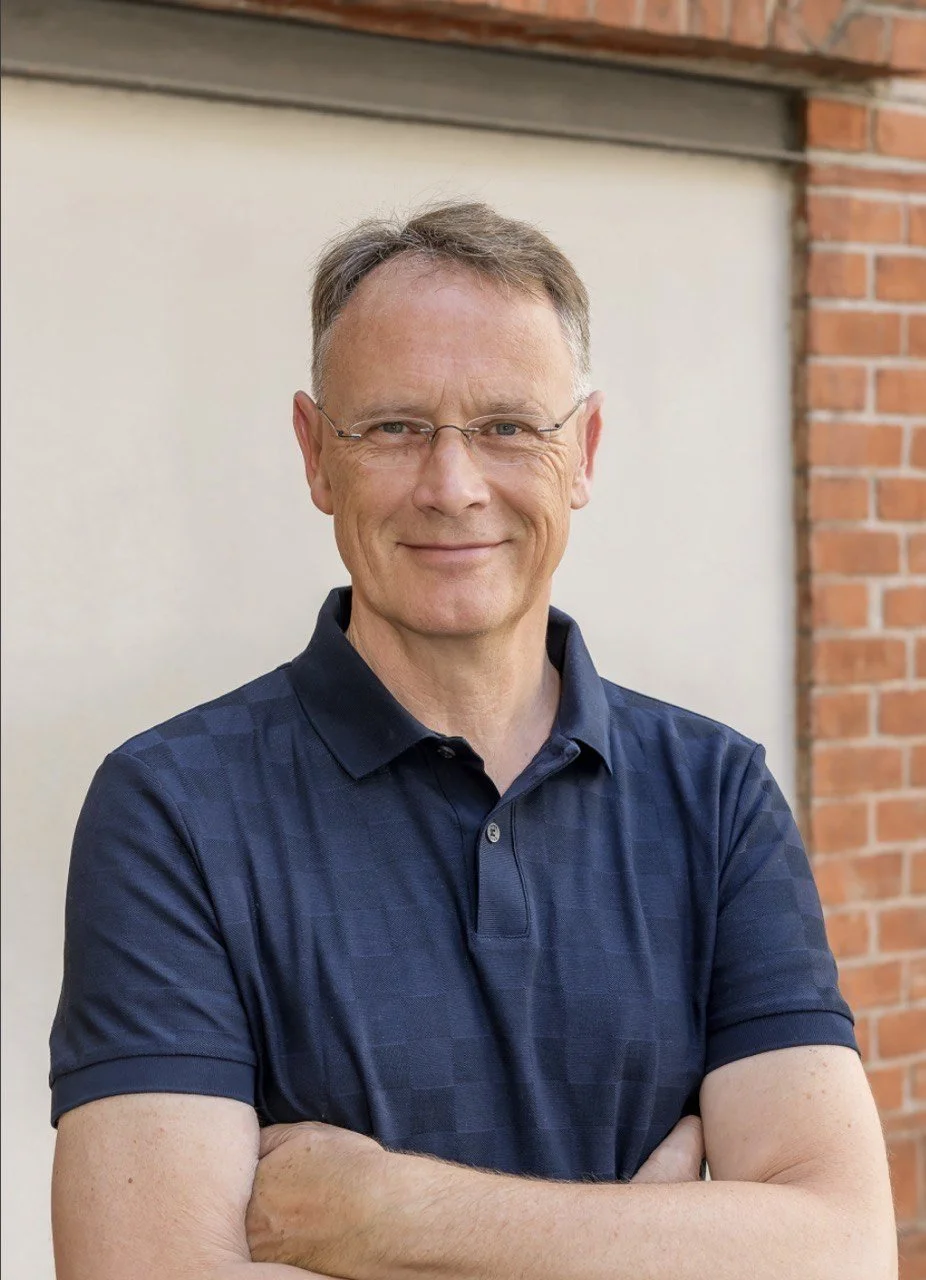
  Stefan Simon, CEO of SURUS Automotive in Tunisia
Stefan Simon, CEO of SURUS Automotive in Tunisia

Interview Summary: In this interview, Stefan Simon, CEO of SURUS Automotive in Tunisia, explains how his company is driving Africa’s transition to electric mobility. SURUS manufactures affordable electric motorcycles and vehicle platforms designed specifically for African conditions, with factories in Tunisia and Senegal supporting local production, skills transfer, and job creation. Simon stresses that Africa, with its rapidly growing population and transport needs, has enormous potential to cut carbon emissions and benefit from carbon markets. While regulatory frameworks under Article 6 are still limited, he sees carbon credits as a way to lower EV costs and accelerate adoption.

He highlights growing enthusiasm across the continent, with governments and customers increasingly recognizing the economic and environmental benefits of EVs. However, he notes that widespread education and stronger institutions are needed to fully unlock Africa’s carbon market potential. At the upcoming Carbon Markets Africa Summit, Simon plans to emphasize Africa’s abundance of solar energy and the ease of monitoring carbon credits in transport via digital tools. For him, the real value of such events lies in building trust, fostering dialogue, and unlocking investment for Africa’s sustainable future.

Q. Thank you for joining us. Please can we start with some background about you and your role at SURUS Automotive.

Thank you very much for the opportunity to present our company. I have a technical background but over a working period of more than 30 years, I learned my lessons also in legal and commercial experiences. The company that I am representing is SURUS Automotive SARL, a manufacturer of electric vehicles, based in Tunisia. African cities have enormous potential for reducing carbon emissions. That is the reason why our company is focusing on the development of the electric mobility sector in Africa.

Q. Tell us more about the projects you are involved in.

At the conference, I would like to share my vision on how scalable transport solutions can contribute to city climate actions. SURUS core value proposition revolves around offering affordable electric vehicles for local production. We are now building factories in Tunisia and Senegal to manufacture electric motorcycles under white label branding for building up national manufacturing identity.

Q. What percentage of your work is in Africa?

Our company slogan is: Designed in Africa for made in Africa. Our motorbike, for example, is a strong and reliable workhorse towing a trailer and designed for the roads of Africa. From Tunisia we are aiming for local content in other African countries: technology transfer, capacity building, and job creation. So, more or less than 100 % of our work force is focused on the continent development.

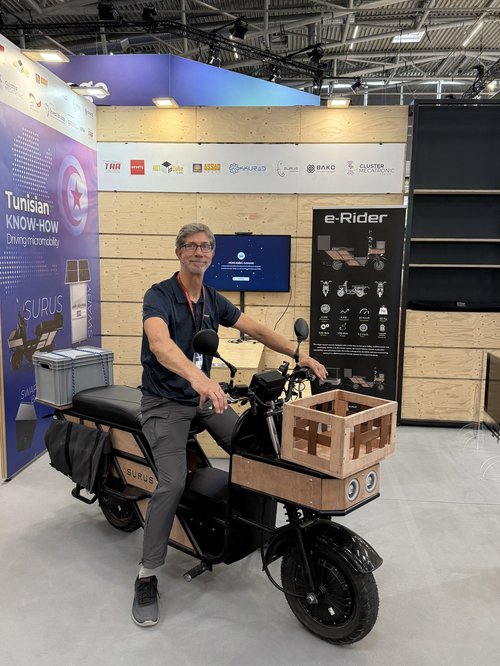
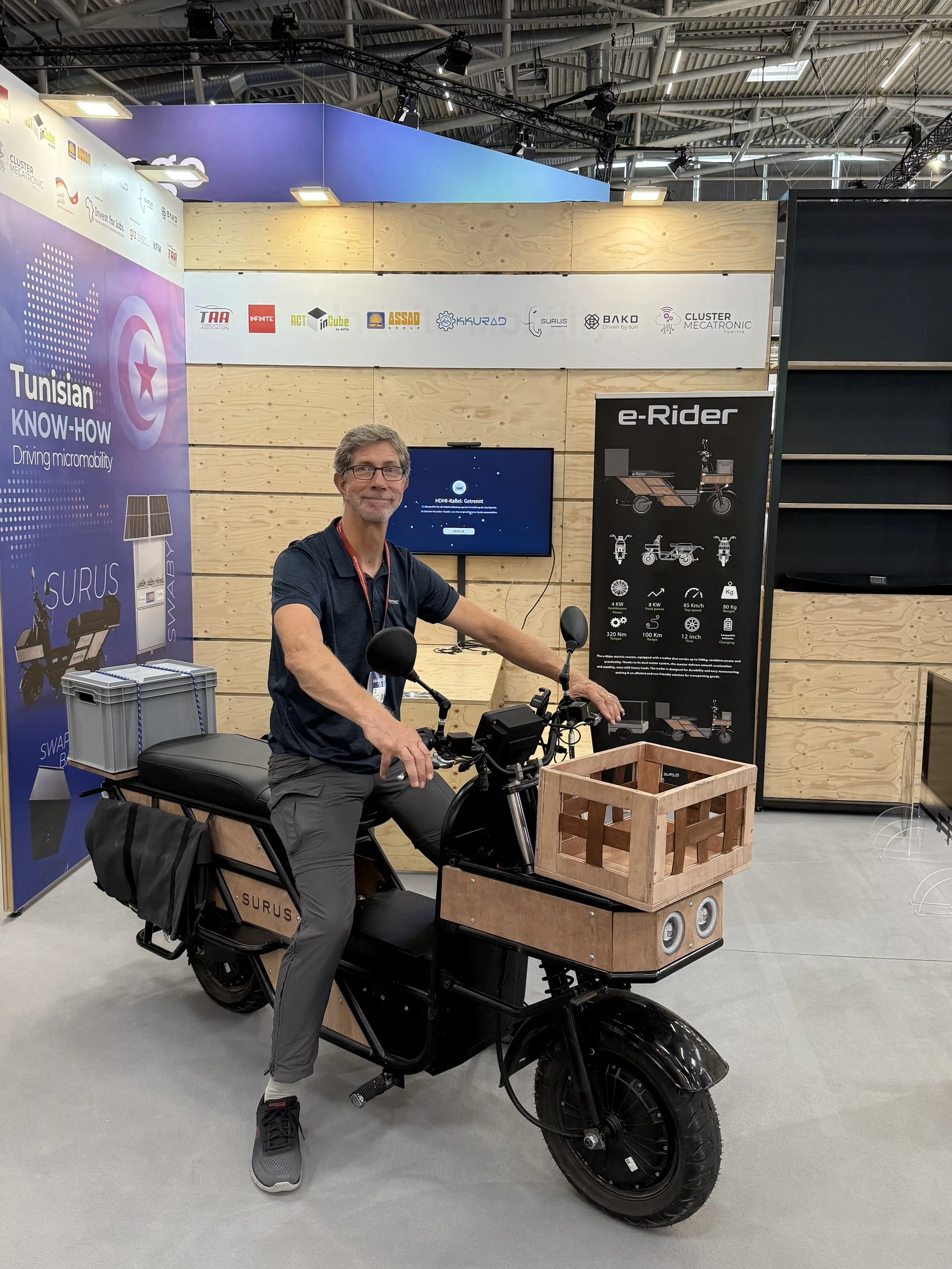
  SURUS Automotive’s e-Rider, an electric motorcycle.
SURUS Automotive’s e-Rider, an electric motorcycle.

Q. How important is the continent for the future of carbon markets?

Not everyone has yet grasped the fact that Africa will be the fastest-growing market of this century. I’m likely to live to see a time when the population of Africa will be as large as the combined populations of India and China. What impact will this have on the Earth’s carbon dioxide balance? Africa needs a lot of vehicles. Indirectly, the possibility of carbon credit sales can help to reduce the production costs of electric vehicles for Africa, which would, in turn, lead to a wider adoption of electric mobility in Africa.

  SURUS Automotive also produces the Rolling Chassis, a skateboard platform with an electric powertrain for any car body.
SURUS Automotive also produces the Rolling Chassis, a skateboard platform with an electric powertrain for any car body.

Q. What are some of your favourite success stories in Africa that you can share?

The real success story in Africa is the positive momentum and enthusiasm that can be felt everywhere. I am impressed by how the transport industry market is starting to grow. Government experts understand our goals of transitioning from combustion engines to electric motors. We don’t need to convince anyone about the benefits of environmental protection. The lower operating costs, the cost for maintenance and repair, and the overall cost of ownership are what ultimately convince every customer to move electric.

Q. You are working in a system that is constantly evolving and changing. What are the main challenges in your view?

Change is a constant in life. Since the start of the COVID-19 pandemic, we have been reflecting on the future development of the transport market in Africa and have developed a strategy for building a more sustainable automotive industry on the continent. Now we are implementing the various action plans. The biggest challenge from my point of view is the time it takes to educate everyone within this value chain about the opportunities related to trading in CO2 emission reductions.

Q. How is Africa positioned in your view to take advantage of this burgeoning opportunity

The number of countries that have so far sown the seeds of cooperation under Article 6 of the Paris Agreement is still relatively small. Currently, there are not enough regulatory bodies in Africa in place to register participants in the carbon market. Yes, but Africa is well positioned with its enormous potential for future growth.

Q. Which countries on the continent are doing the right things to prepare for carbon markets?

Since the Paris Agreement was jointly signed, every country has been working to the best of its ability to fulfil its climate commitments. I don’t want to single out any country as being better than another. The aim of this conference is to exchange ideas and provide mutual support in taking the necessary steps to reduce emissions jointly.

Q. You are a speaker at the inaugural Carbon Markets Africa Summit. Why the decision to join this climate change journey with VUKA Group?

Many investments in Africa cannot be made due to a lack of affordable financing. I am convinced that we can only unlock the potential of additional funding sources through the trading of carbon certificates by working together.

Q. What will be your message at the event?

I would like to highlight two points here:

1) Powered by the sun. Africa hardly needs any petroleum. Located near the equator, Africa enjoys abundant sunshine year-round. The sun’s energy in Africa is more than sufficient to power the entire transport sector.

2) In the transport sector, carbon credits are a viable source of revenue, that can be easily managed online. Data on energy supply and consumption is recorded by the batteries in the vehicles and through the applications on our cell phones. The measurement, reporting, and verification of greenhouse gas emissions in the transport sector can be done entirely electronically, via mouse clicks.

Q. What are your expectations of CMAS?

I’m over 60 years old. I don’t have any expectations anymore and I can take life as it comes. What I’m interested in at the conference are the people and their ideas. So, I want to experience what we can achieve together.

Q. How important is such an event for the continent?

I would like to answer your question with a counter-question. Isn’t trust a precondition for investment? To unlock capital for Africa’s climate transition, we need people to engage in dialogue with one another. This conference provides the framework for the necessary discussions about the future of Africa and the overall CO2 emissions of the entire planet.

Q. Anything you would like to add?

Yes: Thank you! I hope that we can contribute to the success of your conference.

UNDP Africa Sustainable Finance Hub: “Preparing governments to become carbon market ready”

Exclusive interview with Maxwell Gomera, Resident Representative of UNDP South Africa and Director of the Africa Sustainable Finance Hub. The UNDP is the official host partner of the upcoming Carbon Markets Africa Summit.

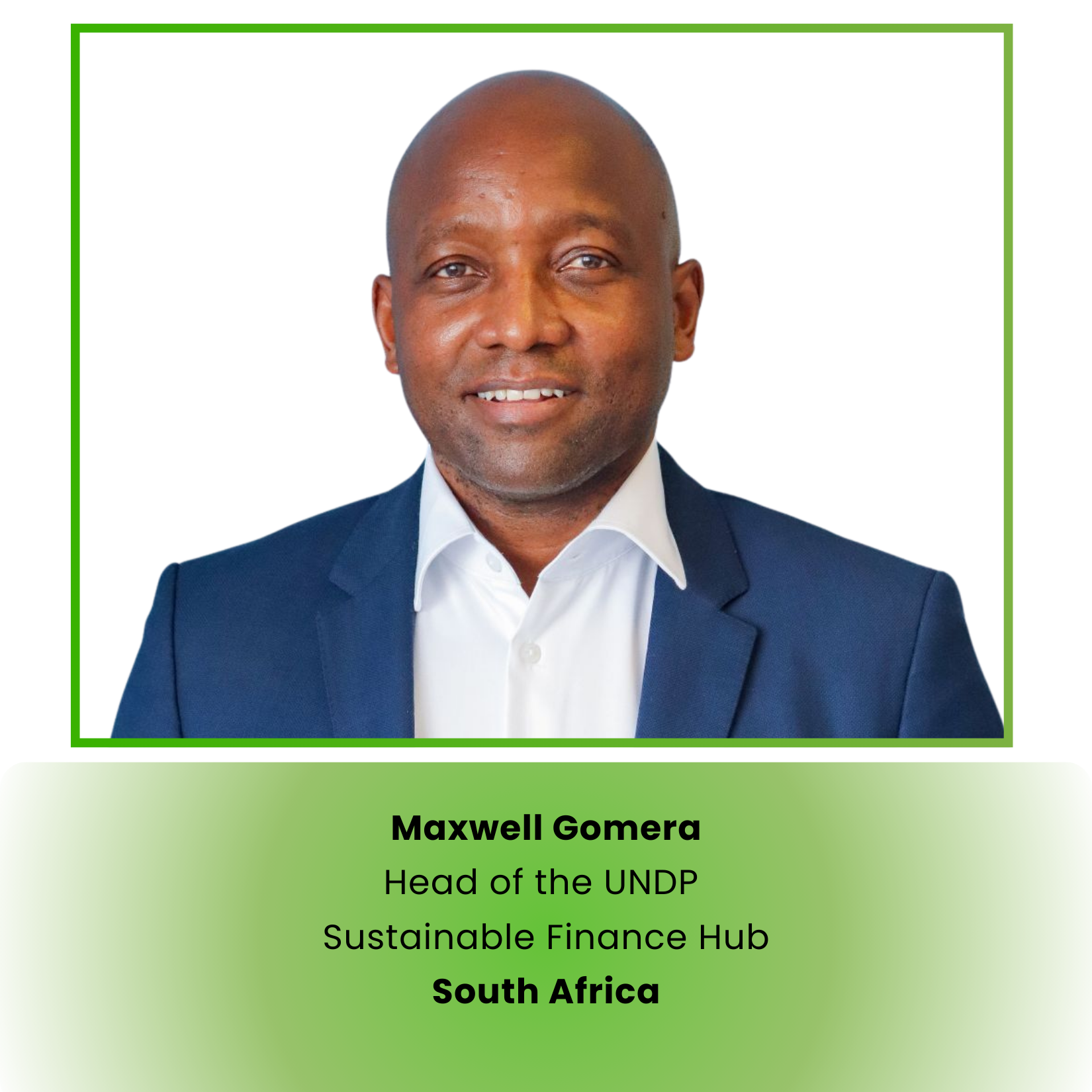
 Maxwell Gomera, Head of the UNDP Sustainable Finance Hub, South Africa
Maxwell Gomera, Head of the UNDP Sustainable Finance Hub, South Africa

Interview Summary: The interview with Maxwell Gomera, Resident Representative of UNDP South Africa and Director of the Africa Sustainable Finance Hub, highlights UNDP’s work in preparing African governments and businesses for carbon markets and broader sustainable economic growth.

Gomera stresses that Africa faces serious challenges—limited fiscal space, high unemployment, energy dependency on fossil fuels—but also immense opportunities thanks to its youthful population and entrepreneurial spirit. The Hub works with governments, banks and SMEs to unlock finance, de-risk investments and harness digital tools for inclusion. A key focus is on accelerating the SDGs and Agenda 2063 through innovation hubs, clean energy solutions and improved access to capital for small businesses.

He emphasises the role of carbon markets, explaining how UNDP helps governments establish registries, rules, and frameworks under Article 6 so they can fairly participate in a trillion-dollar market. Success stories include Rwanda’s transition to electric motorcycles and Namibia’s hydrogen ambitions, showing how carbon finance can ease the cost of transition.

For Gomera, summits like the Carbon Markets Africa Summit are vital for scaling solutions and inspiring hope, especially for young Africans. His closing message is clear: Africa’s potential must be turned into reality, and “tomorrow is worth fighting for.


Thank you for joining us. Please can we start with some background about you and your role at the UNDP.
Thank you for having me. My name is Max Gomera and I’m the head of the UNDP Sustainable Finance Hub based here in South Africa. I’ve been in this role for a year now, and I guess it’s enough time for me to reflect on where are we going, where the country is going and on what the UNDP’s role is in that transition.

Perhaps I can start with an anecdote about my time here. When I first came into this country, I met three young people who live very close to where I’m staying right now. It was in a bar. Two of them were very pessimistic about the opportunities that they saw in this country. “It is what it is,” they told me. “How can you expect us to have any form of hope in a country where unemployment is hovering anywhere between 30% and 60%, depending on which statistic you are using.”

One was very optimistic. She refused to accept that “it is what it is.” And these are the young people that give me hope for Africa, that give me hope for South Africa. Because our job here is important, we want every South African, every young South African to believe that tomorrow is worth fighting for. So, as the UNDP Sustainable Finance Hub, our work here is to work with the government of South Africa and partners alike to ensure that the opportunities for those young people are clear and achievable.

How does the UNDP Africa Sustainable Finance Hub (ASFH) work? Where on the continent are you active?

As a hub, we are active on the whole continent, and it is quite remarkable what we are finding on the continent. If you look at the differences of where African countries are, Botswana, for example, long held as a beacon of good governance, is currently struggling with a shrinking fiscal space. In South Africa, the economy itself is stagnating around 1% growth, 0.8–1% growth. If you look at Nigeria, it’s struggling with inflation of over 20%. This is a story that you find across the continent. On the one hand, governments are running out of fiscal space to finance development. On the other hand, this is an economy that’s also full of opportunity. It has got a burgeoning young population. It’s got SMEs, small medium scale enterprises, that are thriving and innovating, but they are not growing.

The question has to be, why are we not able to grow the African economy so it can meet the needs of many Africans? And this is where we come in. We’ve been working with governments to ensure that we expand the fiscal space and the fiscal opportunities that are available to them to be able to do so. But we also work with private sector, with banks, with the finance industry to ensure that the resources that are needed to power small medium scale enterprises, which are the backbone of Africa’s industry are available.

How can the ASFH accelerate the SDGs and the African Union Agenda 2063?

The problems are real and very varied across the continent. I spent some time in Rwanda, and there I met a woman called Marie José. Marie José was telling me about how she wakes up every day and walks over five kilometres to look for firewood. And on her journeys to look for firewood, she comes across young women who are on the same journey and young men who are twice her size who are also looking for firewood. She mentioned to me that some of the young women who had babies on their backs were actually raped on the way to find firewood. This is outrageous. How is it possible that in 2025, when we are able to send people to the moon, when we are able to create driverless vehicles, we’ve not been able to solve the problem of cooking energy in Africa’s rural areas?

This is something that is within our means. And as UNDP Sustainable Finance Hub, we are now working with governments across Africa, the government of Rwanda included, on how to solve such problems. It is both a financing problem, but it is also an engineering and architectural problem in that particular example. We’ve not been able to come up with the technology for cooking that is affordable in that income setting for rural Africans. Because if we have that technology, people will adopt it as long as it’s within the income setting that they face. This is not something that’s beyond the realms of possibility. And at the African Sustainable Finance Hub, we are working with governments, with private sector, with universities to make sure that this is solved. We have started with deploying over 17 innovation hubs that are unleashing the power of innovation and showing what is possible across the continent. We’re doing this across all the Sustainable Development Goals and trying to solve them and to ensure that these risks of our time do not undermine the prospects for Africans.

What tools does the ASFH use to inform and transform financial systems and to build sustainable and resilient economies?

We are adopting several tools in order to achieve the African dream. If you look at the problem of small medium scale enterprises, for far too long, these have remained locked outside capital markets. African capital markets do not see the potential that is within small medium scale enterprises. They receive less than 5% of the capital that’s available, yet they employ over 60% of Africans. How is that possible? How is that anomaly being allowed to persist?

First, existing capital markets see SMEs as a risk, and as such, they do not invest in that. Our job has been to work with governments, with banks, with the finance industry, to de-risk those aspects that investors see as risks on small, medium-scale enterprises. So, for example, if you are here in South Africa, we are working within many of the townships to develop what the government has rightly identified as a very promising township economy. When we talked to banks about why are you not financing such promising businesses in the townships? Well, they outlined many of the familiar issues: First, we don’t know who these people are. Second, well, they’re risky. They will need them to put some collateral to it. Third, they cannot give us any of their financials. If we ask for three to six pounds financials, we cannot understand them, and so on and so forth.

But these are issues that we can de-risk. So working with the government of South Africa and other institutions, we’ve now developed a way of using digital tools to give people a digital identity that everybody can use. We now, in 2025, know more information about each individual on the planet almost, that there is almost no excuse for any bank to say, we cannot extend a loan to you, because we don’t know who you are. There is almost no excuse. In the digital era right now, we almost can pinpoint where a person is at any one point in time. Second, we are using digital tools to enable such businesses to be able to do seemingly mundane things like recording their inventory using the tools that are available. You now need to use AI to just throw it what you have and it will tell you with an amazing level of accuracy what you have and do with the recording of your inventory.

At the same time, we’re also using digital payment platforms that we are deploying to SMEs so that as they sell, the city is also collecting data on their sales. And with that, they are able to produce their financials every month and able to say to any investor and to a bank that this is who I am and this is the potential that my business has got; here is the reality of what I am actually achieving. The results are amazing.

How is UNDP’s Africa Sustainable Finance Hub catalysing private sector

participation in Africa’s carbon markets under Article 6, and what opportunities should businesses expect?
Well, we have seen what has happened with the Africa’s carbon markets. On the one hand, there have been mixed signals about whether or not this is a market that is thriving globally. We’ve had many big participants retreating from their commitments on carbon markets with BlackRock rolling back on their commitments for carbon. We had easyJet moving away from their commitments. And so if you are a player on the African continent, this can get very confusing. But the reality is that this is a huge market, almost $1 trillion. And Africa’s share on it remains very minuscule. Why? Several reasons.


First, what the global negotiations have done is they have created a new asset class, a new carbon market in which buyers and sellers can interact. The rules have been organised and we were very delighted to see the progress that was made in the last UNFCCC meeting where governments agreed on Article 6, many of what is now called Article 6 under the carbon markets. What that does is it establishes rules and any functional market needs well-functioning rules.


But that is not enough. There are these rules, but African governments themselves also have to be aware of what is it that we have that we can bring to the market? How much of it do we have? Who is buying out there? So they can get a good price for their carbon and establish the institutions that are needed for that? That’s where we come in. We are working with governments to set up a registry of how much carbon they have, what are their commitments under nationally determined contributions. And of that, how much can players within a country take to voluntary markets or to more regulated markets? And what price are they getting for that? And helping them to establish the rules under which each of the actors within each jurisdiction can interact with buyers and sellers who are outside of that jurisdiction.

The results are promising at the moment, and we are very happy that we have achieved a lot of things in domesticating what has come from the international discussions, but also helping countries to set things like, as I said, like registries, but also look at their own capabilities, their taxonomy to ensure that when we say one cubic meter of carbon here, it’s the same language that someone else will understand from across the world. This is important work because these markets function more efficiently if buyers and sellers are able to interact using the same rules.

Part of the ASFH’s goals is to enhance carbon market access and energy financing to lower carbon emissions. How is this done?

Well, there are many examples of where we have had to work with governments to ensure carbon market access. One has to ask oneself, what has been the barrier to accessing carbon markets for African governments? First is just sheer availability of information. And we have worked to ensure that the information around “what is this carbon market?” is available. How do governments prepare themselves? How do they become carbon market ready?

We’ve also worked on ensuring that the institutions and the rules and regulations that are needed in each country in order to participate in carbon markets are available and are understood by everyone. We’ve also had to ask ourselves which sectors of the economy are carbon intensive or are producing a lot of carbon and require intervention?

If you are in South Africa, that sector is the energy market, we generate a lot of our energy using fossil fuels. So it is self-evident that this is an area that’s got lots of potential. So we’ve spent a lot of time understanding how much carbon is being produced in that sector and how do we offset it. Now, there are two ways of reacting to it. One is to offset that, say, reduce using available technology. Therefore, we offset it somewhere else. And that’s what we are working with the government on.

The other one is to say, how do we transition to renewable energy options? What we’ve seen happening across countries like South Africa, Rwanda, and Nigeria, where the massive transitions to renewable energy are very promising. Namibia is another one. We’re working with the Namibian government right now on their ambition for hydrogen-powered energy sources. And that is very promising. We are seeing a lot of innovation across the African continent. And that is showing us that we can transform this economy. Without such transformation, our hopes of even transforming the small medium scale enterprises and industrialising Africa come to nothing. Because without energy, without that transition, we are not able to industrialise this continent.

Any specific success stories you can share so far regarding carbon market development on the continent.

Yes, there are many promising stories, but some of them show the agency and reason why we have to make this transformation. By some reports, the people living in the Middleburg area of South Africa are suffering from respiratory related diseases, and some of them actually die from it. What value do we put on one human life that dies as a result of something that is preventable? They are not the only ones. We’ve seen farmers who are in agony because rainfall patterns have changed across this continent. We’ve seen many who have had to see their whole livelihood upended. But I also talked about the story of Marie-José, who goes around five kilometres every morning to look for firewood in order to be able to feed her family.

Such stories abound in Africa, but we’ve also got the solutions to it. If you look at the transformations that are happening in countries like Rwanda, which are shifting the whole motorcycle economy, they are called “motos.” The city of Kigali is full of motos, and most of those motos are powered by fossil fuels. The government has taken a decision that they want to transition this to electric battery powered motorbikes. But how do you finance that? If you are an individual motorcycle owner, how do you finance that? Where do you get the capex that’s needed to make that transition? Well, the government of Rwanda could introduce subsidies or could say, we are reducing the import duties on it. That’s one way, but it’s not enough to incentivise an industry that will transform the whole economy. And indeed, in some instances, they have done so.

Or we could continue trying to develop the technology and ensuring that the technology costs go down. But we also have a carbon market which can help us to buy down the risk and to buy down some of the costs of the transition from fossil fuel powered motorcycle industry to an electrically powered motorcycle industry. And that is significant. If we get the math right, the cost of transition will be as painless as possible.

Now you could think of it and scale that to industries that are in more mature and sophisticated markets like South Africa, where we have people who are employed by the coal industry. If we’re going to transform and transition that coal industry to renewable energies, there are consequences and job losses that we will face, but also there are opportunities. How do we buy down that risk? Carbon markets offer us that opportunity. If we are able to establish effective and well-functioning carbon markets, we can use the revenue from carbon markets to reduce the pain and cost of transition for most African countries.

You are the official host partner of the upcoming Carbon Markets Africa Summit. Why the decision to join this climate change journey with VUKA Group?

The upcoming Carbon Markets Africa Summit is a great opportunity for us to reflect on where are we going and what are we achieving. It is almost unimaginable that we can even think of industrialising Africa today without thinking about how do we react to the problem of our time? How do we adapt to climate change and how do we mitigate our own contribution to climate change? This is a policy problem but an industrialisation opportunity that we all face as Africans. So summits, such as the Carbon Markets Africa Summit, are a good signpost along the journey that we are all facing. And it is a time to get in touch with people like the VUKA Green Economy Group and ask those questions. What role can we play to accelerate the transition? Because this transition will not happen because there’s a story of a transition that’s happening in Mpumalanga. One story here, one story there. It will happen more effectively when like-minded people can partner and take these ideas to scale. As such, this is why we are very proud to be associated with the VUKA Group, Go Green Africa, Africa’s Green Economy Summit, and everyone who is playing a role in ensuring that this summit succeeds to give Africa the tools that Africa needs to make the transition.

What will be your message at the event?
The message for this summit has to be: Tomorrow is worth fighting for. And every young African must feel that Africa has the possibilities. I am reminded of the story of the three young people that I met when I started my journey here in South Africa. If two-thirds of young people feel hopeless, it is our duty to show them that actually, there is reason for optimising in this country and across the continent. In fact, South Africa offers us many possibilities, but we just have to show young people that this is possible.

And that story, I have seen it happen. At the University of Johannesburg, we have set up what we call a university innovation pod. And that university innovation pod is enabling young African researchers to look into what are the possibilities for innovation. We put 3D printers that are enabling 3D fabrication of material. One young man came and said, look, I am worried about the growing trend of people who are spiking people’s drinks in night clubs, and using artificial intelligence I am now able to enable people to use their handheld device, point at a drink, look at the composition of whatever is in that drink, and say with reasonable confidence whether or not their drink has been spiked. This is a real problem. We all know that across the continent this is happening.

It is such examples that give me hope that given the tools to innovate, young Africans will do so. Because the only difference from where I’m standing between an innovator in Silicon Valley and an innovator in Africa is that the cost of innovation in Africa is quite high, but the cost of innovation in Silicon Valley is low because the ecosystem is joined up. This is why events such as Carbon Markets Africa Summit matter, because we bring together like-minded people to strengthen the ecosystem around a problem that we all share and give solutions to a problem that we all share. So the message has to be: Tomorrow is worth fighting for. Tomorrow is worth the fight.

Anything you would like to add?
The opportunity that Africa gives to the world is one not to be missed. But it will only be a realistic opportunity if we do something about it. It is not enough to recognise that we have potential. When the gap between potential and reality widens, we call that failure. We cannot continue talking about Africa’s potential. We must make that potential a reality. And Africa’s young people today, with their innovation skills, with their energy, with their hope and dreams, offer us the best chance for ensuring that Africa rises as an industrial giant for the world, because that’s the place we deserve.

One Carbon World joins Carbon Markets Africa Summit as official climate impact partner

“Partnerships the way to scale of the African carbon market”

One Carbon World (OCW) will be the official climate impact partner of the upcoming Carbon Markets Africa Summit (CMAS) taking place in Johannesburg from 22 to 23 October.

OCW is a not-for-profit dedicated to helping organisations reduce their carbon footprint and achieve recognised standards such as the Science Based Targets initiative (SBTi). They provide tailored guidance to clients and advocate for putting high-quality data in front of decision-makers.

  One Carbon World is the official Climate Impact Partner for CMAS2025
One Carbon World is the official Climate Impact Partner for CMAS2025


Carbon Markets Africa Summit
will gather the continent’s entire carbon markets value chain, from successful early carbon market movers, climate-finance-ready projects and regulatory bodies to global institutional development organisations and investors.

Measuring CMAS carbon footprint
“We are very, very proud to be working with the VUKA group as their climate impact partner for the CMAS Summit,” says Madeleine Garlick, One Carbon World Africa Director. “We will be measuring the carbon footprint of the CMAS Summit. VUKA believes in leading by example, which includes setting high standards for themselves.”

She adds: “Our partnership, we hope, will enable VUKA to gather huge amounts of data to understand the impacts of their summits. By working together, we hope to be able to track year-on-year improvements. It is a journey. And we think that this is a really, powerful move by an organisation who are not only hosting the critical green conversations that we need about Africa’s future, but are also leading the way by walking the walk themselves.”

Monitoring, reporting and verification
One Carbon World recently began to expand its work into nature-based solutions projects in the carbon market. Garlick explains: “This is very much in response to what our customers have been asking for, which is high integrity carbon credits to support their low carbon journey. We particularly support our customers and clients and projects through the MRV process (monitoring, reporting and verification) to ensure that their process and activities are high integrity and comply with all the relevant data and global verification requirements. Ultimately, we believe that carbon markets are a key part of the climate journey for a number of organisations.”

Partnerships key to scale African carbon markets
According to Madeleine Garlick, One Carbon World’s key message at CMAS will be that “African stakeholders and innovators are developing and leading the market at the moment. And the most important thing at this point in the progress and development of the African carbon market is partnership. Partnerships between businesses, partnership between project implementers to learn from each other, partnerships with communities, finding new ways to deliver value at the grassroots level. Partnership is the way we will get scale out of the African carbon market and ensure it is delivering for everybody.”

Future of sustainable events in Africa
“We’re thrilled to accompany VUKA on the start of their journey as they take meaningful steps to measure the emissions of their inaugural Carbon Markets Africa Summit,” states Andrew Bowen, One Carbon World CEO. He continues: “With One Carbon World’s extensive experience in footprinting the emissions from large events around the world, we know how impactful this kind of leadership can be in shaping credible sustainability conversations and global climate action. We look forward to our partnership as we work together to advance the future of sustainable events in Africa and beyond.”

[Read and watch the full interview with Madeleine Garlick, One Carbon World Africa Director here.]

VUKA Group 
Carbon Markets Africa Summit
is organised by VUKA Group, and the United Nations Development Programme (UNDP) is the official host organisation.

The VUKA Group (formerly Clarion Events Africa) is a leading Cape Town-based and multi-award-winning organiser of exhibitions, conferences and digital events across the continent in the infrastructure, energy, mining, mobility, ecommerce and CX sectors. It has more than 20 years’ experience in serving the business community across Africa. Other well-known events by The Vuka Group include Africa’s Green Economy Summit, Smarter Mobility Africa, Enlit Africa, DRC Mining Week, Nigeria Mining Week, DRC-Africa Battery Metals Forum, ECOM Africa and CEM Africa.

Event dates and location:
Dates:
21 October: Pre-summit day
22–23 October: Summit
Location: Johannesburg, South Africa

Contact details for Carbon Markets Africa Summit

Project Lead: Emmanuelle Nicholls 
Cell: +27 83 447 8410  
Email: emmanuelle.nicholls@wearevuka.com  

Event website: About — Carbon Markets Africa
One Carbon World website: https://www.onecarbonworld.com 

One Carbon World: “Partnerships are key to develop and scale African carbon markets”

Exclusive interview with Madeleine Garlick, One Carbon World Africa Director. One Carbon World is the official climate impact partner of the upcoming Carbon Markets Africa Summit.


  Madeleine Garlick, One Carbon World Africa Director,    One Carbon World
Madeleine Garlick, One Carbon World Africa Director, One Carbon World


Interview summary: This interview with Madeleine Garlick, Africa Director at One Carbon World (OCW), explores the organisation’s approach to supporting African businesses and communities on the path to net zero, the state of African carbon markets, and the importance of robust data systems and partnerships.


Key points:

  • OCW’s Mission and Approach: OCW is a not-for-profit dedicated to helping organisations reduce their carbon footprint and achieve recognised standards such as the Science Based Targets initiative (SBTi). They provide tailored guidance to clients and advocate for putting high-quality data in front of decision-makers.

  • African Carbon Markets: Garlick sees the African carbon market as vibrant and growing, with strong demand for high-quality, nature-based carbon credits. However, she notes the need for better regulatory alignment across African countries to foster trust, investment, and value retention locally.

  • Importance of MRV (Measurement, Reporting, and Verification): Garlick emphasises that reliable MRV systems are crucial for market integrity and scale. Accurate, locally relevant data empowers communities and companies, informs better decisions, and ensures climate claims are credible. She highlights data inequality and calls for greater investment in African scientific and data infrastructure.

  • Local Value and Investment: The interview stresses the need for frameworks that enable African ownership and value retention from carbon projects, including domestic financing mechanisms. Garlick mentions successful partnerships between governments, such as the Coalition to Grow Carbon Markets, as positive steps.

  • Community and Women’s Roles: OCW works directly with communities, training farmers in soil data collection and promoting women’s involvement in climate action. Garlick believes women are key to an equitable and effective climate transition.

  • Challenges and Opportunities: Common challenges include data availability and the cost of green investments. Opportunities lie in seeing sustainability as a driver of business security and broader success.


Q. Tell us about One Carbon World, your position in the climate landscape, and your role.
One Carbon World is a not-for-profit organisation committed to supporting companies and businesses on their low carbon journey. We believe action to tackle climate change has the potential to also support social and environmental goods and help communities. We began our life supporting businesses on their low carbon journey by measuring, reducing and rebalancing their carbon footprint. This included advice, guidance to organisations on how to set tailored targets, particularly through the Science-Based Targets Initiative (SBTi). We believe companies should be doing everything they can, big or small, to start their low-carbon journey. For some companies, this takes time, but we believe every step is a good one.

We have recently begun expanding our work into nature-based solutions projects in the carbon market. This is very much in response to what our customers have been asking for, which is high integrity carbon credits to support their low carbon journey. We particularly support our customers and clients and projects through the MRV process- Monitoring, Reporting and Verification – to ensure that their process, their activities are high integrity and comply with all the relevant data and global verification requirements.

Unfortunately, we believe that carbon markets are a key part of the climate journey for a number of organisations. Finally, we are a UNFCCC observer organisation. For us, this is really important because it gives us an opportunity to profile and support best practice from around the world. And we’re delighted to be able to do this to encourage and incentivise a better carbon market.

Q. What is your assessment of the current state of African carbon markets, especially on the nature-based solutions side?

We believe that the global carbon markets are at an inflection point. We have seen all of the forecasts about the potential scale of the market, and some pretty bombastic estimates about the cost of carbon in 2050. And so whilst we believe that these markets will grow, what most people don’t know is the scale and pace and geographical spread of how the markets will expand.

Some have said that there is a dampening of demand in the African carbon market. We think exactly the opposite.

 In the financial services sector, there is a saying which is that “a volatile market is a vibrant market and one filled with vitality”. And we think that this rings pretty true for the African carbon market.

The MSCI Sustainability Institute, who produces guidance and research on the carbon markets, have come up with a pretty compelling statistic, which is that the commitments to purchase [credits from] high-quality nature-based solutions projects in the first half of 2025 has tripled in comparison to the first half of 2024.

Their assessment shows to me that demand is hot, particularly for high integrity credits, which is fantastic because they’re saying that a lot of these credits are selling at around about the $50 a tonne mark. And for us, where we believe that high integrity projects and credits are the sweet spot and where we should all be aiming, this is a really, really positive sign at the moment.

However, when we look across the African picture, it is very different. Different African countries are at a different point in their journey of understanding and taking advantage of the carbon markets globally, whether that is the VCM (working through voluntary systems) or the Article 6 arrangements that are in place. Some African countries are really just beginning to dip their toe into the carbon markets, whereas others are, frankly, global leaders through articulating robust, transparent frameworks at the national level, whether that’s for Article 6 or the voluntary market. So it is patchy, but there is definitely a development of the sector overall in a positive direction.

The key question, I think, for the next 5 to 10 years is whether these regulatory environments can grow in a way that continues to ensure external investment is facilitated, and that we don’t see barriers to the engagement of external finance into these national carbon markets.

We welcome strong regulation. Regulation helps build trust in all the stakeholders that are needed in the carbon market. So that is trust from communities that their wishes will be honoured and respected. It’s trust from project developers that it is worth their time and their investment in engaging in the market . And trusts also from buyers and ‘consumers’ of carbon credits that when they make commitments financially those commitments will be honoured. So we believe that the key element of a regulatory framework needs to be building this trust.

What we would like to also see more of- which I think is really critical for scale in the carbon market- is sharing between different countries on how they are developing their jurisdictions. So particularly on nature-based solutions, if you want to achieve large landscape level change, you need frameworks across countries, and neighbouring countries that allows for trans-boundary work to happen. And that also reflects the realities of the ecosystem in which we are working too.

The places where we need to do more of this kind of exchange are very exciting. We have the Carbon Markets Africa Summit coming up in Johannesburg in October, CMAS. We also have in a couple of weeks’ time the really important second Africa Climate Summit in Addis Ababa. And these are places where buyers, consumers, project developers, countries, communities, NGOs can get together and exchange notes and learn from each other, which we think is really important at this point in the market.

One final element that we would really like to see is an increase in domestic resource mobilisation into the carbon markets. So this is happening in some places. South Africa is a very good example, thanks to the role of the JSE, the stock exchange, but also [due to] the domestic regulatory framework. This is incentivising domestic institutions and domestic financial institutions to invest in the market. And this is a really helpful supplementary financial flow, alongside external investment into the development of the markets.

Q. Can you tell us about the importance of MRV in ensuring high integrity and scale?
So One Carbon World at our heart is an MRV institution. We believe that data is power. It’s power for communities. It’s power for the market. It’s power for CEOs and boardrooms to understand what is happening in their business. It’s easy to think that in our modern interconnected world, where AI can answer a question for you in moments, any question, that the importance of data science is diminishing, but that simply isn’t the case in the climate age context, particularly because AI has not yet grasped the nuances and sophisticated dynamic nature of a number of the ecosystems in which we are working on nature-based solutions projects.

I’ll just give you one example. We are working with clients in Africa to understand the impacts of the carbon in avocado plantations, which are really dynamic and interesting ecosystems. And when we have done some of our statistical analysis of what is happening in those avocado plantations, unfortunately, if you asked AI, they would give you answers based on data generated in other parts of the world, but not in Africa, so from Australia, South America, etc. Now that is helpful, but what does that really tell you about what is going on in a really complicated ecosystem in central Kenya or in Southern Africa? Not much. What you still need ultimately is people, scientists, agronomists, farmers, labourers and smallholder communities to be out there in the ecosystem, on the farm, taking measurements and explaining what is happening in these really dynamic ecosystems year on year.

Our companies understand this and they know that if you don’t understand what is happening with your carbon, then you don’t really understand what is happening with your farm, your soil or your community. Carbon data is essentially, management data now. And so, for some companies having this data might mean they decide to do more in-setting within their own value chain, or they might decide that actually the best way to realise the value of this carbon is through a nature-based solution intervention, which also has the benefit of diversifying revenue streams for businesses and communities. Again, without this data, year on year, people would struggle to make these decisions in an informed way.

Ultimately, MRV is essential for assuring robust removals and emissions reductions, that they are quantifiable, additional, permanent and that they avoid leakage so that we’re all doing what we say we are doing. MRV is about ensuring that claims are verified. If you don’t have this kind of confidence in the market, then you’ll never achieve scale in the nature-based solution space. MRV is the source of investable credits ultimately.

And for us, that’s also why it’s really important that we see sophisticated project design taking account of MRV from the beginning of the project cycle so that we are taking advantage of the data from the very first day that we begin.

We are worried a little about one of the barriers to scale, which is that there still remains a lack of really, really consistently high-quality data in the African carbon markets. African scientific institutions are doing their best to help fill this gap and they are really, really committed to doing so. For example, many African universities and research institutions are developing allometric equations for key species, but ultimately there is still insufficient data in the global system around some of these ecosystems. And we would like to see the global verification schemes and VVBs working a little bit harder to try and work with scientific institutions to fill evidence gaps and build a robust and healthy African science base for the future.

Q. Please talk about your work with businesses in Africa to harness the power of land to tackle climate change. How are they leading by example?
So I think the best example to talk about here is a company we’re very proud on working with. We worked with a large vegetable grower, processor and exporter in East Africa since 2021. They have an incredibly strong commitment to sustainability at their core. And in 2021, we worked with them to produce their first carbon inventory for Scopes 1, 2 and 3 emissions.

Our aim was to establish the 2021 baseline to underpin their ambitious target, which was to achieve net zero operational emissions for Scope 1 and 2 by 2025. This first inventory, which we produced alongside the company, provided the organisation with critical data that allowed them to adjust their operational footprint to meet their targets. They decided to build a new factory and in this factory invested in huge amounts of exciting renewables technology from a biomass boiler to solar panels and continued energy efficiency measures as well. And as a result of this investment and commitment, they were able to reduce their scope one and two emissions by 80 % against the 2021 baseline. And in fact, the factory in which they built has won a really impressive IFC Edge certification award, which is one of the first in East Africa.

But the beauty of this inventory process, is that really it gave the company huge amounts of data for other areas of their operations. So whether it was waste or water, or giving them data on their suppliers to have really robust conversations about procurement and supplier contracts in the future. So this was just the start of their ability to innovate and grow along their green journey.

We are now also working with them to do a really exciting carbon removals inventory to assess the existing removals potential and realities on their land, which is going to be really exciting to see if we can move forward into some nature-based solutions as well.

Q. What are the main challenges in your view? And the opportunities?
So I think one of the key challenges we see, whether it is working with businesses or projects, is having the data you need readily available. So for businesses, this is sometimes because the sustainability teams don’t necessarily have control over the areas of the business where the data is generated. Sometimes for businesses, they’ve simply never collected this kind of data before.

And so we work very closely with businesses to try and find easy ways for them to build their own internal evidence-base and data collection processes. This is really a living embodiment of the idea of sustainability being a whole of business endeavour.

The other challenge we sometimes see is that when you do an inventory for a business, they do identify some upfront investment that needs to be made into new technologies. Again, this can be difficult to sell internally to stakeholders. But the beauty of the inventory is you are also gathering data on the “dirty” parts of the business and how much they are costing you. And so when you pitch to the board or the CEO, you can weigh up the upfront investment on new technology against the costs you are incurring from the dirty technology. And invariably, if you can present this as an investment that will pay off in years two, three, four and five we see companies taking that step and moving forward, which is fantastic.

The opportunity here really is to be at the cutting edge of climate innovation. And a number of the businesses we work with are excited to be market leaders and want to take these steps. And they’ve realised that actually it’s not really about a profit loss calculation, but taking steps towards green innovation and adopting green technologies actually helps you manage the risk to your business in the longer term, whether these are risks from supply, risks from energy security, or frankly, risks from the consumer market that no longer accepts companies who aren’t starting their green journey. So it really helps you secure your customer base and your supplier base for the future.

Q. You are the official climate impact partner of the upcoming Carbon Markets Africa Summit. Why the decision to join this climate change journey with VUKA Group?

So we are very, very proud to be working with the VUKA group and have been selected as their Climate Impact partner for the CMAS Summit. We will be measuring the carbon footprint of the CMAS Summit in October in Johannesburg with VUKA. VUKA believes in leading by example, which includes setting high standards for themselves.

While they’ve already begun to work in this area, we are really happy that we can take this forward and deepen the commitment through a bespoke carbon footprint for their event. Our partnership, we hope, will enable VUKA to gather huge amounts of data to understand the impacts of their summits. And we were excited to work with them to talk about how we can then reduce some of those emissions and set some targets to do that.

By working together, we hope to be able to track year-on-year improvements. It is a journey. And we think that this is a really, powerful move by an organisation who are not only hosting the critical green conversations that we need about Africa’s future, but are also leading the way by walking the walk themselves.

Q. What will be your message at the event?
Our key message at this event is that Africa is leading and that Africa doesn’t need the outside world to tell them to do that. African stakeholders and innovators are developing and leading the market at the moment. And that the most important thing at this point in the progress and development of the African carbon market is partnership. Partnerships between businesses, partnership between project implementers to learn from each other, partnerships with communities, finding new ways to deliver value at the grassroots level. Partnership is the way we will get scale out of the African carbon market and ensure it is delivering for everybody.

Q. Women’s month is celebrated in South Africa in Aug and on 31 July we celebrated Africa Women’s Day. How important is the role of women in the continent’s climate change journey?
Women’s Day is a really, really important day to celebrate in South Africa. We need to continue to honour our mothers, grandmothers, sisters, wives and friends for the amazing contribution that women have made in South Africa against huge hardship and against deep struggles in the past. And some still continue to struggle to make end meet to support their families. We know that women throughout the continent are underutilised and underrepresented in decision-making structures and in power centres. And this is no different in the climate space. But what we do have is a group of vocal and exciting women at the grassroots level from across the continent who are making their voices heard, building on the legacy of Wangari Maathai from Kenya in the 90s. And I’m delighted to celebrate women’s contribution on climate change this month and this day. Thank you.

Go Green Africa’s new Section 18A status “very important for pushing the green agenda”


  Image: Unsplash, Jan Jirasek
Image: Unsplash, Jan Jirasek

“We are only just getting started”

“The finance team has worked very hard and it isn’t easy to secure a Section 18A tax status with SARS, but we needed it, we’ve got it, and I’m delighted.” So says Iain Banner, Founder and Chairman of Go Green Africa (GGA), the South African non-profit organisation launched during the inaugural Cape Town E-Prix in 2023.

Since then, GGA has advocated for the green economy transformation within Africa through conferences, such as Africa’s Green Economy Summit and Carbon Markets Africa Summit, dedicated partnerships, projects and education, working with experts, funders and change-makers, including Siemens, Uber, the Western Cape Government, Eskom and Kudos.

GGA was recently awarded Section 18A tax status in South Africa. “The reason that is significant,” Banner explains, “is that it allows corporates to participate with us and to benefit from a tax deduction for the monies that it contributes towards helping Go Green Africa and its activities of pushing the green agenda. It’s very important.”

Polluters and solutions on board
According to Banner, highlights of the GGA journey so far have included securing partnerships with the likes of Eskom, Uber “and Siemens, who have verbally agreed to come on board—it was pending our Section 18A status that’s now been secured. We also have one of the big four banks in South Africa joining us. And there will be many more that come alongside us.”

He adds: “And we want both polluters and solutions. We’ve had deep discussions with Sasol, and I’m hoping that they’ll be with us too. So when people say, oh, you can’t take on the polluters, ‘well, why not?’ is my question to them; because until you have them inside the tent, how can you possibly help to influence outcomes going forward?”

Green vs black economy
The Go Green Africa Chairman says it would be wrong to “push hard for the green economy without recognising the fundamentally important role that traditional energy sources have played and continue to play in the future of the growth of the world. For us, and for me in particular, green sits very much as the clean alternative.”

Banner continues: “It needs to be economically viable in order to be adopted. We are working very hard to help showcase technologies that allow for production in a green manner and that is starting to bear fruits around the world. But we are really at the beginning of a journey. And the notion that green will completely replace the black economy is misplaced in my view. It will always have a role.”

[Read or watch the full interview with Iain Banner here.]

About Go Green Africa
Go Green Africa
is part of the Green Economy Portfolio in partnership with VUKA Group, which has more than 20 years’ experience in serving the business community across Africa.

Upcoming events:
Carbon Markets Africa Summit: 21–23 October 2025, Johannesburg, South Africa
Africa’s Green Economy Summit: 24–27 February 2026, Cape Town, South Africa

Go Green Africa website: https://www.go-green-africa.com/

Contact details:
Tailor-made partnerships: Errol Bryce
Cell: +27 83 613 4578
Email: errol.bryce@wearevuka.com

Project Lead: Emmanuelle Nicholls
Cell: +27 83 447 8410
Email: emmanuelle.nicholls@wearevuka.com