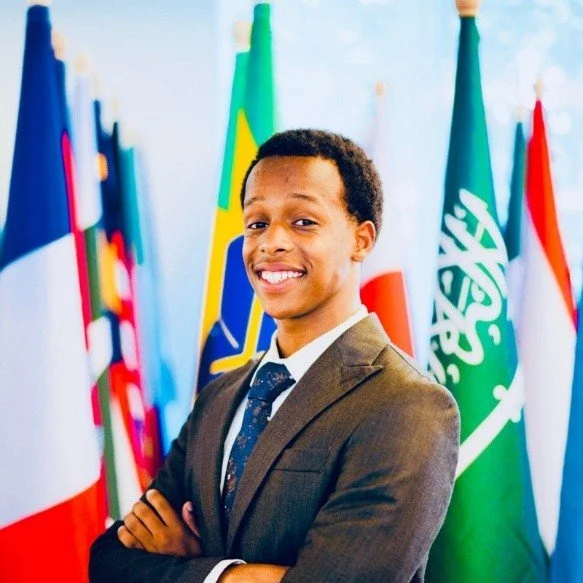
Agri carbon credit projects: “We don’t need brokers. We need projects with strong social and economic impacts.”

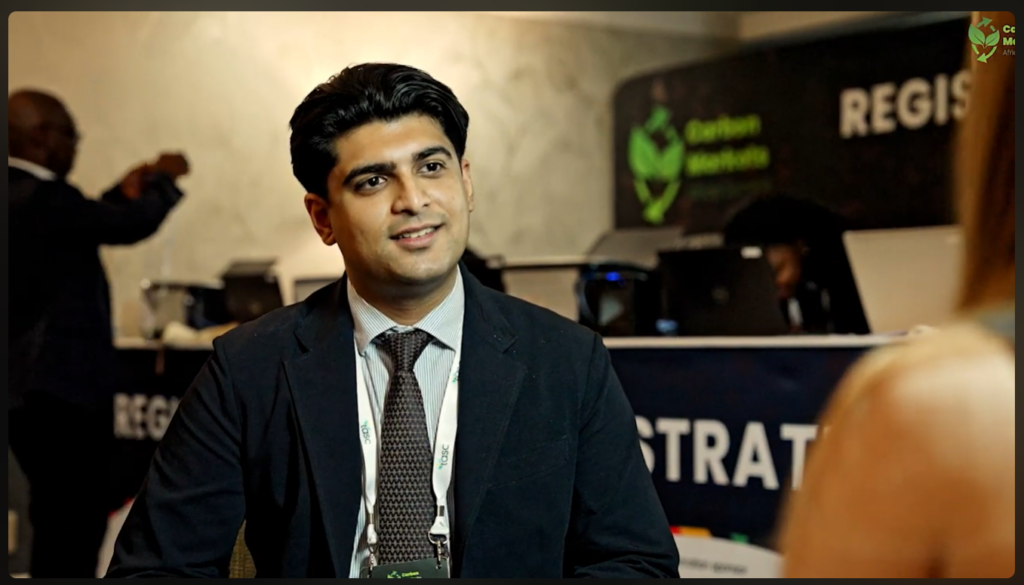
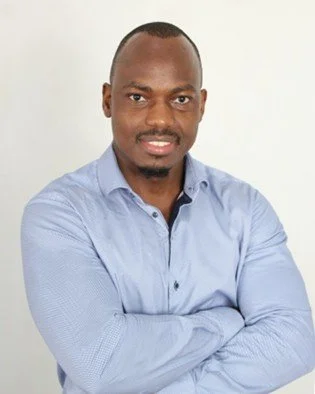
Exclusive interview with Abdilahi Nuh, Founder and CEO, Presto Innovations, Kenya. He was a speaker at the preconference day on the carbon project development process at the inaugural Carbon Markets Africa Summit in Johannesburg in October 2025. 

Interview Summary: 

Abdilahi Nuh describes his journey from early curiosity about environmental issues to becoming a leading carbon-removal project developer in Kenya. Growing up in a community where climate change was viewed as purely spiritual, he worked to build awareness, co-founding the Green Youth Union in Somalia to educate young people and elders about climate risks. His deeper immersion into carbon markets led to the creation of Presto Innovations, a climate-tech venture focused on carbon removal, regenerative land use and community-driven environmental restoration. The company’s flagship biochar project in Garissa County transforms invasive species into a tool for carbon sequestration while empowering smallholder farmers, women and youth.

Nuh highlights Africa’s strong potential in carbon markets due to its abundant land, biomass and ready communities, though challenges remain, including evolving methodologies, regulatory inconsistencies and the complexities of local engagement. He believes African countries like Kenya, Rwanda and South Africa are setting the pace with clear frameworks and community-centred policies. His vision is for high-integrity, community-led projects where revenues flow directly to local people. He stresses the essential role of youth and entrepreneurship in shaping fair and effective carbon markets. Nuh describes the Carbon Markets Africa Summit as a pivotal event that fosters collaboration, innovation and African leadership.


Thank you for joining us. Please can we start with some background on you and your organisation.
I am an engineered carbon removal project developer based in Nairobi, Kenya. 

I’ve always had a naturally curious, charismatic way of exploring big global issues. That curiosity eventually pulled me deep into climate and environmental work a path that wasn’t obvious in the society I grew up in. Where I come from, many people believe that climate is entirely in the hands of God, which is true in a spiritual sense, but it also means people often aren’t aware of how human actions contribute to environmental change. 

When I first started talking about climate and carbon removal, people would laugh or brush it off. But I kept learning taking courses, fellowships and leadership programmes and slowly watched the attitude shift. People around me began to understand, ask questions and to take the issue seriously. That transformation motivated me to take the knowledge back home. 

I co-founded Green Youth Union in Somalia, focusing on educating communities especially youth and elders about climate change, land degradation and the future risks facing the region. We partnered with universities like Plasma University in southern Somalia to run awareness programmes. Funding challenges eventually limited the organisation’s activities, but the impact on people’s awareness stayed with me. 

Later, I came across the world of carbon markets. I immersed myself fully, studying different projects, methodologies, learning how projects are built, and engaging with developers across the continent. That journey eventually led me to start Presto Innovations, which is an African climate-tech venture working on carbon removal, regenerative land use and community-led environmental restoration.  

Tell us more about Presto Innovations and the projects you are involved in.
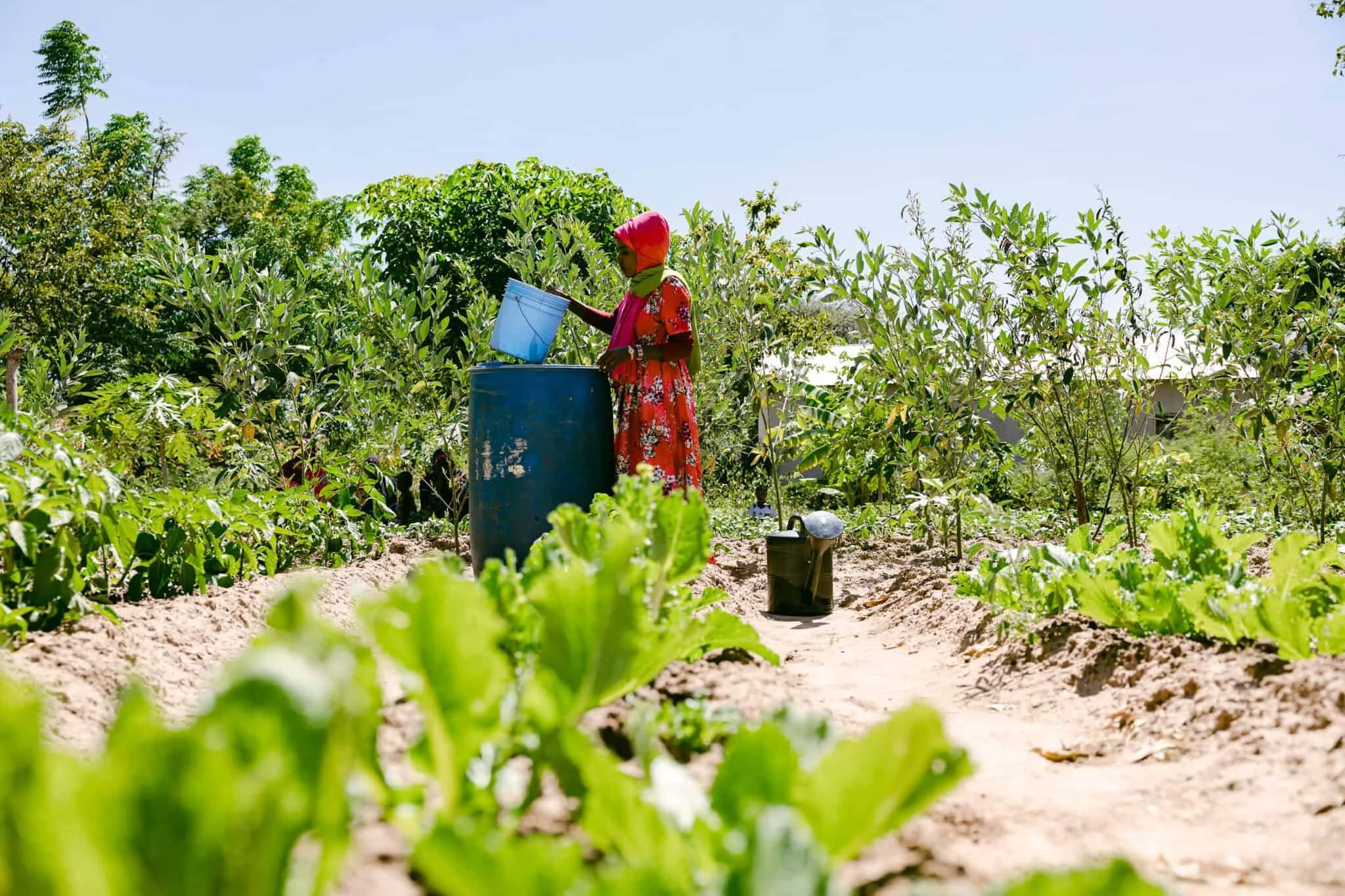
Presto Innovations really is a climate tech venture focused on carbon sequestration or rather carbon dioxide removal, working with smallholder farmers. Our work is grounded in the belief that climate action must uplift people while restoring ecosystems. 

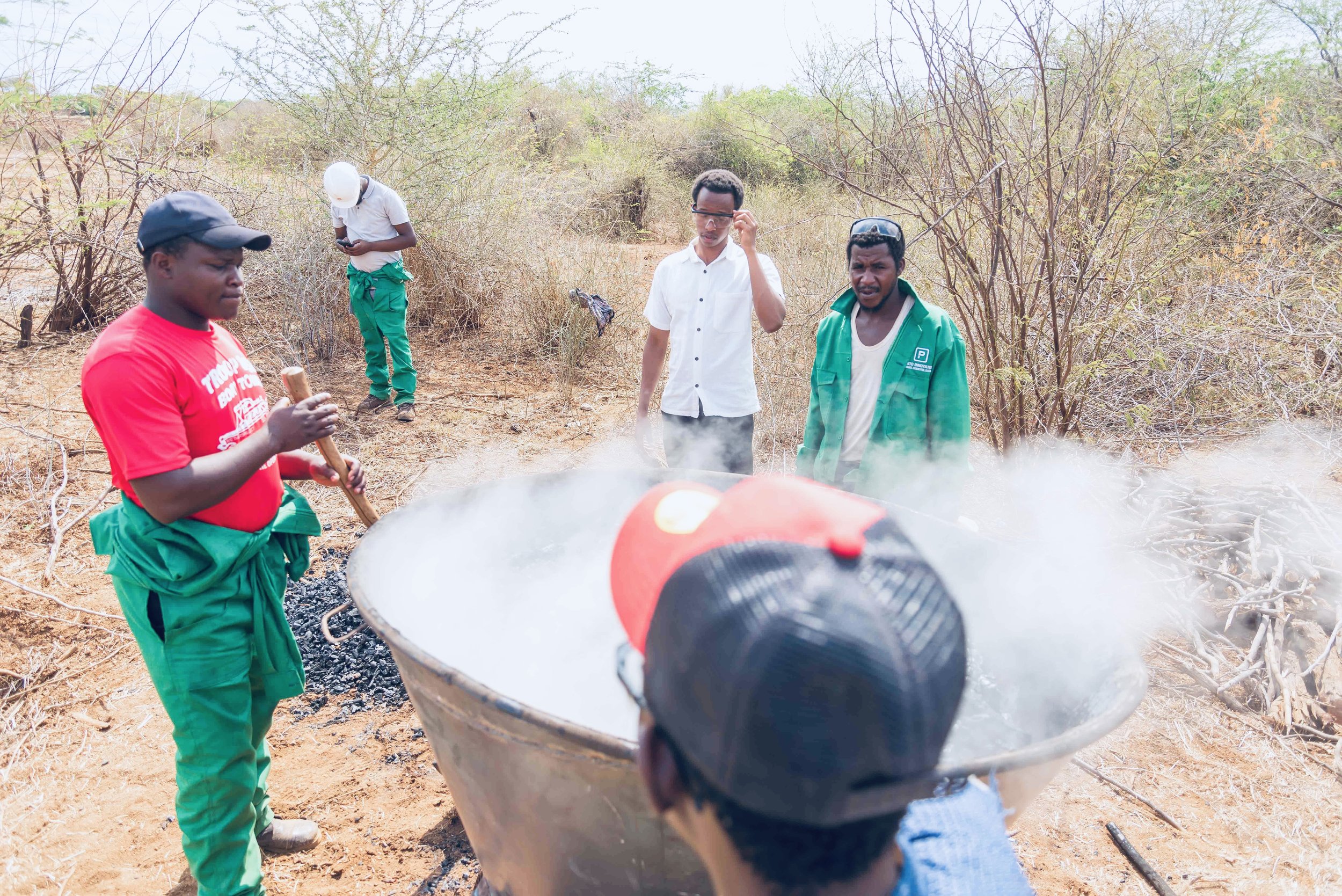
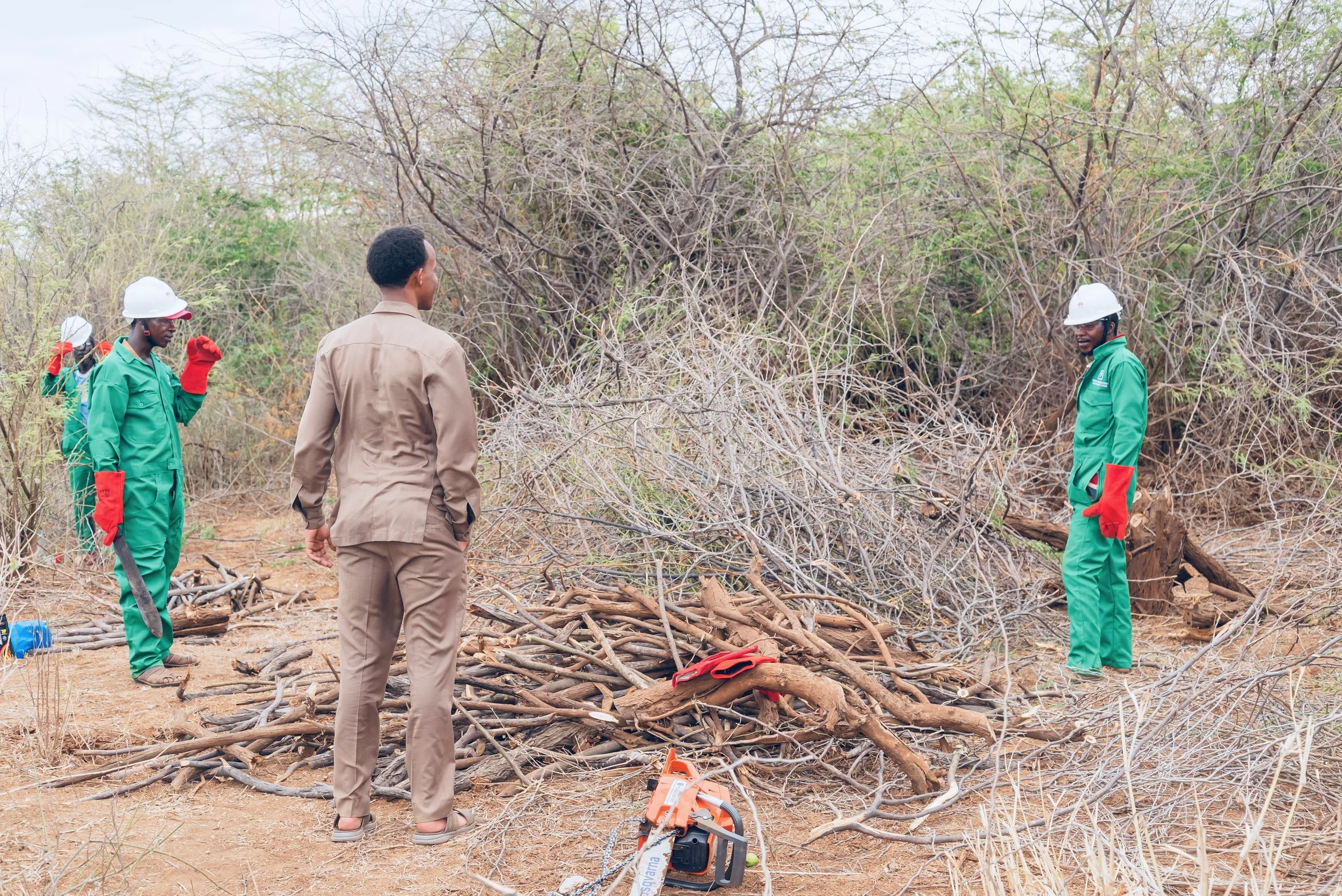
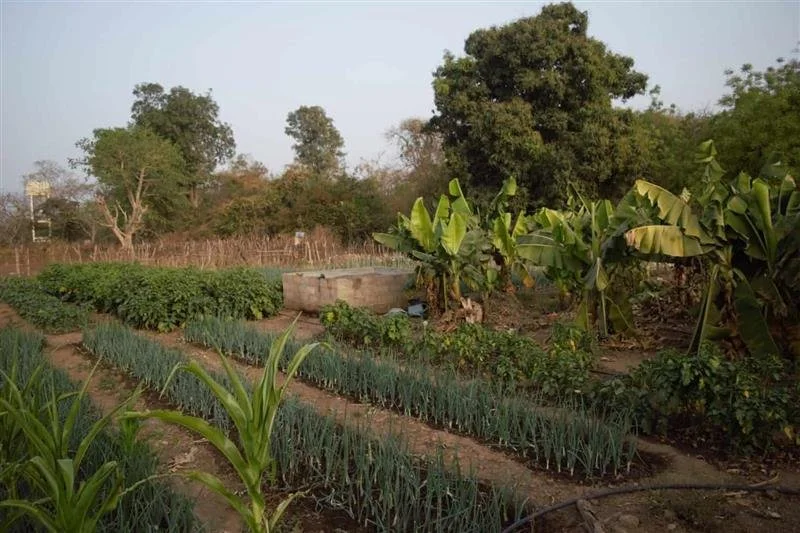
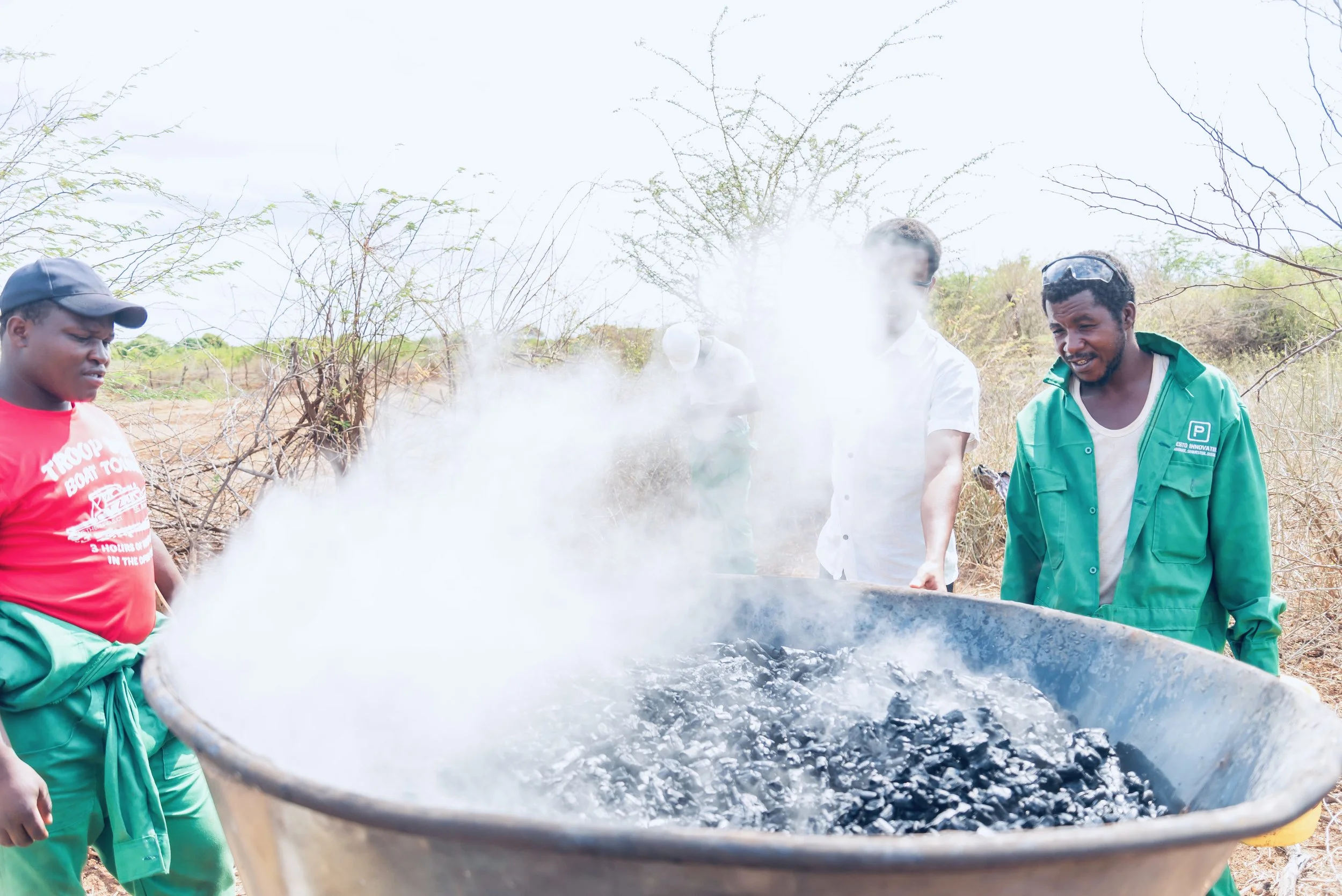
We’ve just completed our flagship project, which is a biochar carbon dioxide removal project using invasive species like Prosophis juliflora as our biomass North Eastern Kenya, Garissa County. 

What we’re trying to do is put farmers at the forefront of the climate solution. As you all know, agriculture is one of the biggest emitters. Around 25% of global greenhouse gas emissions come from the agricultural sector. So our goal really is to empower smallholder farmers. It’s not just about carbon removal and carbon markets, but really trying to empower these farmers, the women, the youth, and put them at the forefront of the climate solution. 

How important is the continent for the future of carbon markets? 

Africa really is a frontier because we’ve got the land, we’ve got the biomass and abundant feedstock. Communities are really ready to participate. And I personally believe that carbon markets could unlock billions in climate adaptation and rural development. 
You are working in a system that is constantly evolving and changing. What are the main challenges in your view?
There are a lot of challenges. Just to mention a few: there is a lot of uncertainty in methodologies, slow verification processes and inconsistent national regulations. Many early-stage project developers struggle with Registration and MRV costs. That’s on the cost side.  

But with implementation on the ground what we have to consider is dealing with the county or the area location you’re doing the project in dealing with the national government, which has a lot of back and forth. Then lastly, dealing with the farmers. One thing we’ve realised is, it’s not easy to deal with farmers. So, it’s not good to come off as an authority trying to work with the farmers, but rather working with them and making the project a community-based project where they run the project, and you’re the one helping them run it.

How is Africa positioned in your view to take advantage of this burgeoning opportunity?
I would say Africa is positioned perfectly if we prioritise transparency and local ownership. We’ve got the natural assets, we’ve got the urgency, but what we need is capacity building and strong policies to really guide carbon-removal project developers and ease the process of making Africa a frontier in the carbon market space, considering that the Global South is very impacted by climate change.

Which countries on the continent are doing the right things to prepare for carbon markets?
Just to mention a few, my country Kenya, Rwanda and South Africa are doing fantastic work and are leading in carbon markets. They’ve built regulations to guide project developers and putting emphasis on communities and benefit sharing. They’re developing Article 6 frameworks, national registries and clear carbon market guidance. In short, they are like a hub for all African countries kind of follow what these regulations are doing and to really guide private project developers. 

What is your vision for this sector? And particularly regarding the role of youth and entrepreneurship. 

My vision for this sector is making carbon credit projects locally led by the communities and having high integrity carbon credits. What’s really important in the sale of carbon credits, rather climate finance, is that these funds go directly to the communities. We don’t need brokers; we don’t need intermediaries to help facilitate this. We need projects that not only have carbon credit sales or are beneficial to the climate, we need projects that have strong social impact and economic impact for the areas where the projects are being done. 

It’s incredibly important to be a young person working in this space, and equally important that we bring even more young people into the carbon markets space. In the broader climate conversation, youth are the generation that will live longest with the consequences of today’s decisions especially those made on international platforms and at major climate conferences. 

That’s why our involvement isn’t optional; it’s essential. Young people need to understand how carbon markets function, how policies are shaped, and how these mechanisms influence climate action on the ground. The more informed and engaged we are, the better positioned we’ll be to advocate for fair, transparent and effective systems. Ultimately, youth participation helps ensure that carbon markets evolve in a way that genuinely supports sustainable development and safeguards our future. 

And when we talk about youth, we also have to talk about entrepreneurship. Many young people aren’t waiting for opportunities they’re creating them. In my case, I’m building a climate-tech venture focused on carbon dioxide removal with smallholder farmers. Right now, we’re producing biochar from invasive species such as the problematic Prosopis juliflora, transforming something environmentally harmful into something valuable for the climate, for people and for the soil. 

This is just one example of how young innovators can turn local challenges into climate solutions. With the right support, youth-led enterprises can play a major role in strengthening carbon markets and driving real, tangible impact on the ground. 

You were a speaker at the inaugural Carbon Markets Africa Summit. What was your experience at the event and what was the engagement like?
It was a fantastic experience and powerful. I got to meet a lot of people where our conversations were honest and practical, not just theory, I connected with digital MRV potential partners and investors that we will be working with to do our projects. I met international organisations who are very keen and interested to be a part of the carbon market space where they see carbon markets as a development tool, not just a financial mechanism.

As you may know, now the world is moving away from donor-funded projects. Rather that they need and what they’re looking for is projects that can sustain themselves.

How important is such an event for the continent?
It’s extremely important truly critical for the continent. The Carbon Markets Africa Summit came at a pivotal moment for the carbon market space. While many people see carbon markets as a new or emerging sector, the reality is that the market has existed for years; what’s changing now is Africa’s level of engagement, ownership, and visibility within it. 

Events like this are essential because they bring policymakers, financiers, technical experts, and project developers into the same room. That’s where real momentum begins when decision-makers and practitioners can speak directly to each other, align their priorities, and identify practical pathways to unlock Africa’s potential. 

For a continent with enormous natural assets, millions of smallholder farmers, and rapidly growing climate-tech innovation, these conversations help remove barriers, build trust, and accelerate investment. The summit creates a platform for African voices to shape the rules, the standards, and the future direction of carbon markets globally. And most importantly, it ensures that the benefits of these markets actually reach African communities on the ground. 
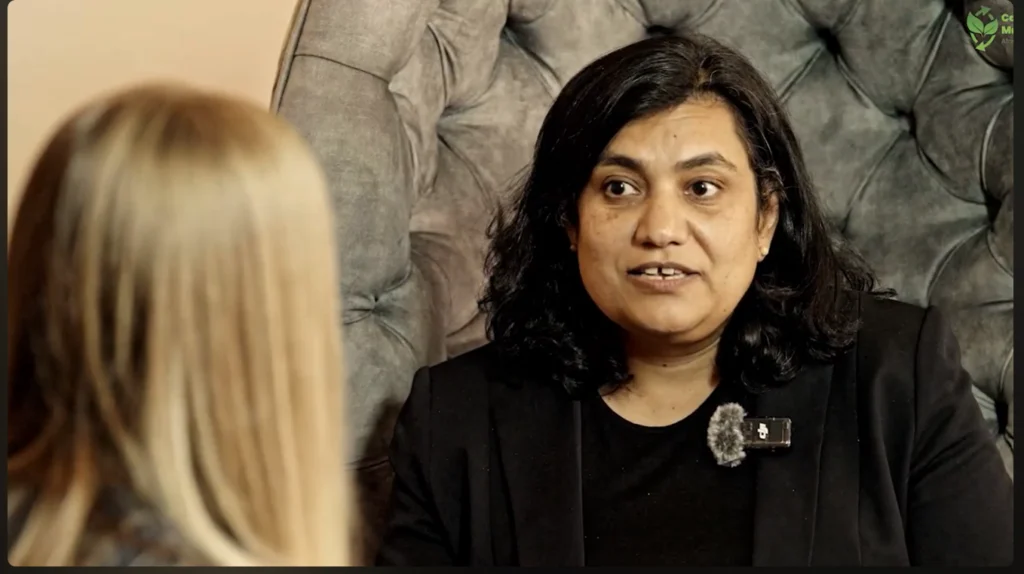
FSD Africa at CMAS 2025: Reshma Shah on Financing a Greener, more inclusive future

At CMAS 2025, conversations around climate finance, inclusion, and long-term resilience took on new urgency — and FSD Africa has been leading the charge in shaping solutions that address all three. In an exclusive onsite interview, Reshma Shah unpacked the organisation’s vision for mobilising climate and green finance that not only accelerates sustainable development, but also ensures that communities across Africa benefit equitably.

Reshma highlighted the importance of innovative financial instruments, partnership-driven approaches, and market-building strategies that can create real impact on the ground. Her insights underscore how platforms like CMAS 2025 are helping align capital with climate ambition — driving a greener, more inclusive future for the continent.

AUDA-NEPAD at CMAS 2025: Ravi Raichoora on Turning Policy into Action for Africa’s Green Transition

At CMAS 2025, the conversation around enabling real, scalable climate action across Africa took centre stage — and AUDA-NEPAD has been at the heart of that mission. In an exclusive onsite interview, Ravi Raichoora shed light on how the organisation is working to close the critical gaps between policy, planning, and investment to unlock a more resilient and sustainable future for the continent.

Ravi’s insights highlight the importance of coordinated implementation, stronger institutional frameworks, and collaborative partnerships that can turn high-level ambitions into on-the-ground impact. His perspective offers a clear view of the systems Africa needs to accelerate its green transition — and how platforms like CMAS 2025 are helping drive that momentum forward.

SGS at CMAS 2025: A Conversation with Francesca Cerchia on Africa’s Carbon Market Future

At CMAS 2025, the momentum around Africa’s climate finance and carbon markets was unmistakable — and few voices captured this energy as clearly as Francesca Cerchia, Global Head of Climate Solution, Industries & Environment at SGS.

In an exclusive onsite interview, Francesca unpacked the rapid evolution of Africa’s carbon markets, the essential role of collaboration, and how innovation is reshaping pathways to sustainability across the continent. With a strong focus on building trust, improving transparency, and boosting investor confidence, she highlighted how CMAS 2025 has become a catalyst for meaningful progress and stronger climate outcomes.

This conversation offers valuable insight into the opportunities ahead for Africa’s green transition — and the systems needed to make them thrive.

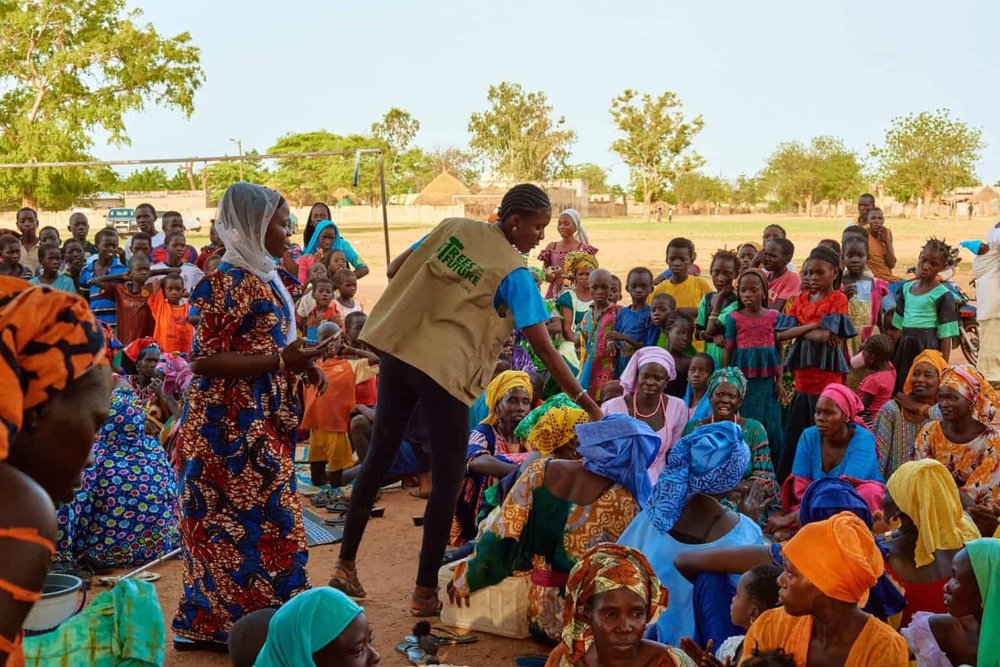
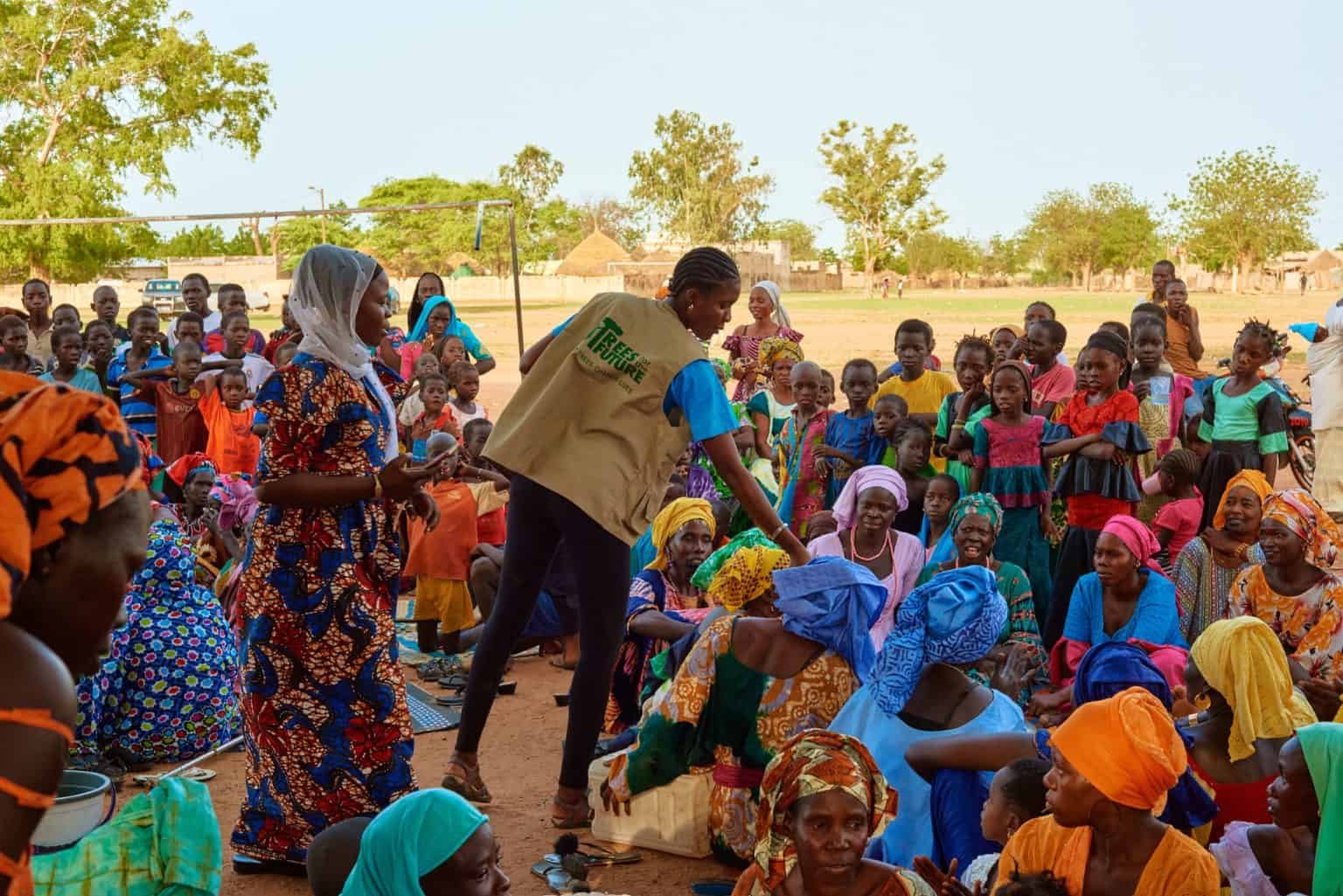
Trees for the Future: “Our mission is to assist farmers to restore land and unlock prosperity.”


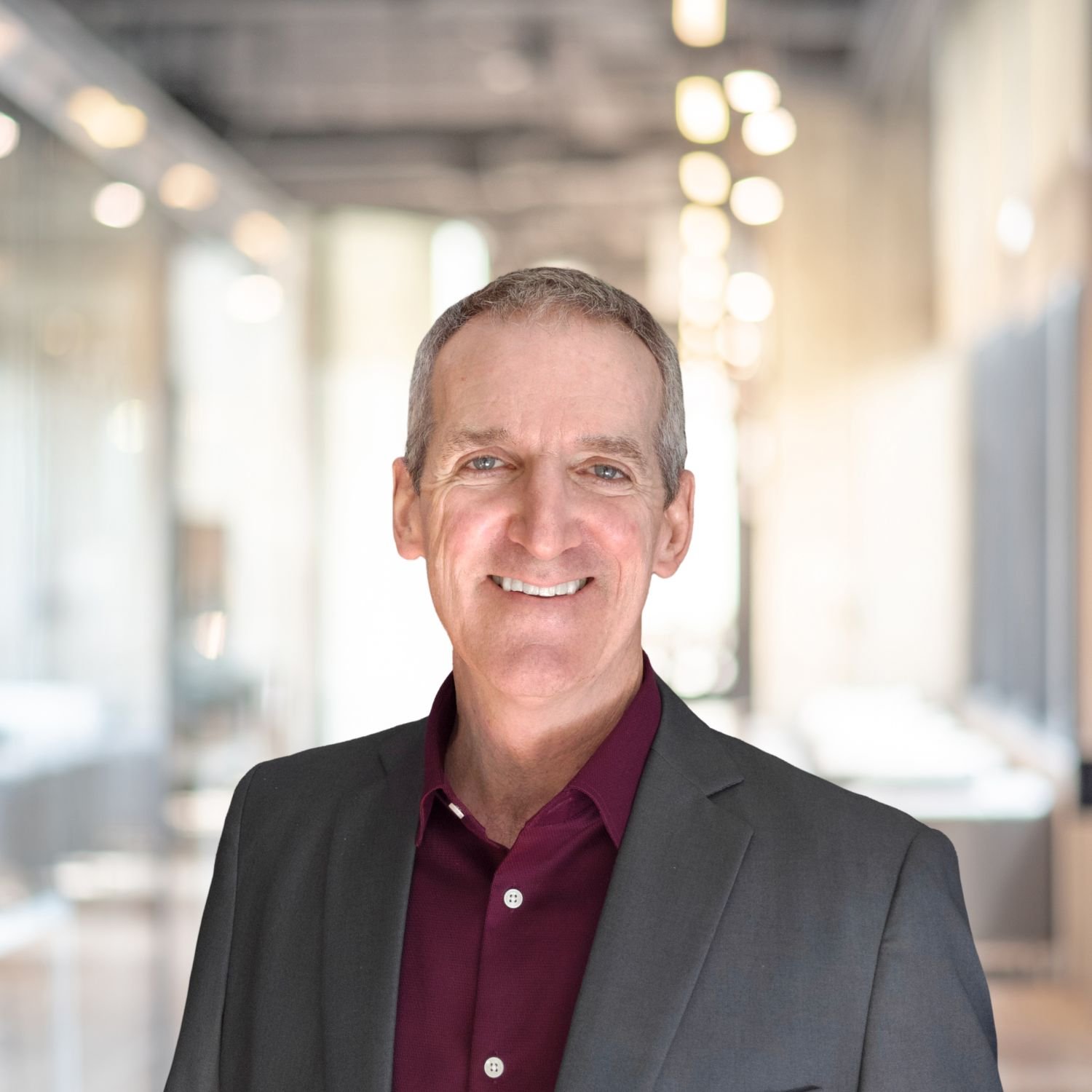
Exclusive interview with Tim McClellan, CEO, Trees for the Future, a gold sponsor at the upcoming Carbon Markets Africa Summit.  

Greetings. I’m Tim McClellan. I’m the CEO of Trees for the Future. I’ve been in this role about 3 1/2 years, and I joined an organization that’s 35 years old. It’s dedicated to the service of smallholder farmers in Africa.

Our purpose is to assist them in building agroforestry systems and we help them to do that on degraded lands that they have typically inherited through many generations.

What does Trees for the Future do?
Our mission at TREES is to assist farmers to restore land and unlock prosperity. In doing so, we expect them to grow into what we call thriving climate changers. They are the people in the world most vulnerable to the changes of climate change.

With our assistance and with their hard work and ambition, they are also the people who can be one of the most powerful agents of change in mitigating climate change.

With our programs, we want them to benefit through increased income and increased food security. We also want their lands to be restored in such a way that there’s increased biodiversity.

And this is an and it’s not a purpose, one of their crops is carbon – because of the way we support them to change their land use, they are great sequesters or mitigators of carbon dioxide in the atmosphere.

And in that way, great partners with all of us to stem the challenges of climate change.

What is the Forest Garden Approach?
About 10 years ago we consolidated around this approach, and we’ve now instituted about 70,000 of what we call forest gardens.

The forest garden first and foremost is a portion of the property that the farmer agrees to take out of annual mono crop production and shift into a multi strata agroforestry system.

And the first initiative is usually to surround the property that they wish to put into production, usually between an acre and a hectare of land and that perimeter that we ask them to make is a live fence. It’s a tightly spaced, densely packed set of trees around the full perimeter of the property.

It’s first and foremost a barrier, particularly to animals, so there’s typically a thorny species on the outside.

There’s a nitrogen fixing species on the inside that’s good for soil amelioration, but also good for Fodder and fuel.

The wall itself initiates what our overall purpose is with the farmer, which is to proliferate new enterprises. Once the barrier is well established, then you can accelerate that process.

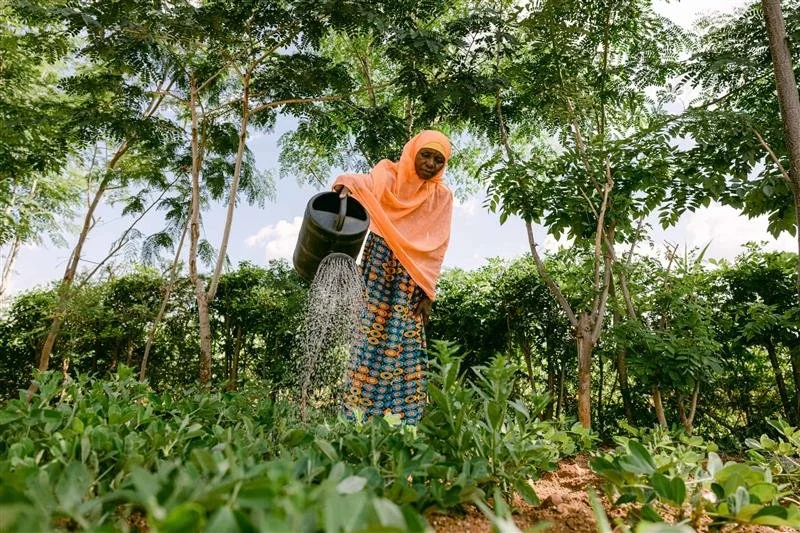
We typically encourage farmers to engage in vegetable gardening, both for their own use and for local markets.

Fruit trees are introduced based on the market dynamics and what’s most suitable for sale, either locally, regionally or hopefully internationally with many of our farmers.

So the idea is to add this diversified approach to their overall resilience strategy and it’s first and foremost before carbon, an approach to make their day-to-day income from the farm, much more reliable and diversified.

Where does carbon fit in?
The carbon comes about because there are so many densely packed trees on the property. It’s actually a great carbon play also.

And so, what the carbon becomes for them is an additional crop and their share of the carbon sales, which we’re able to arrange in international markets on their behalf, becomes a payment every three years. That’s an additional crop for them of very high value.

Obviously for any land use program, we like other projects in this area have to deal with the issue of permanence. Our approach to that is I think foundational in the way we set up the agreement with the farmer.

So, we enter into a long-term agreement with them as part of our free prior informed consent activity.

We first and foremost have to help them understand what all this is about. So how is carbon created? How does that add up on their farm? What types of practices are likely to maximize carbon, and how is that likely to affect them? And how it fits in with other strategies that they have for the land, be that selling fruits, selling timber.

Balancing all of those needs. It’s the holistic approach, I think, that allows the farmer to count on lots of different sources of income and benefit, both for subsistence and also for new income.

That means we’re looking to invite the farmer into a generational impact that is consistent with the long-term nature of a carbon project. We typically are currently operating under standards for 40 years.

It’s our ambition that the farmer and his or her descendants are getting so much out of the farm, both from a carbon perspective, but from a product and enterprise perspective that it’s just a great business for them.

It’s an intensive model, so we work with the farmers in an intensive way for four or five years and in a lighter touch thereafter, all for the purpose of creating a sustained impact.

How do small holder farmers and carbon fit together?
If you think about Africa with 30 million smallholder farmers, many of them are still making difficult decisions, whether to stay on farms that are increasingly difficult to manage in the face of climate change impacts, droughts, floods, pests, or move to the city.

We think that there’s a great opportunity to restore over 600 million acres of degraded land, treat the resilience needs of this many millions of farmers and their families, and stabilize food systems for the duration of what’s going to be a difficult time period in the next several 100 years with respect to climate change.

We need to have better answers for farmers, and I think Africa brings both the opportunity for cost-effective offsetting for other companies and countries that are looking to support climate response and it fits very well with the needs for capital here in in Africa to deploy for the betterment of both land and people.

What is the role for Africa?
I think what we’ve experienced in the last five years or so is the various jurisdictions on the continent trying to assess and develop their regulatory environments so that they’re suitable and aligned with the global compacts that we’ve made through the UN and through the Paris Agreement and subsequent efforts.

These are hard things and frankly the standards are shifting all the time on the jurisdiction so I think what you can see is that the countries that have gone furthest the fastest and been nimble

in getting their legislation in place and getting their policies set up are reaping the benefits already.

And then I think the second piece is Governance around projects. I’ve worked my entire life in global development, and I think my experience so far in the carbon markets is that the requirements for transparency for traditional kind of monitoring and evaluation and learning now MRV in the carbon markets.

It’s simply at the very highest standard, and it will continue to become that much more rigorous.

Projects, regardless of where they are, not just in Africa, it could be in Iowa or Brazil, you know, they just need to meet up with the market requirements and we need to proliferate the number of projects that are a counterfactual to the noise that we’ve seen in the market so far with various gaps in transparency, gaps in integrity. You know the new projects coming online need to be determined to show that this can be done, it can be done well with reliability and and good integrity.

Where is TREES working?
For TREES, our initial carbon investment has been in Kenya. We’ve situated that investment on the Eastern Shore of Lake Victoria.

We have a global ambition to have a landscape scale intervention with farmers who are partnering with us surrounding the lake.

So we want to move as soon as we can into other countries where we’re already operating, that being Uganda and Tanzania with carbon initiatives.

We’re also invested in West Africa and Senegal and Mali. We would also love to move our carbon initiatives there.

And we have ambition to be useful throughout the continent, where that makes sense for countries that are progressing on their strategies and our own skills.

And at some point, we hope that others will take up our techniques and amplify them further.

We don’t feel like we have to be everywhere and do everything. We foresee a day where our methods become replicable and become taken up by others, and we would find great joy in that.

Why is TREES at CMAS 2025?
I am so looking forward to CMAS and having a really strong presence at the conference.

We feel it is a huge opportunity for learning. You have investors, you have other project developers, you have standards agencies, specialists, vendors of all types.

So you have the right ecosystem in the room to really accelerate everybody’s partnership and learning on the continent.

And secondly, I think we have a particular role to play.

We really are a farmer first organization that wandered into carbon because it seemed to make sense because of the way our overall programs were situated.

We really haven’t adjusted our projects in terms of how we do them much to make them into carbon projects.

We’ve had to build the pieces around that. You know our forest garden approach has had to be supplemented with the MRV and all the technical aspects of being in the carbon market.

But Ayub, who’s a member of our team, you know one of our farmer partners from Migori in Kenya, is going to be joining us.

And I think that’s been very important for us to really center some of the discussions around the farmer’s voice, the community’s voice.

If we’re not serving Ayub and his community members, we have no reason to exist, carbon or not.

So we’re keen to bring that perspective that is maybe unique and and additive to the overall plenary activity

What do you want to gain from CMAS 2025?
I’m most excited to be in this room with so many other practitioners – it’s a really important time for the carbon market.

We are seeing some resistance to the market in various sectors. We’re also seeing successes.

So, I think maintaining the momentum, maintain the momentum for the African market as a great place to develop projects and to fund projects, I’d love to be a part of making that be true through our conference and through our readouts to the broader community.

We have a special place in Africa in the global response, and it’s time now to make that emphatically our message collectively.

Final thoughts before CMAS 2025?
I’m Tim from Trees for the Future. I’ll be there with several colleagues. We are so eager to meet all of the many partners, investors, colleagues, practitioners and can’t wait to be with you all.

UNDP partners with Carbon Markets Africa Summit: “Preparing governments to become carbon market ready”

“Carbon markets can unlock billions in finance for the continent”

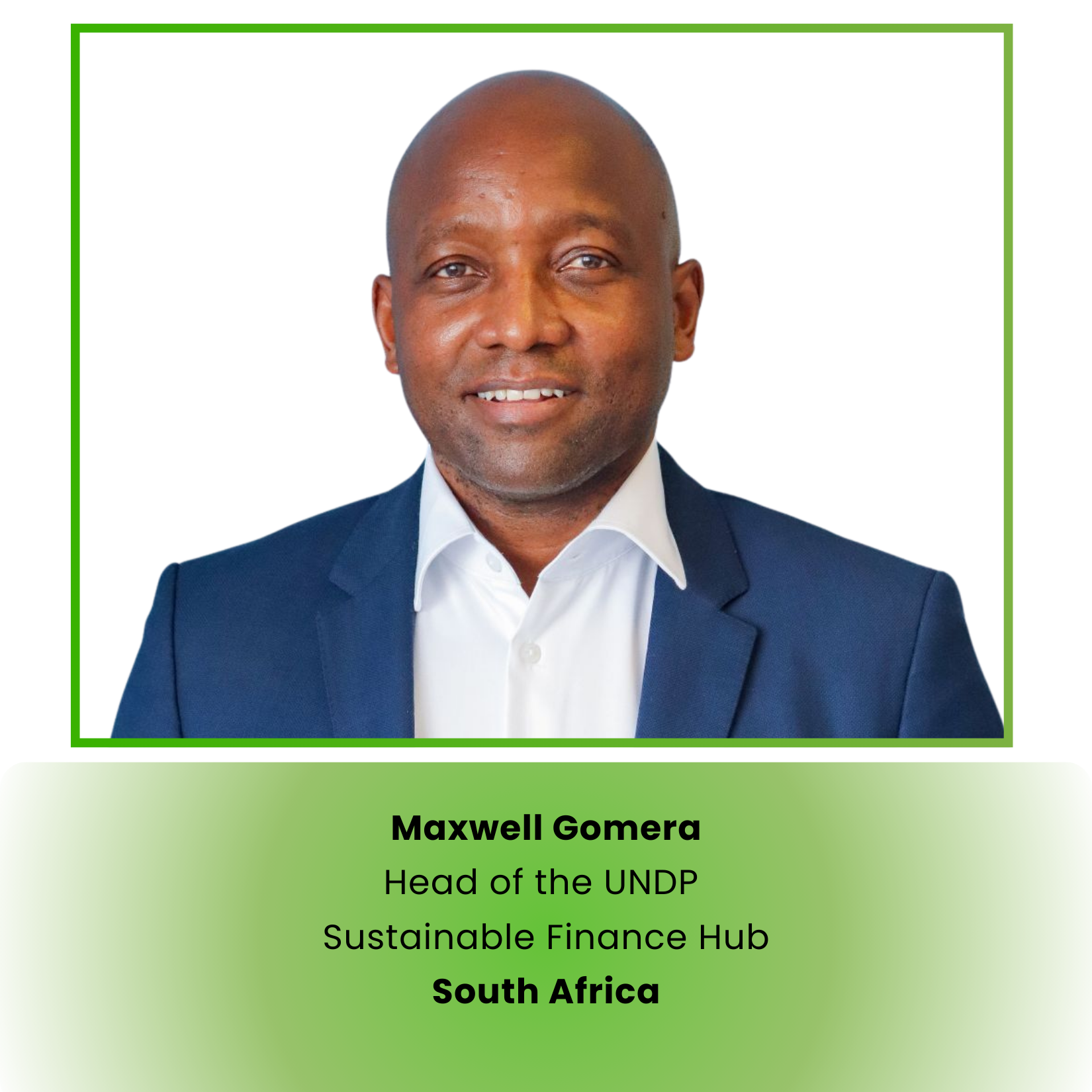
“How is it possible that in 2025, when we are able to send people to the moon, when we are able to create driverless vehicles, we’ve not been able to solve the problem of cooking energy in Africa’s rural areas?” asks Maxwell Gomera, Resident Representative of UNDP South Africa and Director of the Africa Sustainable Finance Hub.

He continues: “This is something that is within our means. And as the United Nations Development Programme (UNDP) Africa Sustainable Finance Hub, we are now working with governments across Africa on how to solve such problems. High-integrity carbon markets can offer Africa a powerful tool to mobilise finance required to advance climate action and ensure fair benefits while driving sustainable and inclusive development.”

Carbon markets unlocking billions
“Africa no longer waits for promises to be kept—we act,” Mr Gomera adds. “Carbon markets can unlock billions in finance, strengthen our institutions, and accelerate both Agenda 2063 and the Paris Agreement’s 1.5°C goal. At UNDP’s Africa Sustainable Finance Hub, we believe in a unified continent ready to harness this opportunity, own its solutions, and lead the global transformation towards resilience and prosperity.”

The UNDP is the official host partner of the upcoming Carbon Markets Africa Summit CMAS), taking place in Johannesburg from 22 to 23 October, gathering the continent’s entire carbon markets value chain, from successful early carbon market movers, climate-finance-ready projects and regulatory bodies to global institutional development organisations and investors.


“We cannot continue talking about Africa’s potential. We must make that potential a reality,” says UNDP’s Maxwell Gomera. “The Carbon Markets Africa Summit matters, because we bring together like-minded people to strengthen the ecosystem around a problem that we all share and provide solutions. Our message is: Tomorrow is worth fighting for.”

The UNDP is making important contributions to the Carbon Markets Africa Summit programme:

CARBON 101
As part of the CARBON 101 pre-summit masterclass on 21 October, UNDP Carbon Market Programme Specialist Bernardin Uzayisaba will facilitate a session on “Why carbon markets matter – and why Africa’s timing is critical.” There is already a lot of interest in this masterclass by delegates who will gain a foundational understanding of global carbon markets—both voluntary and compliance—and their evolving mechanisms: what they are and how they work. In addition, he will explore the global architecture shaped by Article 6 of the Paris Agreement and Africa’s emerging role in a system that’s rapidly evolving.

Day 1: Keynote session
– Maxwell Gomera, Resident Representative of UNDP South Africa and Director of the Africa Sustainable Finance Hub will deliver a keynote address in the CMAS opening session on 22 October.

Sandra Lindström, Head of International Climate Cooperation, Swedish Energy Agency, a UNDP partner, is another keynote speaker in this session, as she explains: “Sweden has been active in carbon markets for over two decades and we believe that Article 6 of the Paris Agreement has an important role to play in enabling increased global climate ambition. Our long-standing partnerships in Africa are being ramped up to include cooperation on emissions trading with strong sustainable development contributions”. 

Turning policy into action
As African countries transition from climate ambition to implementation, regulatory clarity is emerging as the cornerstone of carbon market development. UNDP Carbon Market Programme Specialist Bernardin will moderate the discussion on “Africa’s carbon market frameworks: Turning policy into action” in this session, which will explore how national frameworks are evolving post-COP29, what integration of Article 6 looks like on the ground, and how public-private collaboration can drive effective execution.

NBS & AFOLU discussion
In the sector-focused dialogue on nature-based solutions and AFOLU, Mr Uzayisaba will also join the expert panel discussion to explore carbon methodologies, investment models, policy frameworks, and the role of communities in delivering high-integrity, land-based carbon outcomes.

African companies entering carbon markets
On Day 2, Tomas Sales, Special Advisor for UNDP Africa Sustainable Finance Hub, will co-lead the workshop on “How African companies can enter the carbon market.”
This workshop is designed for African corporates and SMEs looking to understand the business case for engaging in carbon markets.

[Read the full interview with UNDP’s Maxwell Gomera here.]

VUKA Group 
Carbon Markets Africa Summit
is organised by VUKA Group, which has more than 20 years’ experience in serving the business community across Africa. The United Nations Development Programme (UNDP) is the official host organisation.

Other partners and sponsors for this inaugural event include the following:
Strategic institutional partners: AUDA NEPAD and UNEP.
Diamond sponsor: TASC
Gold sponsors: FSD Africa, SGS and Trees for the Future

Event dates and location:

Dates:
21 October: Pre-summit day
22–23 October: Summit
Location: Johannesburg, South Africa

Contact details for Carbon Markets Africa Summit

Project Lead: Emmanuelle Nicholls 
Cell: +27 83 447 8410  
Email: emmanuelle.nicholls@wearevuka.com  

Event website: About — Carbon Markets Africa

“Demonstrating the positive impact of sustainable practices on economic growth”

  Toni Heigl, founder and CEO of    CarbonWise Consulting
Toni Heigl, founder and CEO of CarbonWise Consulting

Exclusive interview with Toni Heigl, founder and CEO of CarbonWise Consulting and a speaker at the upcoming Carbon Markets Africa Summit in Johannesburg. 


Interview Summary: Toni Heigl, founder and CEO of CarbonWise Consulting, discusses the company’s role in advancing carbon markets, particularly in Africa. With around 80% of their projects based on the continent, CarbonWise focuses on integrating economics, ecology, and social inclusion in areas like e-mobility, renewable energy, and nature-based solutions. Heigl highlights Africa’s strong position in the global carbon market due to its young population, rapid growth, and abundant renewable resources. Success stories include emission-free vehicle fleets, solar power, and industrial improvements. 
 

Key challenges include navigating complex regulations and ensuring financial stability for long-term projects. Countries such as Ghana, Zambia, and Uganda are leading in Article 6 frameworks. Heigl will speak at the Carbon Markets Africa Summit, emphasizing urban sustainability and the need for collaboration across stakeholders. He sees the event as a crucial platform for building partnerships that can drive impactful climate solutions and economic growth. 


Q. Thank you for joining us. Please can we start with some background about you and your role at CarbonWise Consulting. 

Thank you for having me. I appreciate the opportunity to share my background. I am the founder and CEO of CarbonWise Consulting. Throughout my career, I have always been driven by a desire to challenge the status quo, especially when confronting urgent issues that demand our attention. The evolution of climate change into a recognized climate crisis has profoundly resonated with me, both in scientific discussions and public consciousness. 


As an engineer and project manager, I feel a strong sense of responsibility—not only in my professional role but also as a global citizen—to contribute positively to solutions in this critical area. This passion for making a difference inspired me to establish several start-up ventures, including CarbonWise Consulting. Here, my goal is to facilitate meaningful change in carbon markets and drive impactful solutions that address climate challenges. 


Q. Tell us about CarbonWise Consulting’s services and the industries that you work in. 

At CarbonWise Consulting, we focus primarily on Africa, where we operate as both consultants and investors. Our vision is to integrate economics, ecology, and social inclusion in our projects. We are pioneers in the realm of regulated international carbon markets, specifically Article 6, and we are proud to have one of the world’s first validated and authorised mitigation activities. This positions us at the forefront of shaping this evolving sector. 

Our unique expertise and practical experience allow us to collaborate effectively with partners and clients to develop and implement projects that yield sustainable benefits for both society and the environment. We concentrate on key areas such as e-mobility, renewable energy, and nature-based solutions, particularly in rapidly growing markets within developing and emerging countries. 


Q. What percentage of your work is in Africa? 

About 80% of our project work happens in Africa. South Asia and Latin America play a minor role for us. 


Q. How important is the continent for the future of carbon markets? 

Africa plays a crucial role in the future of carbon markets. It is home to some of the fastest-growing economies, driven by a young and dynamic population. This demographic advantage, coupled with the emerging recognition of future markets on the continent, presents significant economic potential. Additionally, Africa is rich in renewable energy resources, making it an ideal epicentre for carbon markets in the coming decades. The combination of these factors positions Africa as a key player in the global transition towards sustainable practices. 


Q. What are some of your favourite success stories in Africa that you can share? 

Africa has produced remarkable entrepreneurial achievements, particularly in sectors such as fintech, media, telecommunications, and the gig economy. The continent is often described as leapfrogging technologically, showcasing innovation that surpasses many parts of the world. We are proud to have contributed to several of these success stories by integrating carbon revenues into emission-free vehicle fleets, both on land and on water, as well as through solar power installations and improvements in industrial processes. These initiatives not only highlight Africa’s potential but also demonstrate the positive impact of sustainable practices on economic growth. 


Q. You are working in a system that is constantly evolving and changing. What are the main challenges in your view? 

Our mission is to build bridges and foster collaboration for climate action, acknowledging that global challenges require global solutions. We operate within a highly specialized, formalized, and regulated environment, which demands both perseverance and resilience. One of the primary challenges we face is ensuring financial stability for every programme that we set up as we navigate the often lengthy yet rewarding process of implementing carbon mitigation projects. This requires us to remain adaptable and committed, as we work to drive meaningful change in a constantly evolving landscape. 


Q. How is Africa positioned in your view to take advantage of this burgeoning opportunity? And which countries on the continent are doing the right things to prepare for carbon markets? 

Africa is strategically positioned to seize the emerging opportunities in carbon markets. Countries such as Ghana, Zambia, and Uganda have made notable advancements in developing Article 6 frameworks and attracting impactful projects, serving as pioneers in this field. While there is potential for further acceleration, the continent has established a strong and influential presence in the carbon market arena. With ongoing commitment and collaborative efforts, Africa can enhance its role and drive significant progress in sustainable development and climate action. 


Q. You are a speaker at the inaugural Carbon Markets Africa Summit. Why the decision to join this climate change journey with VUKA Group? 

I chose to join as a speaker at the inaugural Carbon Markets Africa Summit because complex carbon programs require collaboration among multiple stakeholders and a foundation of trust among all partners. Personal interactions are essential for building these relationships. I appreciate the approach and structure of the CMAS, viewing it as a crucial platform for strengthening the carbon market community. I wish everyone involved a successful event and look forward to the growth that will follow. 


Q. You are part of a sector-focused dialogue in the programme focusing on “Urban Carbon & Circular Economy.” What will be your message at the event? 

My message at the event will focus on the rapid urbanization occurring across nearly all African countries. We have been collaborating with our partners on various aspects of urban development, including city mobility, carbon-related issues in the construction sector, energy management, and recycling and waste management. These elements are intricately connected within the broader framework of city management. During the dialogue, I aim to explore how we can effectively manage these interrelated challenges, ensure they are well integrated, and identify the key priorities that need to be established for sustainable urban development. 


Q. What are your expectations of CMAS? 

I expect CMAS to facilitate the building of new connections and the reinforcement of existing relationships within the industry. By consolidating and aligning our alliances, we can strengthen the regulated carbon markets, as addressing the challenges in this sector requires a collaborative effort from all stakeholders involved. 


Q. How important is such an event for the continent? 

Regional events have certainly played a role in addressing local issues, but their impact can often be limited. In contrast, global events tend to focus on high-level discussions that may hardly or at least very slowly translate into practical solutions. Given Africa’s crucial role in addressing the climate crisis, this conference is particularly significant. I look forward to leveraging this platform to forge new project alliances, partnerships, and financial agreements that can drive meaningful change across the continent. 

SunCulture interview: “We’re not just creating carbon credits—we’re creating climate-smart livelihoods” 

Exclusive interview with Daniel Okoth, Head of Carbon, SunCulture, Kenya and a speaker at the upcoming Carbon Markets Africa Summit in Johannesburg.

 Daniel Okoth, Head of Carbon at SunCulture
Daniel Okoth, Head of Carbon at SunCulture

Interview Summary: Daniel Okoth, Head of Carbon at SunCulture, discusses how the company leverages carbon finance to scale climate-smart agriculture in Africa. SunCulture replaces diesel and manual pumps with solar-powered irrigation systems, helping farmers increase income while generating high-quality carbon credits. The company partners with insurers, financiers, and global organizations to expand services and derisk investment. 

Okoth emphasizes Africa’s central role in the future of carbon markets, highlighting the continent’s potential to design equitable and innovative systems that benefit local communities. He cites success stories like farmers doubling their income through solar irrigation and SunCulture pioneering irrigation-based carbon credits. 

Key challenges include market volatility, unclear regulations, and cash flow pressures, but Okoth is optimistic about Africa’s positioning with strong leadership from countries like Kenya, Ghana, and Rwanda. Speaking at the Carbon Markets Africa Summit, he plans to call for faster policy frameworks and farmer-centered market design, stressing that Africa’s carbon opportunity is immense but time-sensitive. 

Q. Thank you for joining us. Please can we start with some background about you and your role at SunCulture. 

I’m Daniel Okoth, and I lead the carbon program at SunCulture. I’ve been in this role for close to three years now, and my focus has been using carbon finance to power SunCulture’s growth and impact across Africa. 

My role spans from delivering premium carbon credits from our solar water pumps, to shaping our go-to-market strategy in both the Voluntary Carbon Market and emerging compliance markets, including under Article 6 of the Paris Agreement. 

Before joining SunCulture, I worked on carbon due diligence systems, contributed to methodology development using Earth observation tools, and advised on structuring Corresponding Adjustment transactions between host and buyer countries. This background helps me bring both a technical and market-driven perspective to our work. 

Q. Tell us more about SunCulture and the projects you are involved in. Who are your partners?  

SunCulture is a climate-smart agriculture company focused on unlocking the potential of smallholder farmers across Africa through solar-powered irrigation and productive-use appliances. We work at the intersection of clean energy, agriculture, and climate finance — and carbon is a key enabler in all of this. 

Our core project involves replacing diesel and manual water pumps with highly efficient solar water pumps that allow farmers to grow more, earn more, and do so in a way that is climate-resilient. These systems generate high-quality, measurable carbon reductions which we bring to market as carbon credits. 

With farmer incomes both increased and more secure, we want to continue to bring more products and services to our customers that increase their incomes or reduce their risks. For example we have partnered with Turaco to offer microhealth insurance, and credit-life insurance. And we are now working with Humanity Insured and IBISA to bring parametric weather insurance to smallholder farmers. And in addition to financing our farmers to purchase our solar water pumps, and help them build their financial profile, we have now also launched an input financing product to allow them to further invest in their farms. 

We’re fortunate to have some incredible partners. Organizations like British International Investment (BII), the Shell Foundation have been instrumental in providing early stage carbon financing, and we have used platforms like Patch (amongst others) to market and sell our credits. Scaling our business has also been supported by equity financing from many organisation including equity investment from Acumen, Water Equity, and the Private Infrastructure Development Group, as well has foundations related to high net worth individuals and also Results Based Financing support from GreenMax Capital, CLASP, FSD Africa, the Beyond the Grid Foundation and the Workd Bank. Together, we’re building market ecosystems that derisk investment and ensure long-term sustainability for farmers and financiers alike. 

Q. What percentage of your work is in Africa? 

All the work (100%) of SunCulture is targeting emerging markets of Africa at the moment, where the need and opportunity for impact are immense. Everything we do—from product development to last-mile delivery to our carbon strategy—is centered on the needs of African smallholder farmers. 

That said, our mission is to develop and commercialize life-changing technology for the world’s 570 million smallholder farming households. So while Africa is our starting point, we’ve set our sights globally. The challenges faced by smallholder farmers are shared across continents, and our long-term vision is to scale our solutions wherever they’re needed most. 

Q. How important is the continent for the future of carbon markets? 

Africa is relatively early in development and  endowed with a variety of prime opportunities for growth, development and most importantly human capital building all which set precedence room for changing stereotypes that empower sustainable market practices. 

Africa is absolutely critical to the future of carbon markets. The continent is still early in its carbon journey, but it’s rich with opportunity—from its natural ecosystems to its human capital. 

What’s exciting is that Africa has the chance to build a carbon market that is equitable, innovative, and truly impactful—not just replicating systems from elsewhere, but designing solutions that work for our context. This includes supporting livelihoods, building local capacity, and ensuring that benefits from carbon flows are felt directly by communities. 

Q. What are some of your favourite success stories in Africa that you can share? 

One of my favorite success stories is watching how a single solar water pump can transform a household. I remember visiting a farmer in Machakos County, Kenya, named Margaret, who went from relying on seasonal rain and diesel generators to using a solar pump. Within one season, she had doubled her income—and was selling produce year-round. 

On the carbon side, we’ve also had major wins—we delivered some of the world’s first solar irrigation-based carbon credits, and did it in a way that puts farmers at the center. That’s the kind of success we want to replicate across the continent. 

Q. You are working in a system that is constantly evolving and changing. What are the main challenges in your view? 

One of the biggest challenges is keeping pace with a market that’s still taking shape. While there’s long-term promise in carbon, short-term volatility makes it tough to plan—especially when timelines for methodologies, approvals, or regulation are unclear. 

This uncertainty affects investment decisions and stretches our operational capacity. Managing cash flow becomes a balancing act, especially when we must deliver high-quality credits at scale while staying true to our mission. 

Q. How is Africa positioned in your view to take advantage of this burgeoning opportunity? 

Africa is incredibly well positioned—but only if we build the right systems to support long-term investment. 

We’re already seeing strong signs: innovative financing mechanisms, catalytic partnerships, and the emergence of carbon-focused financial institutions like Melanin Kapital. At SunCulture, we’re working with partners like BII and Shell Foundation to build buffered carbon ecosystems—systems that are structured to handle market shocks while delivering consistent value to farmers and investors alike. 

Projects like the Kenya BioHub—backed by EDF, Invest International, and Mauritius Bank—are further proof that the continent is serious about decarbonization. The momentum is here; we just need to align it with policy, regulation, and local capacity. 

Q. Which countries on the continent are doing the right things to prepare for carbon markets? 

We’re seeing strong leadership from countries like Ghana, Kenya, Uganda, Tanzania, Ethiopia, Rwanda, Zimbabwe, Liberia, and Côte d’Ivoire. 

What stands out is how these countries are localizing global frameworks like the Paris Agreement. They’re developing national carbon registries, creating clarity around Corresponding Adjustments, and actively engaging the private sector. These are the kinds of signals investors are looking for—and they’re what will unlock scale. 

Q. You are a speaker at the inaugural Carbon Markets Africa Summit. Why the decision to join this climate change journey with VUKA Group? 

VUKA Group is convening the right stakeholders—from policy makers and financiers to entrepreneurs and project developers. That’s exactly the kind of platform we need to accelerate Africa’s role in carbon markets. 

SunCulture’s mission is deeply aligned with this journey. We’re not just creating carbon credits—we’re creating climate-smart livelihoods. Joining this summit allows us to share what’s working, learn from others, and push the conversation toward solutions that are rooted in Africa. 

Q. What will be your message at the event? 

Our message is simple: Africa’s carbon potential is real, but time is not on our side. 

We need to fast-track enabling frameworks—policies, verification standards, registries—so that the pace of climate finance matches the urgency on the ground. And we must design markets that benefit the people delivering the impact—especially smallholder farmers and rural communities. 

Q. What are your expectations of CMAS? 

I’m looking forward to connecting with others who are at the forefront of climate innovation—from carbon developers and financiers to regulators and tech platforms. We’ll also be sharing what we’ve built at SunCulture—a robust, proven ecosystem for premium carbon delivery. I’m excited for the conversations, the partnerships, and the learning that will come from this summit. 

Q. How important is such an event for the continent? 

It’s incredibly important. Bringing together financiers, regulators, and project developers in one space creates the kind of cross-sector dialogue we need to unlock solutions that are both ambitious and realistic. 

This isn’t just a talking shop—it’s a space to align, benchmark, and collaborate on ideas that can transform Africa’s carbon future. 

Q. Anything you would like to add? 

We’ll be sharing more at the Carbon Markets Africa Summit about the SunCulture carbon ecosystem—how we’ve built it, what we’ve learned, and where we’re going. If you’re serious about delivering premium carbon from Africa, and doing it in a way that creates real impact for farmers, we invite you to connect with us. This is just the beginning. 


SGS INTERVIEW: “We need to make sure that Africa is at the centre of the voluntary carbon markets development”

Exclusive interview with Francesca Cerchia, Industries & Environment, Global Head Climate Solutions, SGS, (Société Générale de Surveillance SA), a gold sponsor at the upcoming Carbon Markets Africa Summit in Johannesburg.

 Francesca Cerchia, Global Head of Climate Solutions at SGS
Francesca Cerchia, Global Head of Climate Solutions at SGS

Interview Summary: Francesca Cerchia, Global Head of Climate Solutions at SGS, explains that the company supports industries worldwide through its Impact Now sustainability initiative, focused on climate, nature, circularity, and ESG assurance.

She stresses that Africa must be at the centre of voluntary carbon markets, given its potential for carbon mitigation, innovation, and job creation. A standout example is SGS’s work verifying a biochar project in Uganda, which delivers climate, soil, and community benefits. She highlights challenges such as credibility, transparency, and market volatility globally, and in Africa specifically, limited access to finance, weaker institutions, and technical gaps.

Countries like South Africa, Ghana, Kenya, Tanzania, and Zimbabwe are making strides, with Ghana leading on international carbon agreements. At the Carbon Markets Africa Summit, SGS will focus on the importance of trust and high standards to ensure Africa’s role in shaping the future of carbon markets.


Thank you for joining us. Please can we start with some background about you and your role at SGS.

Hello everybody, I’m Francesca and I am the Global Head for Climate Solutions with SGS. SGS is a Swiss global company, and I’ve been with the company for 13 years in November, always covering climate, environment, health and safety.

Tell us about SGS’s services and the industries that you work in.

As I mentioned, SGS is a Swiss company. We are the largest testing inspection and certification company in the world. We operate a network of roughly 2,500 labs and business facilities across 115 countries. And today we have 99,500 full-time employees.

We provide services across almost every industry, from agriculture to mining, industrial manufacturing, pharma, consumer product, you name it. We help organisations achieve the highest standards of quality, compliance and sustainability.

Talking about sustainability, Impact Now for Sustainability is an initiative that we launched in November 2024. It’s a cross-business and global initiative that brings together and simplifies all of our services around four strategic pillars. The climate pillar, the nature pillar, the circularity pillar and the ESG assurance pillar. The goal is to help companies accelerate transition towards more sustainable, competitive and also internationally aligned business models. We really want to address the triple planetary crisis. So it’s climate change, biodiversity loss and pollution.

What percentage of your work is in Africa?

While it’s always tempting to give percentages when we answer these type of questions, I don’t necessarily believe that these metrics are realistic, and sometimes they can be misleading, especially for a company like ours. We operate, as I mentioned, globally, and we work in regions that are also at different stages of development. If I give you a percentage, that may suggest that there’s disparity or imbalance. Hence, it rarely reflects the truth of the engagement, but also the infrastructure or the impact that we have.

So let’s emphasise the substance of our work rather than the numbers. And when we look at Africa, we can’t think of Africa as a monolith. It’s a continent and there’s extraordinary diversity and opportunities but also lot of complexity. And our approach there, instead of giving you a number, is that of listening, learning but also adapting to the local context.

How important is the continent for the future of carbon markets?

I think we all know, and there’s consensus there, that Africa is definitely poised to play a critical role in the future of carbon markets. And this is because it offers a high potential for mitigation, but also opportunities for climate action and innovation in particular sectors. So it’s an opportunity to unlock climate finance that’s desperately needed, to create jobs and ensure that all of this happens in an equitable way.

Just to mention a few initiatives that resonate with Africa. We have the African Union Action Plan on the carbon markets, and this shows that there is policy momentum. That means that Africa wants to start leading rather than just be a player in the architecture of the voluntary carbon markets.

What are some of your favourite success stories in Africa that you can share?

I have one particular favourite story here and it is a standout success story. It’s our work in the Navikale biochar facility in Uganda where we have provided and we continue to provide independent verification to ensure compliance with an approved biochar methodology. We also conduct rolling audits on a periodical basis to ensure that there’s integrity and transparency. And I think this work has shown us really firsthand how biochar can be a game changer in Africa. We always hear about cookstoves, but biochar really is also one of the future sectors of incredible growth for Africa. It combines carbon removals, soil restoration but also a lot of job creation. And let’s not forget these low tech or new tech solutions in the agricultural space. So it’s a clear example for us on how integrity on carbon projects can deliver real impact on the ground.

You are working in a system that is constantly evolving and changing. What are the main challenges in your view?

Yes, you’re absolutely right. Carbon markets are evolving constantly and sometimes it’s really difficult to keep up with the changes. In terms of challenges, I’d like to talk about the global challenges first of all. So carbon markets face global challenges no matter what country or what continent. The biggest global challenge is certainly related to integrity and credibility. Several initiatives are addressing this, so I think we’re on the right path. And just to mention one, there’s ICVCM.

Then we’ve got issues with transparency, potentially, because we have a lot of fragmented standards, a lot of fragmented programmes and registries, and in some instances, even limited accredited third party verification. And the third one, again, as a global challenge is market volatility, and fluctuating demand and inconsistent prices are still there. So we need to find or strike a balance there as well, so that project developers and investors know exactly what is their return.

I think that to this then we can add some specific African challenges. For me, the main ones are, first of all, the limited access to upfront capital for project development. The second one is perhaps a weaker institutional framework and then potentially also insufficient technical expertise.

Which countries on the continent are doing the right things to prepare for carbon markets?

I think there are quite a few countries moving. I would like to start with the Carbon Markets Africa Summit host country; so let’s talk about South Africa first. It has definitely been the first country taking the first step in the right direction with implementation of the Carbon Tax Act. However, and there’s always a but, it’s delayed, and I think we all need to ask ourselves, is it actually driving real impact? Now, I’m not going to provide an answer to this. Let’s have a look at what happens in phase two and see whether or not it will actually be capable of driving a true decarbonisation.

Then I think we can mention Kenya, Ghana, Tanzania and Zimbabwe. Ghana in particular, as it is the most advanced today on Article 6.2 of the Paris Agreement, having already signed some bilateral agreements.

SGS is a gold sponsor of the inaugural Carbon Markets Africa Summit. You are sponsoring a session on “High integrity in practice – Standards, verification & market trust.” What will be SGS’s message at CMAS, and how important is such an event for the continent?

Yes, we are a gold sponsor and the decision on which events to sponsor throughout the years and throughout our businesses, goes through a process that we take very seriously. We’ve decided to sponsor because we believe that it is not just another conference, but it’s rather a platform. And it’s a platform where we see a lot of stakeholders come together, but important stakeholders. We have government representatives, investors and project developers, and it’s the right place to get the conversation going and to exchange experiences but also challenges.

I also think it is uniquely positioned because it’s got a perfect timing. It’s just before COP30 and the G20, and it’s got an ambition. So the ambition is to be a catalyst for change. I think Africa needs change because there are opportunities and these need to be taken.

Anything you would like to add?

Maybe just one closing thought. First of all, I will see you there. And the second one is: Let’s get talking because Africa carbon markets will not thrive in silence and we need all the stakeholders to work together to make sure that Africa will be at the centre of the voluntary carbon markets development. Thank you.

Interview – SGS – CMAS2025

EMOBILITY INTERVIEW: “African cities have enormous potential for reducing carbon emissions”

Exclusive interview with Stefan Simon, CEO of SURUS Automotive in Tunisia. Stefan is a speaker at the inaugural Carbon Markets Africa Summit in Johannesburg in October.

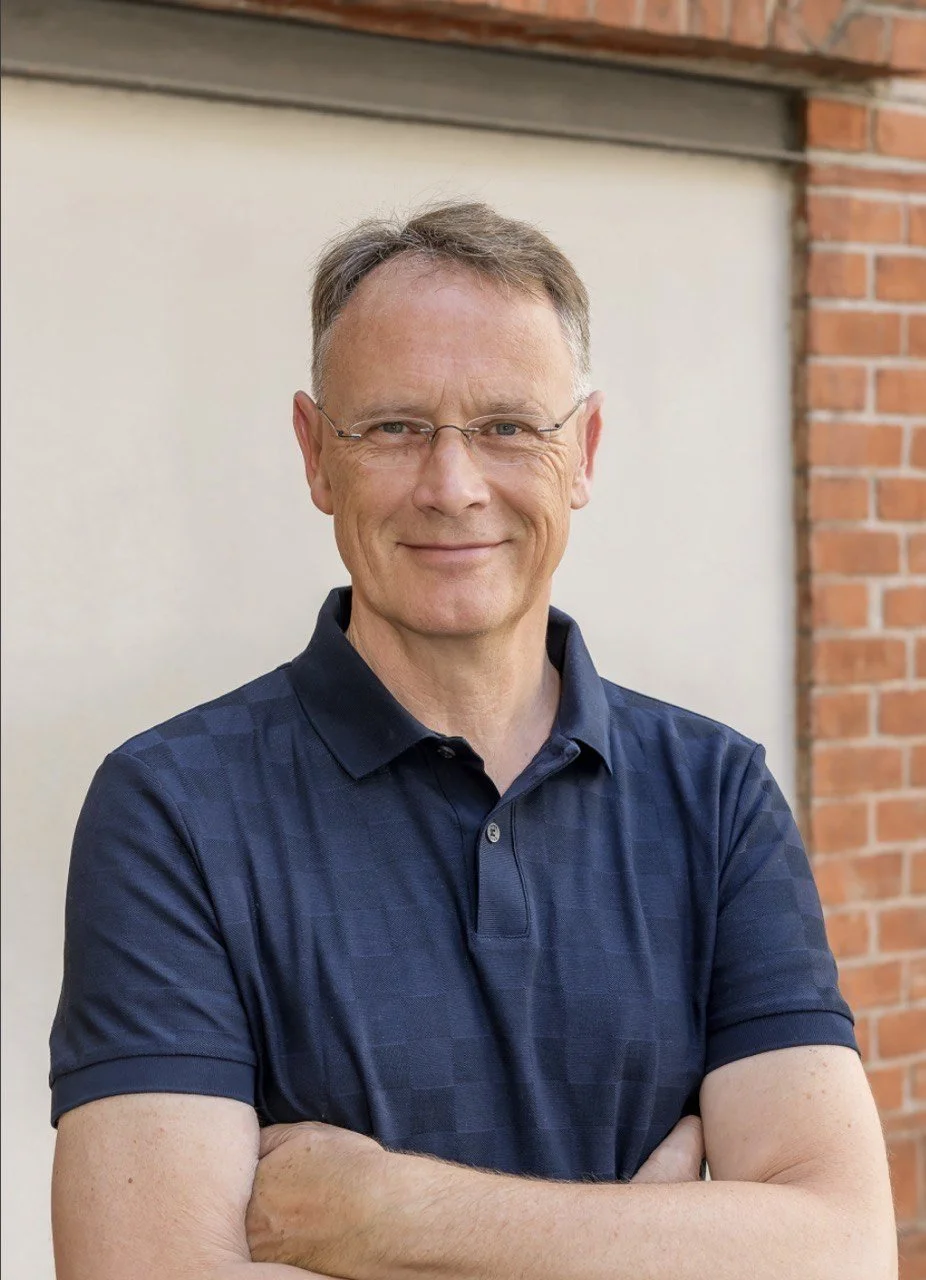
  Stefan Simon, CEO of SURUS Automotive in Tunisia
Stefan Simon, CEO of SURUS Automotive in Tunisia

Interview Summary: In this interview, Stefan Simon, CEO of SURUS Automotive in Tunisia, explains how his company is driving Africa’s transition to electric mobility. SURUS manufactures affordable electric motorcycles and vehicle platforms designed specifically for African conditions, with factories in Tunisia and Senegal supporting local production, skills transfer, and job creation. Simon stresses that Africa, with its rapidly growing population and transport needs, has enormous potential to cut carbon emissions and benefit from carbon markets. While regulatory frameworks under Article 6 are still limited, he sees carbon credits as a way to lower EV costs and accelerate adoption.

He highlights growing enthusiasm across the continent, with governments and customers increasingly recognizing the economic and environmental benefits of EVs. However, he notes that widespread education and stronger institutions are needed to fully unlock Africa’s carbon market potential. At the upcoming Carbon Markets Africa Summit, Simon plans to emphasize Africa’s abundance of solar energy and the ease of monitoring carbon credits in transport via digital tools. For him, the real value of such events lies in building trust, fostering dialogue, and unlocking investment for Africa’s sustainable future.

Q. Thank you for joining us. Please can we start with some background about you and your role at SURUS Automotive.

Thank you very much for the opportunity to present our company. I have a technical background but over a working period of more than 30 years, I learned my lessons also in legal and commercial experiences. The company that I am representing is SURUS Automotive SARL, a manufacturer of electric vehicles, based in Tunisia. African cities have enormous potential for reducing carbon emissions. That is the reason why our company is focusing on the development of the electric mobility sector in Africa.

Q. Tell us more about the projects you are involved in.

At the conference, I would like to share my vision on how scalable transport solutions can contribute to city climate actions. SURUS core value proposition revolves around offering affordable electric vehicles for local production. We are now building factories in Tunisia and Senegal to manufacture electric motorcycles under white label branding for building up national manufacturing identity.

Q. What percentage of your work is in Africa?

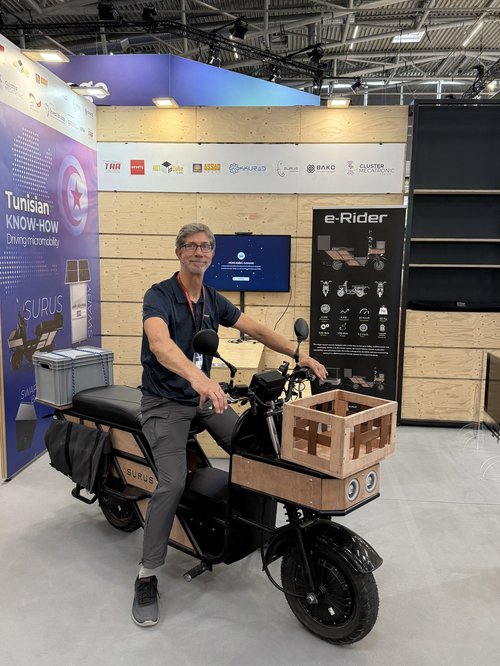
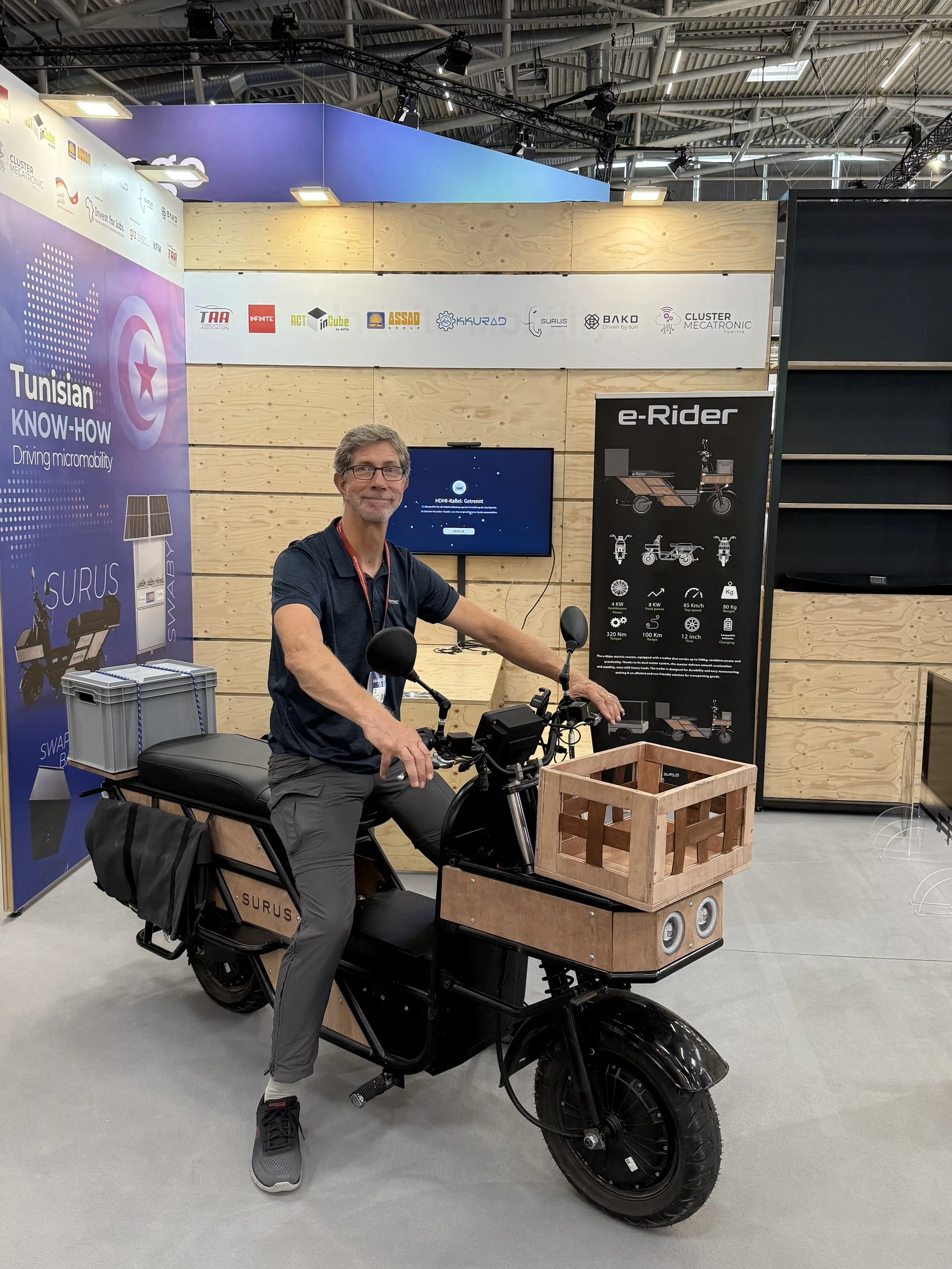
Our company slogan is: Designed in Africa for made in Africa. Our motorbike, for example, is a strong and reliable workhorse towing a trailer and designed for the roads of Africa. From Tunisia we are aiming for local content in other African countries: technology transfer, capacity building, and job creation. So, more or less than 100 % of our work force is focused on the continent development.

  SURUS Automotive’s e-Rider, an electric motorcycle.
SURUS Automotive’s e-Rider, an electric motorcycle.

Q. How important is the continent for the future of carbon markets?

Not everyone has yet grasped the fact that Africa will be the fastest-growing market of this century. I’m likely to live to see a time when the population of Africa will be as large as the combined populations of India and China. What impact will this have on the Earth’s carbon dioxide balance? Africa needs a lot of vehicles. Indirectly, the possibility of carbon credit sales can help to reduce the production costs of electric vehicles for Africa, which would, in turn, lead to a wider adoption of electric mobility in Africa.

  SURUS Automotive also produces the Rolling Chassis, a skateboard platform with an electric powertrain for any car body.
SURUS Automotive also produces the Rolling Chassis, a skateboard platform with an electric powertrain for any car body.

Q. What are some of your favourite success stories in Africa that you can share?

The real success story in Africa is the positive momentum and enthusiasm that can be felt everywhere. I am impressed by how the transport industry market is starting to grow. Government experts understand our goals of transitioning from combustion engines to electric motors. We don’t need to convince anyone about the benefits of environmental protection. The lower operating costs, the cost for maintenance and repair, and the overall cost of ownership are what ultimately convince every customer to move electric.

Q. You are working in a system that is constantly evolving and changing. What are the main challenges in your view?

Change is a constant in life. Since the start of the COVID-19 pandemic, we have been reflecting on the future development of the transport market in Africa and have developed a strategy for building a more sustainable automotive industry on the continent. Now we are implementing the various action plans. The biggest challenge from my point of view is the time it takes to educate everyone within this value chain about the opportunities related to trading in CO2 emission reductions.

Q. How is Africa positioned in your view to take advantage of this burgeoning opportunity

The number of countries that have so far sown the seeds of cooperation under Article 6 of the Paris Agreement is still relatively small. Currently, there are not enough regulatory bodies in Africa in place to register participants in the carbon market. Yes, but Africa is well positioned with its enormous potential for future growth.

Q. Which countries on the continent are doing the right things to prepare for carbon markets?

Since the Paris Agreement was jointly signed, every country has been working to the best of its ability to fulfil its climate commitments. I don’t want to single out any country as being better than another. The aim of this conference is to exchange ideas and provide mutual support in taking the necessary steps to reduce emissions jointly.

Q. You are a speaker at the inaugural Carbon Markets Africa Summit. Why the decision to join this climate change journey with VUKA Group?

Many investments in Africa cannot be made due to a lack of affordable financing. I am convinced that we can only unlock the potential of additional funding sources through the trading of carbon certificates by working together.

Q. What will be your message at the event?

I would like to highlight two points here:

1) Powered by the sun. Africa hardly needs any petroleum. Located near the equator, Africa enjoys abundant sunshine year-round. The sun’s energy in Africa is more than sufficient to power the entire transport sector.

2) In the transport sector, carbon credits are a viable source of revenue, that can be easily managed online. Data on energy supply and consumption is recorded by the batteries in the vehicles and through the applications on our cell phones. The measurement, reporting, and verification of greenhouse gas emissions in the transport sector can be done entirely electronically, via mouse clicks.

Q. What are your expectations of CMAS?

I’m over 60 years old. I don’t have any expectations anymore and I can take life as it comes. What I’m interested in at the conference are the people and their ideas. So, I want to experience what we can achieve together.

Q. How important is such an event for the continent?

I would like to answer your question with a counter-question. Isn’t trust a precondition for investment? To unlock capital for Africa’s climate transition, we need people to engage in dialogue with one another. This conference provides the framework for the necessary discussions about the future of Africa and the overall CO2 emissions of the entire planet.

Q. Anything you would like to add?

Yes: Thank you! I hope that we can contribute to the success of your conference.