Anthesis: “Our first large-scale renewable energy project can power approximately 200,000 homes”

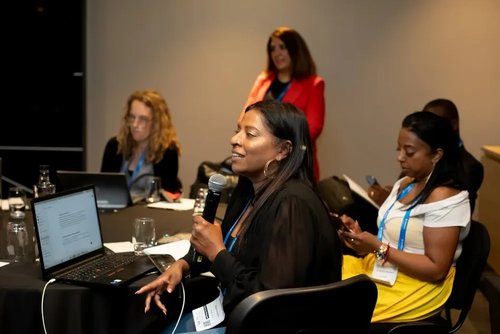
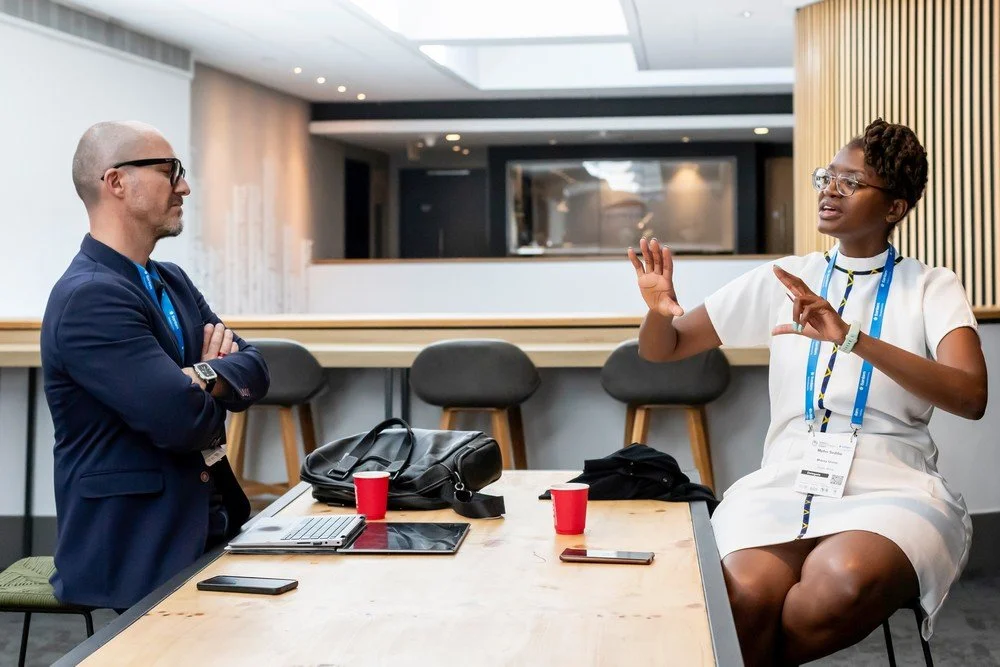
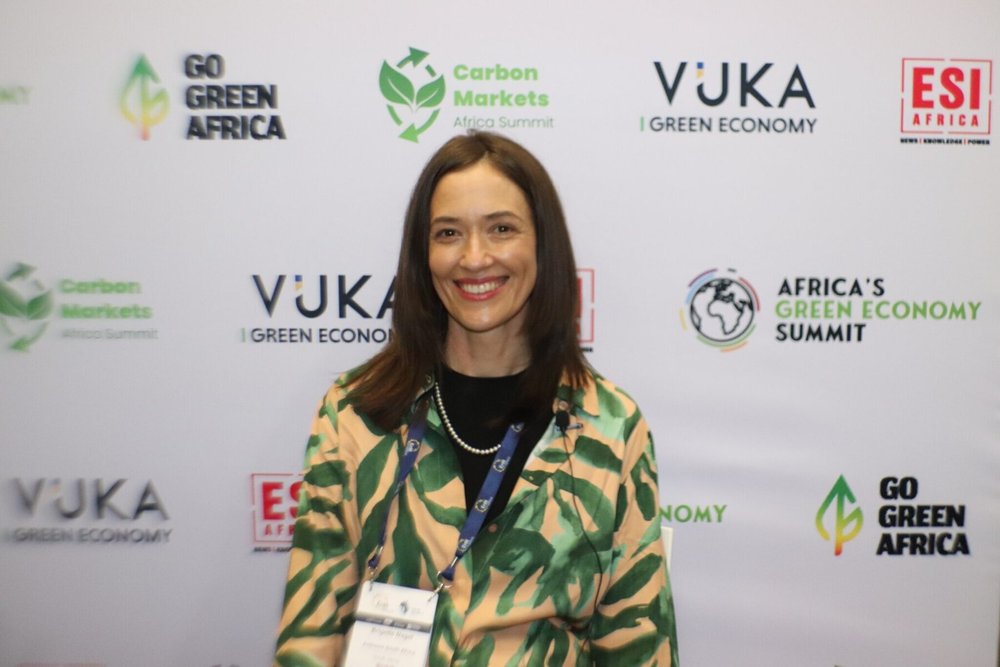
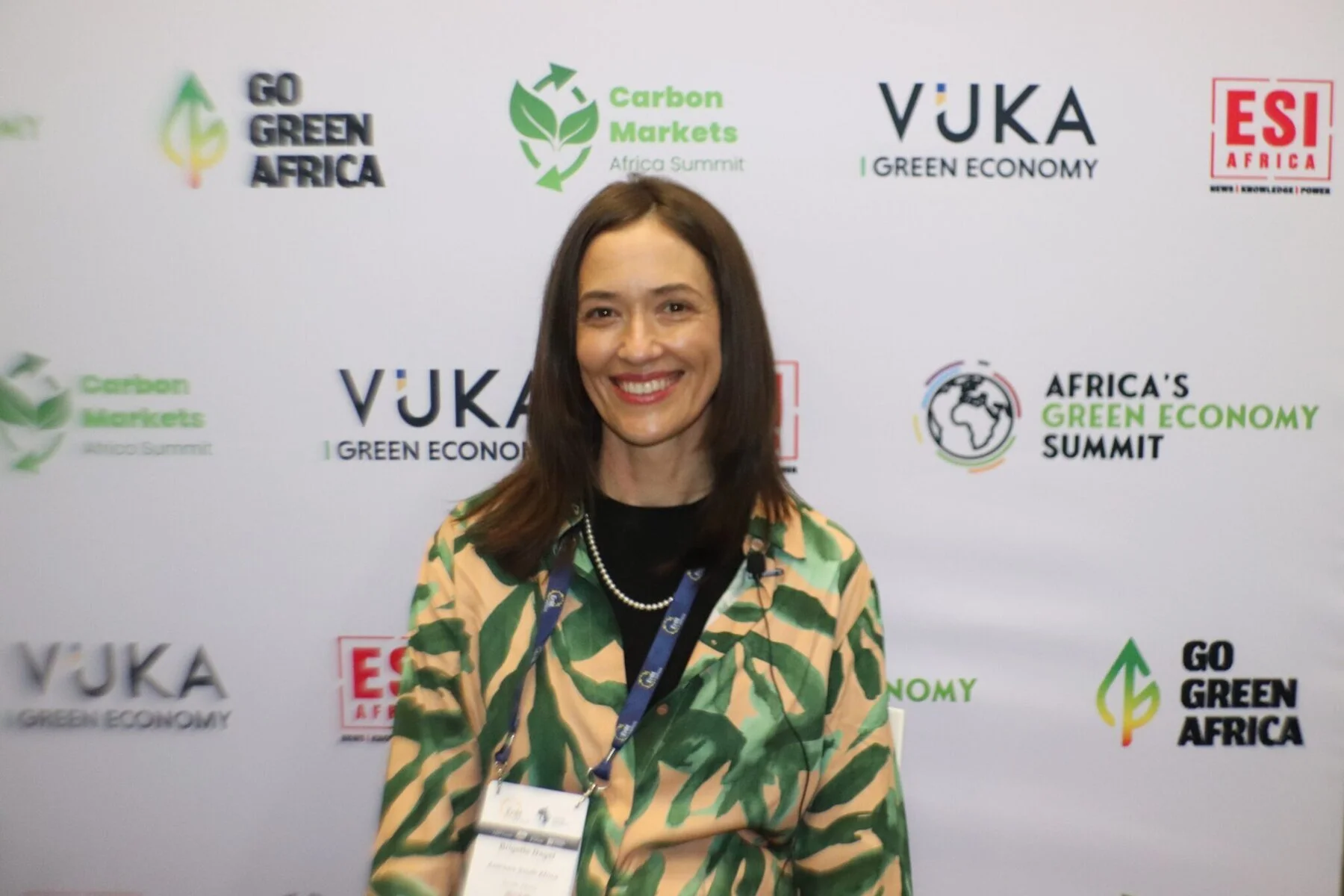
AGES interview at Enlit Africa with:  Brigette Nagel, Carbon Project Developer, Anthesis South Africa. Brigette was also a panellist in the Carbon Credits Roundtable at Enlit Africa in May 2025.

Q: Tell us about the background about you, the company Anthesis, and what do you do.


So I’d like to start with my own background. Initially, I started off my career as a chemical engineer working in the mining sector and mining consultancy space, and it was very exciting, lots of great exposure and wonderful opportunities. But soon I started to deal with this inner turmoil, and I realised that I wanted to do something that specifically focuses on improving the planet.

So a few years in I quit my job, and I started to work at an NGO in Zambia where we provided biodigester solutions to rural communities with solar-powered boreholes. I was just fascinated by this technology where you can deal with waste, as well as supply water and electricity, and I wanted to see it implemented more widely.

Now, one of the key challenges we faced was financial viability. The projects just couldn’t stand on their own feet. They needed grant funding. So I set off to do a master’s degree on the techno-economics of biogas, but also other renewable energy technologies in the context of developing countries like South Africa. What I discovered and one of my key findings during my research was that we really need to valorise the environmental benefits that certain technologies bring, because financially it is not always viable on its own. But if you take these environmental benefits into account, it carries great weight.

And that is where my journey with the voluntary carbon market started. And so I basically approached my current employer, Anthesis, they were not doing any renewable energy projects at the time, but they were willing to employ me nonetheless. And yes, that’s how our journey started. And today I’m proud to say that three years later, we have five large scale renewable energy projects under development and that I’m playing a very active role in developing those projects.

Q: Tell us about your successes, you’ve had an agricultural success story recently, and then more specifically your, your energy projects.

I would like to first just say a little bit more about Anthesis. As a company, we started out about 12 years ago in South Africa. We were a branch of a Dutch company called Climate Neutral Group. Initially, we only focused on all things carbon, from carbon footprinting to carbon tax and then also to carbon offsets. But three years ago, we were acquired by the British company Anthesis, and we have now grown to be the largest or one of the largest sustainability consultants in the world.

We have a presence in about 23 countries and we focus on a very wide range of sustainability solutions, everything from packaging to supply chains, with carbon offsets being the final cherry on top.

AgriCarbon is one of our biggest success stories. It is a programme where we provide financial benefits and a reward to farmers who choose to farm in a sustainable, regenerative way. And we’ve also been the first company in Africa to receive carbon credit issuance under this methodology. So it’s very exciting to us. On the renewable energy side, we are also very proud of the Redstone concentrated solar plant, which is our first large-scale renewable energy project that we  have registered in South Africa.

This project consists of a very high, 250 metre high solar receiver tower that absorbs thermal energy from the sun and then stores this energy in the form of molten salts. The salts are then pumped into a subcritical steam turbine, and that’s how it is converted into electricity, which then feeds into the South African grid. This project can power approximately 200,000 homes, and it can also provide power when the sun’s not shining, and it can store power for up to 12 hours. So yes, we are really proud to be partnering with them.

Q: Let’s talk about the challenges of what is still a nascent sector, especially the carbon markets sector.

I think one of the biggest challenges in the carbon market is that it’s constantly changing. You have to really stay on top of things. One kind of technology can be eligible one day, and then the next day it’s not eligible anymore. In addition, it can be quite burdensome to get a project all the way from development to validation, registration, verification and, finally, issuance.

We do find that there is a lack of understanding in the public sector. There’s also a lack of trust in carbon credits that still needs to grow. I think that’s one of the great things about working for a company like Anthesis where we supply this wide range of services. Our clients are already on a sustainability journey, doing lots of different things. And if you see carbon credits from that perspective, it’s not a standalone solution but rather ,it’s one piece of a puzzle, then it really is a wonderful and powerful tool.

Q:How do you see VCMs changing the energy sector on the continent?

I feel that especially renewable energy, amongst other technologies, has the potential to really have a great impact on our climate and our planet. However, it needs to be at sufficient scale and carbon credits have the potential to provide the momentum that those technologies need to reach the exponential growth to really have an impact.

Q: What do you think is the biggest misconception about carbon markets and carbon credits?

I think one of the biggest misconceptions is that people see it as a standalone measure, an industry where money is just thrown at someone doing something somewhere else and you don’t have to worry about it, and then you make these claims. There’s also been widespread propaganda about greenwashing and so on, but the carbon market has really evolved a lot, including an integrity council that establishes principles for high integrity carbon credits.

Q: Is there anything you’d like to add that we haven’t touched on?

I think from my side, I’d like to encourage people to really read up a bit more about carbon markets and expand their knowledge about it. Also, if you do have a project that you feel is quite interesting that has an environmental benefit and you’re wondering whether there’s carbon credit potential, reach out to us. Or if you are a corporate and you want to embark on a sustainability journey and you’re not sure where to start, reach out to us.

Transforming Wattle into Wealth: Aqualibre Africa’s Innovative Approach to Carbon Credit Generation 

Black Wattle (Acacia mearnsii) might sound like the star of a botanical fairytale, but in reality, it’s more of a prickly villain. This invasive tree species is wreaking havoc on South Africa’s environment, guzzling water, fueling wildfires, and threatening native biodiversity. With over 2% of South Africa’s landmass now under siege, it has become a strategic environmental threat. 

This troublemaker’s story began in February 1858 when it was introduced at the Cape Town Botanic Gardens. Hailed as a timber hero, Black Wattle later became a key resource in South Africa’s tanning industry due to its tannin-rich bark. However, by the 1990s, the rise of cheaper chemical tannins rendered the wattle plantations obsolete, leaving abandoned fields to morph into an ecological nightmare. 

From hero to villain, the Black Wattle’s story is a classic tale of unintended consequences. Yet, Aqualibre Africa is rewriting its narrative, turning this environmental liability into an economic and ecological opportunity. 

Turning Invasion into Innovation 

Faced with South Africa’s wattle infestation, Aqualibre Africa (Pty) Ltd tackled the problem head-on. Led by Benedict Weaver, an Oxford-educated corporate intelligence expert, and Cornelia Gottschalk, a computer scientist passionate about environmental solutions, the Cape Town-based climate-tech company launched an ambitious initiative. 

Supported by the Department of Cooperative Governance and Traditional Affairs (COGTA) and the Community Works Programme (CWP), Aqualibre mobilized local communities as “wattle warriors.” These trained individuals harvest and transport the invasive trees to Aqualibre Africa’s processing sites. There, the wattle is chipped, dried, and transformed into biochar using cutting-edge pyrolysis technology at their pilot project in George. 

Biochar: A Triple Win 

The resulting biochar isn’t ordinary charcoal—it’s a game-changer. Farmers use it to enhance soil health, fruit growers improve yields, and livestock farmers mitigate methane emissions. This process also generates insured, verified carbon credits, offering dual benefits: combating climate change and providing a sustainable income stream. 

Revenue distribution is fair and inclusive: 30% goes to the government, 30% to project originators, and 30% directly to the local community, with an additional 10% funneled into a social responsibility fund for community-driven projects like building schools or community halls. 

A Market-Driven Approach to Carbon Credits 

Aqualibre Africa’s unique model sets it apart: the generation of insured carbon credits from green projects. Collaboration with underwriters ensures that investments remain protected even if projects underperform, attracting more investors to their initiatives. They have established biochar offtake agreements with local and international farmers, tapping into a pipeline of over 3,500 potential clients eager to offset their carbon footprints. 

Partnerships with initiatives like COGTA CWP and events like the Africa Green Economy Summit (AGES) amplify their impact, connecting them with stakeholders and accelerating the scalability of their projects. 

Shaping a Sustainable Tomorrow 

As global regulatory landscapes evolve, South Africa’s carbon tax and international agreements like the Paris Accord push companies towards greener practices. “Our mission at Aqualibre Africa is to bridge the gap between present actions and future sustainability goals,” says Weaver. “We aim to turn invasive species management into an opportunity that benefits the environment and communities alike.” 

By redefining ecological responsibility and resilience, Aqualibre Africa is proving that even the toughest environmental challenges can be transformed into opportunities for growth. Their innovative approach to invasive species management, carbon credit generation, and community empowerment positions them as a leader in the green economy. 

Aqualibre Africa invites stakeholders, partners, and communities to join their mission. Together, they are building a thriving ecosystem that champions environmental integrity, economic opportunity, and social well-being. Through strategic partnerships and innovative practices, they aim to combat climate change while uplifting those who need it most. 

Environmental remediation: “Carbon sequestration is the new gold for Africa”

Exclusive interview with Alvaro Tangocci, Technical Consultant, Ergofito, a leading company in the environmental remediation and agricultural bio-technology sectors.

Q: Thank you for joining us today. Tell us a bit about your background and your current role at Ergofito.

My name is Alvaro Tangocci, I have run the scientific aspects of Ergofito for the last 23 years. As we are dealing with a totally natural product, R&D consists of understanding nature’s parameters. The work involves biology, soil science, quantum biology and a lot of respect and awe for how nature solves all problems.

Q: Would you take us through some of what the products that Ergofito manufactures that helps restore chemical imbalances in nature and how these are applied.

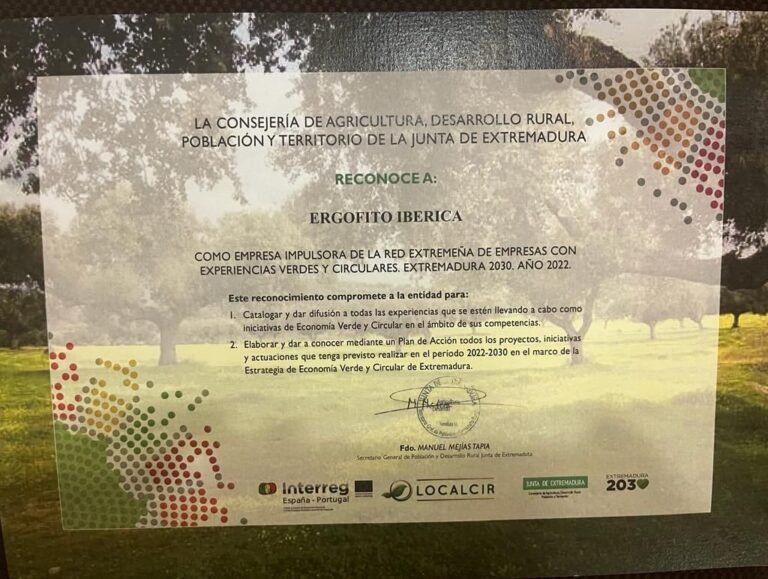
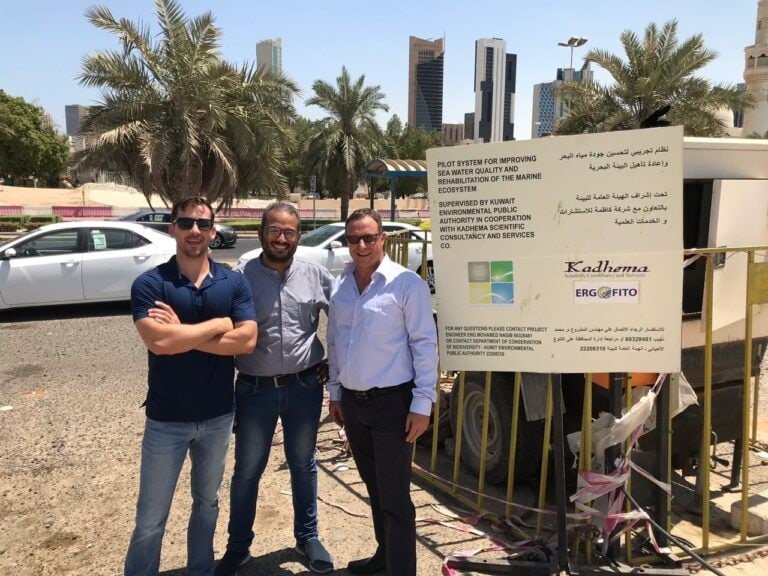
Ergofito consists of 43 consortia of bacteria, fungi and enzymes, all naturally extracted from soils that have never been farmed or mined. It is a friendly extraction as nature replaces it all in two hours after field collection. Such a natural mix decomposes all that is inert and organic, such as hydrocarbons in soil or water, raw sewage and effluents, to name a few.

The product is currently used in refineries, oil production fields in Ivory Coast and Congo as well as the rest of the world. Sewage plants are treated in many countries but mostly in South Africa. It is also used in agriculture where soils are depleted and where crops or plants underperform due to land abused by extensive chemical fertilisation and soil compaction.

However chemical fertilisers are vital for food production as our world is now close to nine billion people, we need increased production, hence chemical fertilisers. When used with natural bacteria, chemical fertilisation is called biological farming, which is the future for agriculture sustainability while increasing produce output. With biological fertilisation, the best of both worlds is achieved.

Q: What are some of your favourite success stories that Ergofito was involved with so far?

We have a couple of successes that are notable. The first one is the Government of Spain that requested a highly monitored proof of concept on growing cucumbers while increasing weight, reducing fertiliser by 30% and improving produce quality by a minimum of 30%. We ran the test over the full season with all goals achieved: We were awarded a prize for agricultural innovation as we set new standards in Spain. We introduced nature back to farming: The merit goes to nature.

The largest success to date is applying Ergofito for the purpose of increasing carbon sequestration in soil via photosynthesis. A four year test was set up in the Sundays River Valley on ten hectares of lemons of the cultivar Eureka. The test was done by independent soil scientist and laboratories. We averaged 100 tons of sequestered CO2 per hectare per year, which is ten times the industry standard.

Nature has captured carbon into soil via photosynthesis over a very long period. All the coal, gas and oil ever produced was done so by photosynthesis. As we entered the Industrial Revolution over two hundred years ago, we took and still take the said stored carbon and put it back in the air. It make sense to use nature again to return it back to the soil, and thus rendering soil more fertile, more resistant to plant pathogens and more resistant to climate change. Soil without carbon and microbes is called dirt.

Q: Where in Africa are you active?

At the moment, we are in Gabon, and we are active in Congo, Ivory Coast, Sierra Leone, Zambia, Mozambique, and of course South Africa and Swaziland. We have a lot of inquiries for remediation from many countries, but currently we are fully active in these countries.

Q: What kind of certifications do you have?

In South Africa we have the DAF certificate for our agricultural mixes, for the environmental mixes we have EPA in the USA as well as Food Safe Certificate SANS 1828:2017 and European Norms EN 1276:2009.

Q: This is a very new and nascent sector, what have been the challenges so far?

The main challenge in carbon sequestration is that everyone uses all types of man-made solutions, it seems that understanding photosynthesis is a challenge. Fortunately that understanding, once presented, is more and more accepted as the norm.

Q: What is your vision for what carbon markets can mean for the continent?

Africa has a massive available area able to produce carbon credits for the international market. It would be a wonderful mechanism to export an African environmental solution while improving our soils and generate serious financial incentives out of it. That is without exporting any produce. It is a known fact that industrialised countries are the largest carbon emitters, but Africa is a victim of climate change in many ways. Now we can use nature in Africa’s favour while generating billions of US dollars via carbon credits. Such wealth will change many people’s lives for the better on our continent.

Q: Anything you would like to add?

In conclusion, carbon credits are mostly based on plant mass increase or the reduction of carbon emission. Such methods work and are positive, however they are not able generate sufficient carbon credits to really make a difference. Also no one can guarantee that illegal logging will not take place, or fires or plant sickness. While, by using photosynthesis the way nature does it, we can place the capture carbon in the rhizosphere and below, safe from fires, floods, climate change or theft, in other words, truly secure. It’s a solution that would be hard to question as treated soil can be measured independently and prove permanent carbon sequestration. Trust nature.

Is regenerative farming key to successful carbon markets?

There is great optimism currently about the future of carbon markets and what these could mean for Africa. The role of regenerative farming in increasing the carbon supply, and therefore the carbon credits for the continent, is also receiving a lot of positive press. The latest: AgriCarbon, Anthesis’ pioneering carbon farming programme recently becoming the first carbon farming initiative in Africa to achieve registration and carbon credit issuance under Verra’s VM0042 Agricultural Land Management Methodology.

This renewed optimism is encouraging since the carbon market crash in 2022, linked to several factors (including the Russian invasion of Ukraine) but also issues related to the quality and integrity of some carbon credits, particularly those from nature-based solutions exposed weaknesses in the market and caused investor concerns. However, such “growing pains” may be par for the course for any nascent sector (think of cryptocurrencies), as an entirely new system of checks and balances have to be developed, tested and adapted, as the market evolves. And evolving it is.

According to the World Bank, carbon pricing revenues reached a record $104 billion in 2023, and there are now 75 carbon pricing instruments in operation worldwide. Over half of the collected revenue was used to fund climate and nature-related programmes.

“Carbon pricing can be one of the most powerful tools to help countries reduce emissions. That’s why it is good to see these instruments expand to new sectors, become more adaptable and complement other measures,” says Axel van Trotsenburg, World Bank Senior Managing Director.

Nature-based solutions in Sub-Saharan Africa

Also in Sub-Saharan Africa, nature-based solutions are gaining momentum. According to a new report from the World Resources Institute and the World Bank, developed in collaboration with the African Development Bank, between 2012 and 2023, the region saw nearly 300 new nature-based resilience projects that collectively secured over $21 billion in funding. And between 2012 and 2021, the number of new projects steadily grew by an average of 15% per year.

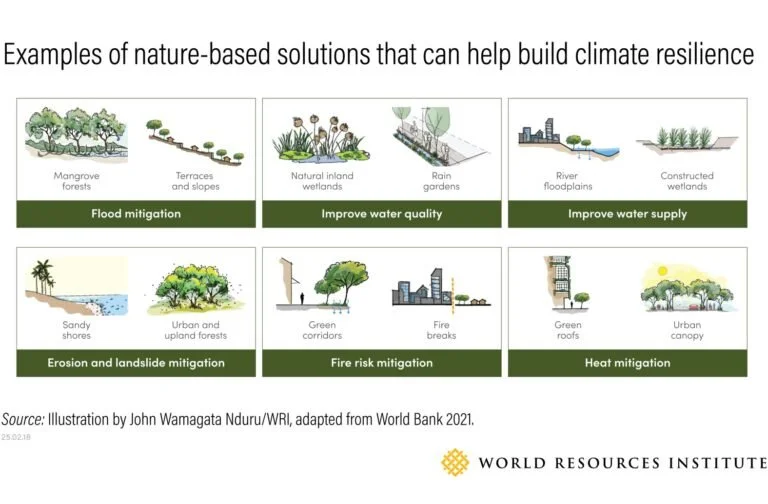
While the name may sound technical, nature-based solutions refer to a well-known and intuitive set of approaches that aim to protect, manage and restore natural systems—such as forests or wetlands—to benefit people, nature and the climate simultaneously.

Early carbon market rock stars

Which countries on the continent are doing the right things to prepare for carbon markets?

“We have a number of early movers, rock stars, superstars on the continent who are really paving the way for the development of international carbon markets,” says Olivia Tuchten, Principal Climate Change Advisor at Promethium Carbon in South Africa.

She explains: “For example, Ghana is one of the very first early movers. They have developed a very innovative approach to formalising mainstreaming carbon markets within their economy. Kenya is an enormously important regional hub. That’s where Africa Carbon Markets Initiative (ACMI) is located. The Kenyans historically have a large amount of carbon credit projects that have been registered with well-recognised carbon programmes. So they have a huge wealth of experience and capacity to develop these types of projects.”

She continues: “East African and West African countries have alliances, which are proving incredibly beneficial in sharing information and knowledge. I think regional cooperation in that regard is absolutely key to developing carbon markets on the continent. South Africa, obviously, is also a leader on the continent in terms of carbon markets.” [Read the full interview here.]

AgriCarbon programme

Verra is a carbon credit registry that manages the Verified Carbon Standard (VCS), which is the biggest standard in the carbon market based on market share. It drives finance toward activities that reduce and remove emissions, improve livelihoods, and protect nature.

Anthesis South Africa’s AgriCarbon programme commenced in 2021, and through sustainable agricultural practices adopted by 29 farmers across 17,582 hectares, has issued 39,207 tonnes of carbon credits.

The company’s MD Franz Rentel is rightfully proud of its milestone of become the first carbon farming initiative in Africa to achieve the Verra seal of approval: “Innovation is at the core of Anthesis and this milestone is a testament to our commitment to pioneering sustainable solutions. What was once uncharted territory is now a thriving sector, with projects worldwide building on what we started. This achievement underscores how bold ideas, backed by strategic expertise, can drive real impact and reshape industries for a more sustainable future.”

Future of carbon supply

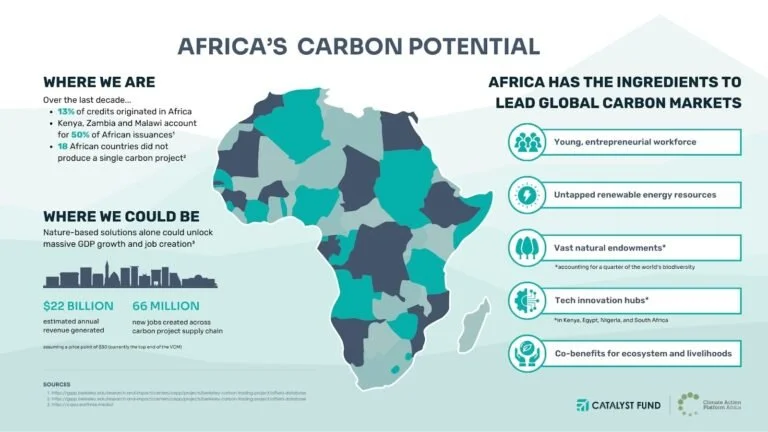
Africa is poised to become the future of carbon supply, according to the Catalyst Fund’s Ash Berman and Malika Anand, and the continent’s supply of carbon credits cannot get to market fast enough. According to the analysts: “Both the voluntary carbon market (VCM) and compliance markets more than doubled in value between 2020 and 2022 as an increasing number of corporations and governments in the Global North seek to execute voluntary or mandatory Net Zero commitments. In 2022, $2 billion of carbon credits were traded on the VCM, more than doubling since 2020. The volume of credits required globally is expected to increase at least 20x by 2035, with 30 to 40x needed for scenarios consistent with the Paris Agreement on climate change. To harness this opportunity, we need to establish African markets as attractive destinations for private sector investment, and support African innovators to navigate the carbon value chain.”

Africa’s forests

The continent’s forests play an important role in its carbon supply and accreditation. Last month, the International Day of Forests was celebrated globally. A report published the NGO Farm Africa details how smallholder farmers in eastern Kenya are reaping financial and environmental benefits from an agroforestry project that integrates carbon finance with sustainable agriculture.

The report, “Growing green – How agroforestry and carbon markets are transforming farming in eastern Kenya,” details how 21,500+ farmers in Embu and Tharaka Nithi counties have planted trees and adopted climate-smart farming techniques. The farmers have reduced carbon emissions by a total of 24,945 tonnes of carbon dioxide and earned income through the sale of an equivalent number of Carbon Removal Units (CRUs), while contributing to climate change mitigation and soil restoration across 14,175 hectares of land.

This initiative, launched by Farm Africa in 2020 in partnership with Acorn, Rabobank and AGRA, enables farmers to generate revenue from carbon credits while improving biodiversity and agricultural productivity. Eighty per cent of the revenue from carbon credits goes directly to farmers, many of whom have used the earnings to pay school fees, expand farms, and invest in alternative income sources. “Beyond environmental benefits, the initiative has provided a financial lifeline for local communities,” says Mary Nyale, Country Director, Farm Africa, Kenya.

Morocco new force for regenerative agri

The Singapore Centre for African Studies that prepares reports for prospective Asian investors, regards Morocco as another emerging force for regenerative agriculture in Africa. The kingdom has established regenerative agriculture solutions on the basis of carbon reduction and the monetisation of carbon credits that are especially attuned to the needs of African agriculture with its estimated 350-million smallholder farmers. In Morocco, 71% of farmers work on less than 5 hectares.

According to the Singapore Centre for African Studies, Morocco’s African agricultural success story as a major fruit and vegetable exporter to Europe can be attributed to the kingdom’s ten-year initiative, the Green Morocco Plan (Plan Maroc Vert), that has managed to increase the value of agricultural exports by 117% to roughly $3.5 billion and created 342,000 new jobs.

Southern African regenerative farming

In one of our exclusive interviews in this edition of the Green Economy Express, Andrew Ardington, the founder of the Regenerative Agriculture Association of Southern Africa (RegenAg SA), says finance is the biggest hurdle in farmers changing to regenerative agriculture.

“Regenerative agriculture can never become compulsory. It is definitely a carrot solution, not a stick solution. Farmers have to engage with it. They have to believe in it. And they have to work with the natural ecosystem of their farm that cannot be legislated. What can be legislated is incentives. Farmers will do this themselves if they can find the financial partners to help them make the change.”

He explains: “We are in this rather strange situation of a world where everyone is expecting the farmers to invest in this transition. Agriculture constitutes less than 3% of global GDP, and it is a very indebted sector of the global economy. So it’s really in no position to pay for this transition that is required to maintain the planet as a welcoming and habitable place for human beings. So we need to have an in-depth look as a society how to set up the investments with farmers in primary agriculture by 97% of GDP that’s not involved in primary agriculture.” [Read full interview here.]

  • This article first appeared in the Green Economy Express newsletter, published by Africa’s Green Economy Summit.

“Carbon markets are not a silver bullet, but a key component, in Africa’s measures to address our climate crisis”

Exclusive interview with Olivia Tuchten, Principal Climate Change Advisor, Promethium Carbon, South Africa. At the third edition of Africa’s Green Economy Summit in February, Tuchten was the co-moderator of a packed masterclass on carbon markets.

Q: Thank you for joining us today. You have a strong background in the carbon and climate change sector. Tell us a bit about your background and your current role at Promethium Carbon.

I’m Olivia Tuchten. I’m from a company called Promethium Carbon. We are a climate change advisory company. We’ve been operating in this space for over two decades now. We are primarily carbon climate change specialists and consultants. That’s all we do. That being said, our work spans across mitigation and adaptation, climate change vulnerability risk assessments and reporting for governments. I’ve been with the company for about 10 years and tend to specialise in the mitigation side of the work that we do, especially the work around carbon markets and carbon credit project development and issuance of carbon credits.

Q: Would you take us through some carbon market fundamentals please, their evolution, the challenges that followed regarding transparency and fairness. And where are we today?

Carbon markets are essentially a system that has been designed to reduce global greenhouse gas emissions by assigning a monetary value to the carbon credit that is created as a result of the measure that is implemented. When I say measures, it varies, for example, you can have renewable energy measures, those types of projects which displace grid electricity that is very emissions-intensive. You can have other types of project activities like forestry projects, conservation projects that perhaps sequester or remove greenhouse gas emissions from the environment.

Typically, these types of systems and markets have operated through two mechanisms. They are generally referred to as the compliance markets and the voluntary markets. Compliance markets, we’re more and more using the term regulated markets, for example, like the South African domestic market based on our carbon tax system, which allows for the use of carbon credits to offset a corporate greenhouse gas inventory where that corporate has to pay carbon tax, and the use of carbon offsets in the system is regulated. One doesn’t have to use a carbon offset, but the rules by which you do use them is well defined in pieces of legislation.

Voluntary markets have arisen through the likes of big corporates who have recognised that there is an urgent need to decarbonise and that carbon offsets can play a vital role in this process. These types of corporates purchase carbon credits in the market to voluntarily offset their corporate greenhouse gas inventories, hence the term voluntary markets.

Q: You are working in a system that is constantly evolving and changing. What are the main challenges in your view?

The system that we are working in is evolving rapidly. One can say that the carbon markets were born out of the Kyoto Protocol, which was a UN mechanism that was implemented in the late 1990s and we’ve come a long way since then. As you will be aware we now have the Paris Agreement, which is the new UN mechanism, a new global mechanism whereby countries that have ratified and joined the Paris Agreement recognise that there is an urgent need to decarbonise because climate change is a man-made phenomenon and we have a responsibility to correct the imbalance that we as a human society have created.

The Paris Agreement has really spurred new rules to enhance market integrity. And it is really said to be the precedent in terms of carbon markets. That being said, it has taken a very long time to get to where it is now, which is almost ready to be implemented. We’re on the verge of the Paris Agreement carbon markets or international markets.

In the interim, private sector has realised that there is this urgent need to decarbonise, as I said previously, and they’ve taken matters into their own hands, if you like. And they have spurred the development of these voluntary carbon markets where carbon credits are used to offset greenhouse gas inventories of these corporates on a very voluntary basis.

Because there’s been such a rapid evolution, in terms of the carbon markets, there are certain challenges that have come up and certain criticisms and issues. For example, there are concerns raised about the integrity of carbon markets and there are various measures underway to address these types of challenges. You see that there are market players like the ICVCM, the Integrity Council for Voluntary Carbon Markets, that has come out as a champion sector or entity to establish core principles to ensure the integrity of carbon credits. There are amazing technological developments, AI, blockchain, other technology innovations in the likes of decarbonising whole systems. Those are very exciting, and really there is a growth in this market that we can see happening as a result of the drivers from the Paris Agreement, drivers at country levels, drivers from corporate citizens and ordinary citizens like you and me really spurring the development of these markets.

Q: What are some of your favourite success stories of carbon credit swaps on the continent?

Some of the success stories across the continent for me are the types of initiatives that address development needs as well as mitigating greenhouse gas emissions or removing greenhouse gas emissions from the atmosphere.

There is really amazing work being done in the renewable energy space. For example, these types of projects not only mitigate greenhouse gas emissions, but they tick a development agenda, which is to provide increased access to electricity that’s clean, that’s affordable. These are huge development agendas. In addition, there are projects that are addressing waste and sanitation needs in very innovative ways, whether it’s the use of alternative waste treatment techniques like black soldier fly larvae. These are incredible success stories. In addition, I think I must mention the huge potential for increased carbon sequestration on the continent. And that’s in the form of large forestry types of projects, large conservation types of projects as well. So they’re super exciting projects that are worth following.

Q: In your view, how is Africa positioned to take advantage of this burgeoning opportunity?

Africa is largely well prepared to take advantage of the opportunities from a number of positions. First, we have abundant natural resources that can be the basis of these carbon credit projects. For example, we have vast forests and an abundance of sunshine and wind, and these make really good drivers for the development of carbon projects and carbon markets on the continent. I think you will know that the ACMI, the Africa Carbon Markets Initiative, which was launched recently, recognises the potential on the African continent and the aim of ACMI is to scale voluntary carbon markets significantly.

There are obviously some challenges in this regarding transparency issues around the development of these types of projects around the monitoring, the reporting, the methodologies that are used. And there are instances of market failures, whether they are through negligence or through forward greenwashing, double counting. Those are types of examples that that really is an issue that needs to be addressed in the market.

Some other issues relate to typically low carbon credit prices for these types of project initiatives. And that certainly needs to be addressed because these projects need to be sustainable in the long term and we need fair carbon prices to make that happen.

Q: Which countries on the continent are doing the right things to prepare for carbon markets? What more needs to be done?

We have a number of early movers, rock stars, superstars on the continent who are really paving the way for the development of international carbon markets. For example, Ghana is one of the very first early movers. They have developed a very innovative approach to formalising mainstreaming carbon markets within their economy. Kenya is an enormously important regional hub. That’s where ACMI is located. The Kenyans historically have a large amount of carbon credit projects that have been registered with well-recognised carbon programmes. So, they have a huge wealth of experience and capacity to develop these types of projects. East African countries, West African countries, they have alliances, which are proving incredibly beneficial in sharing information and knowledge. Regional cooperation in that regard is absolutely key to developing carbon markets on the continent.

South Africa, obviously, is also a leader on the continent in terms of carbon markets. As you may be aware, we have a carbon tax system which provides for the use of a limited amount of carbon credits to offset taxpaying entities carbon tax liabilities. And that’s been a huge success and is expected to grow well into the future.

There are obviously the areas for improvement. We need better policy and regulatory frameworks that enable these types of project activities. We need transparency on governance regarding how these projects are managed from a private sector level and a public sector. And obviously there does need to be capacity building on the continent, which is very important.


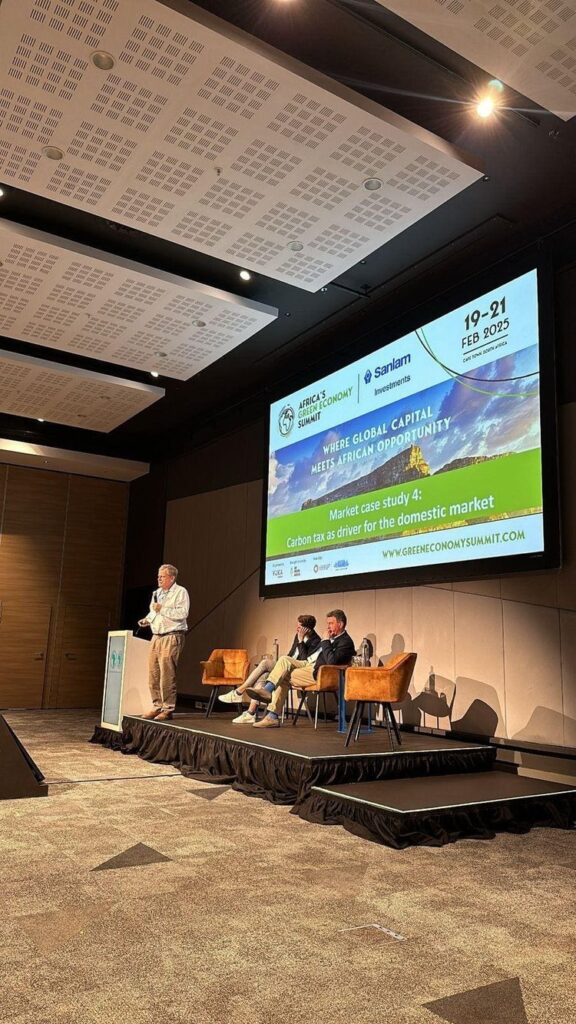
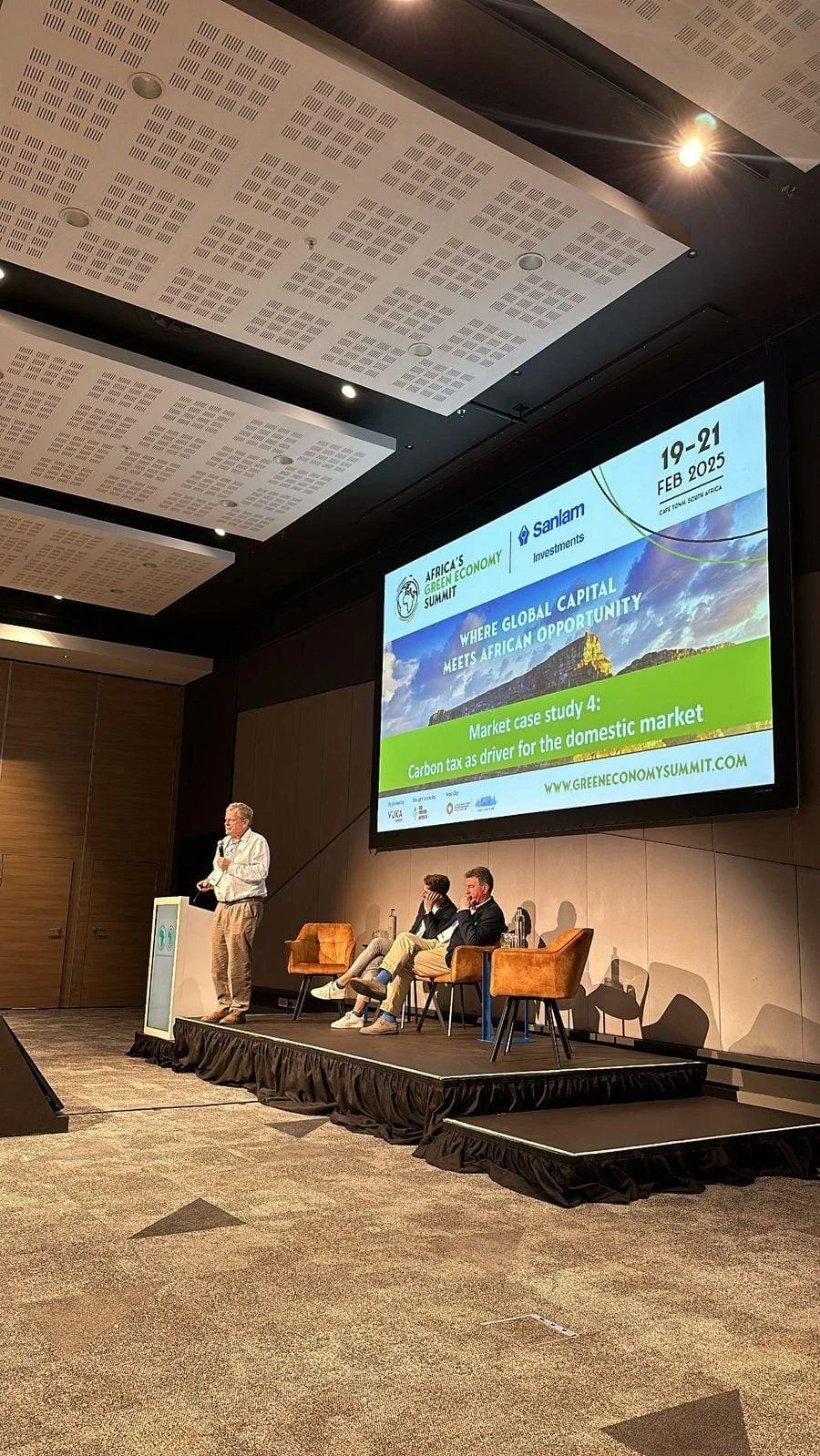
Q: At the third AGES in February, you co-moderated a masterclass on carbon markets with another expert. The room was packed, and it was a great success. What were your main take-aways in terms of audience questions and views?

There was a very positive outcome from the carbon markets masterclass that was held at AGES. Really what we got was there was a strong enthusiasm for carbon markets. There were a large number of attendees and I think that just demonstrates the interest in this potential tool that can be used to address our global climate change crisis.

Other insights from the masterclass were that there’s a real need to focus on practical applications. How do you make a carbon credit project? How do you get the finance for it? Those are the types of needs that need to be addressed. I think there was also overwhelming optimism about Africa’s potential to participate in these markets, whereas Africa did not successfully participate in the Kyoto markets, namely the clean development mechanism, it didn’t participate very well. I think that there’s a recognition of where there were failures, and there is an understanding of the lessons learned, and I hope that we can apply that going forward.

Obviously, one of the key takeaways, again, is the need to unlock finances for projects in these sectors. And that may also require capacity building, whether it is technology transfer, whether it’s human capital, those kind of things. Those were the main key insights arising from that workshop.

Q: What is your vision for what carbon markets can mean for the continent?

We are absolutely committed to developing carbon markets across the continent, particularly because carbon markets have the potential to contribute to the continent’s development agendas. And the way in which carbon markets can do that is that they can provide access to funds for measures that were previously considered economically unfeasible, or perhaps they faced other barriers like a lack of access to technology. Perhaps there were regulatory, legislative, political kind of barriers that have prevented these incredibly important projects from taking place. I do want to caution that carbon markets are not a silver bullet to our climate crisis. What they do represent is a key component in our suite of measures to address the climate crisis.

Carbon markets can be an incredibly substantive and long-term component of these suite of measures to address climate change.

Q: Anything you would like to add?

Other than to say I’m very keen and excited about the next phase of these workshops and looking forward to engaging further with interested parties, even critics, at the upcoming workshops and sessions.

AGES Pre-Con Highlights: Carbon Markets Masterclass: “There are real opportunities in this sector”

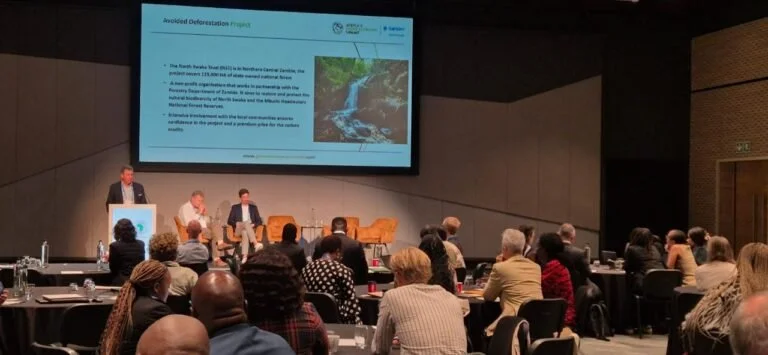
The pre-con day of AGES 2025 got off to a swinging start with the sold-out Masterclass in African Carbon Markets (the venue had to be changed to accommodate extra attendees) on Tuesday, 18 February. Andrew Gilder (Climate Legal) and Olivia Tuchten (Promethium Carbon) proved energetic and engaging facilitators, and throughout the day kept the conversations going, fielding questions from the audience, watching the clock and masterfully navigating the packed programme that featured 12 expert speakers and panellists.

Prof Anthony Nyong, Director of Climate Change and Green Growth, African Development Bank (AfDB) welcomed the attendees saying “The time to act is now. We are in the right place and at the right time today to ensure that Africa benefits from carbon markets.”

The masterclass featured carbon market fundamentals, attendees were encouraged to ask questions throughout, and lively discussions were part and parcel of a fascinating, interactive day.

The audience was also reminded of, and treated to, many examples of Africa’s huge carbon market credit potential, such as the Congo Basin, the second-largest rainforest on the planet, in addition to real-life case studies, including the North Swaka Trust’s community reforestation in northern Zambia, Vlinder’s mangrove reforestation carbon project in Kenya, how South Africa’s innovative Carbon Offset Administration System has already shown substantial results and how West African countries are preparing to take advantage of carbon markets. Ghana was even called “the original rockstar” by the AfDB’s Olufunso Somorin. An inspiring and galvanizing start to the third AGES!

AGES Pitch Programme: $5 billion BGHES latest project to join line-up

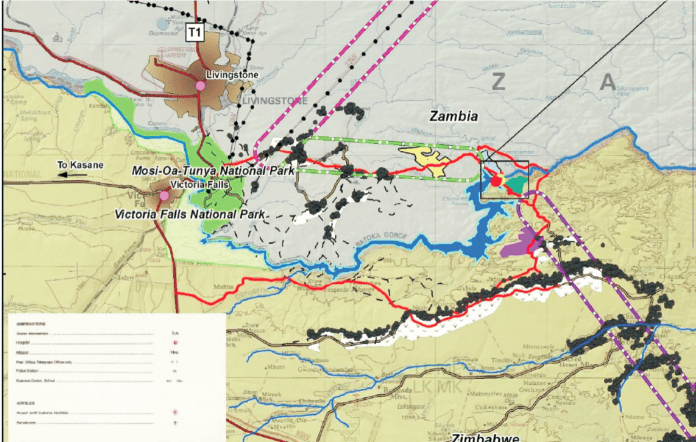
The popular AGES Investment Pitch Programme is back this year and will feature not one, but two strategic stages tailored to accommodate varying project ticket sizes and financing structures. The Batoka Gorge Hydro Electric Scheme (BGHES) is the latest project to join the more than 50 SMME and infrastructure project pitches.

Click here to see the list of all the projects featured at AGES 2025!

The first of many networking opportunities!

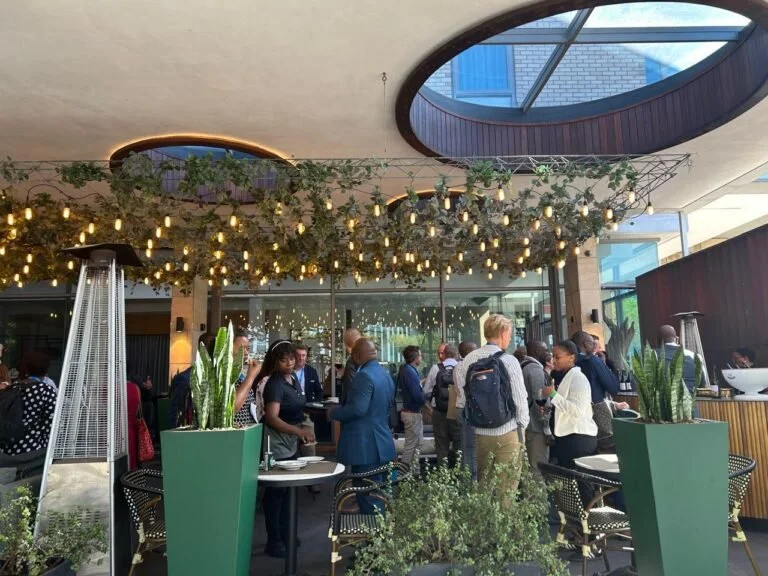
The AGES 2025 delegates raised a glass to the start of the summit at Urban Umami. The opening drinks were sponsored by DBSA and offered a wonderful way to network before the event.


Africa Carbon Markets: Status and Outlook Report 2024-25

The Africa Carbon Markets Initiative (ACMI) is driving the growth of carbon markets in Africa with a focus on integrity, equity, and transparency. In its first year, ACMI has advanced initiatives across the carbon market value chain by engaging diverse stakeholders and collaborating with governments to create supportive policies. The initiative also works with financial institutions to develop de-risking solutions, unlocking private-sector investments for impactful carbon projects across the continent.

In 2024, carbon markets faced significant credibility challenges, with major concerns about overstated emissions reductions in key project categories like deforestation avoidance (REDD+) and cleaner cookstoves. These issues are particularly impactful in Africa, where such projects represent 90% of recent credit supply. Accusations of greenwashing and fears of land loss for carbon credit initiatives have fueled skepticism about their true climate benefits. Transparency and equity questions have further eroded trust, contributing to a global demand drop of 22% and significant price declines. These challenges are shaping the future of Africa’s carbon markets, emphasizing the need for high-integrity, impactful solutions.


Read here

Go Green Africa: “We’re working very hard to introduce trust into the carbon market system”

Exclusive interview with Iain Banner, founder and chairman of Go Green Africa and co-founder of Africa’s Green Economy Summit.

Let’s start with Go Green Africa, its goals and the progress that was made in 2024.

I think 2024 has been a solid year for Go Green Africa. We kicked it off in February 2023 around the staging of Formula E Cape Town. And the intent was essentially to democratise going green; so to do that, it meant we needed to look at the big companies that are polluting, such as Eskom and Sasol and companies like Uber, and we needed to get them on board.

Then we needed solutions too, and we were able this year to bring Siemens to the party. They have joined us. It’s still to be officially announced, but I can advise that it is a happening thing, which I’m delighted about. And then of course we’ve got our smaller companies that are helping to drive technological solutions into the polluters to reduce the emissions of these polluters. And the job ahead includes really democratising it to the individuals, getting people to start thinking green and, most importantly, acting green. It’s a journey that will take time, but we’re very excited about it, and we’ve laid the foundation, and from here we want to accelerate into 2025.

What is your vision in terms of what carbon markets can mean for the African continent?

Carbon markets can mean a tremendous amount for Africa. I personally think that the carbon market system, the idea that you can use carbon credits as a means of offsetting your carbon footprint is really a strong idea. The problem is, it’s been hijacked by bad actors, cowboys and crooks, who have seen an opportunity in the early days to take full advantage of a system that was perhaps underprepared for that attack.

We’re working very hard to introduce trust into the system, and we are working with platforms that are independent and visible, such as Assidium, the registry, as well as Carbon Zero, the trading desk. And it’s all about credibility and transparency. And I am personally extremely excited about what carbon markets can do by way of nature credits and how we can protect very important wild landscapes in Africa through funding that is generated by carbon credits and that is totally valid because of the sequestration that happens in places like the Congo Basin, which is almost the size of the Amazon, and as important. So we’re working hard to try and make sure that we can take advantage of the new dispensation that’s just come out of COP29 and I see a bright future for carbon markets in Africa.

What is your view on the so-called Article 6 agreement on carbon markets at COP29?

The Article 6 agreement 6.2, that came out of COP29, is exciting. You’ve got the new finance goal of $300 billion per annum, meaning obviously there’s a lot more money that is to be made available annually for climate finance. And then the renewed attention to equity, the simplified access to climate finance for less developed countries. So that applies to the whole of Africa, frankly. Africa has carried the burden of being a mini polluter, let’s call it, relative to the rest of the world, but it’s essentially not had its fair share on the playing field. So, I think that these resolutions coming out of COP29 are positive, and we’ll see how things play into 2025.

Please tell us more about your work in north Zambia?

We’re involved in a very exciting project in the north of Zambia called the North Swaka Trust. It’s in Central Province, which is responsible for 50% of agricultural production in Zambia. The North Swaka Trust is overseeing the North Swaka lands as well as the Mkushi Headwaters, which total about 122,000 hectares; and it’s essential that this forest is retained and that these headwaters are protected, because the water that flows from them is the water that makes the agriculture possible in the Central Province. If that is deforested and degraded as it is potentially going to be, it will create a serious problem.

Fortunately, funded by INEOS, the North Swaka Trust has got to a position now where we are going through the scoping for the project. We’ll be verifying the methodologies and then verifying the project and securing carbon credits in order to fund the work that’s required to support the local communities, etcetera. It’s quite simple: the local communities need to be empowered in such a manner that when an illegal logger comes along with $100, they shoo them away, or something a bit more serious than that, because they realise that these are lands that are really, really essentially important for their country.

And that applies to all projects of this nature, and I’m reliably informed that there are up to 300 forests like this in Zambia alone. So this could be a real benchmark test case. We’re looking forward to the challenge of taking this project on, and we hope that it will generate sufficient revenue from carbon credits to fund the restoration work and the protective work that’s required to maintain the forests that are so important in North Zambia.

ACMI: “Transparency, integrity and credibility are key to deliver social and economic benefits alongside the environmental outcomes”

Exclusive interview with Paul Muthaura, CEO of the Africa Carbon Markets Initiative (ACMI).

Let’s start with a short introduction about your career thus far and your role at ACMI.

Good afternoon, everyone. My name is Paul Muthaura, the chief executive of the Africa Carbon Markets Initiative. I was a long-term securities regulator and for a span of time, a member of the International Standards Setter for Securities Regulators (IOSCO). Thereafter, I moved to lead one of the larger regional insurance businesses in East Africa. I am glad to say that we were the first continental member of the TCFD Insurance Pilot Group.

Thereafter, I became an independent consultant, looking very much at supporting capital markets development in the East African region, and then looking fundamentally at the net zero transition and how we’re going to position Africa in a meaningful way, which led very much into the transition into the Africa Carbon Markets Initiative.

ACMI was launched at COP27, how have your goals and objectives evolved since then?

The Africa Carbon Marks Initiative was launched at COP27, and at the point of our launch, it was very much focused on really scaling voluntary carbon markets (VCMs) in Africa. Building from that initial point, through extensive stakeholder engagement, there grew to be a recognition of the need to support work that’s much broader than just the VCM space, looking at how we’re going to position markets effectively on the Article 6 evolution and implementation as well as looking at roadmaps to compliance market development in various markets. If anything, when you look at the somewhat adverse press that came out in 2023 and 2024 around some of the concerns around integrity gaps in the VCM space, we saw this as a stronger indication that there might or will likely be faster growth and scaling in the Article 6 space and the compliance market space. So, we’re glad that we’re readily able to support markets across the spectrum of types of carbon markets.

We note ACMI’s focus shift to include Article 6 and compliance markets beyond VCMs, will there be some integration across these market types?

As I mentioned, we are seeing significant evolution in both the Article 6 space and compliance market space, building on the foundations of VCM space. There is a running query as to whether these are going to become integrated? We do believe in time they will be, because a cohesive ecosystem really is what’s going to most support global climate goals achievement and effective balancing of those global goals as against national and regional priorities.

However, we must be conscious that by their very nature, compliance markets do tend to have a slower rollout process because of the policy and regulatory framework development to ensure alignment of national policy and international standards. But we do believe that enhanced coordination across these markets will really support a shift, if it’s supported with an effective level of shared learnings and implementation of transparent frameworks, and will really drive a more effective response to climate change, both at national level, regional levels, and ultimately at a global level.

It is noteworthy that ACMI’s mandate is continental.  How does that align with your workstreams on a country to country basis?

I think we are conscious that at the point of our launch, we were looking at really supporting and scaling of carbon markets on the whole African continent. But our work in our first two years has been very much focused on supporting a number of first mover jurisdictions that express their eagerness and willingness to work with ACMI at operationalising their national frameworks. In that process, I think it’s become increasingly evident that there are multiple African jurisdictions that are looking to draft and implement carbon market policies and frameworks that are at differential levels of approaches. But we do believe that this does give some level of a platform for valuable lessons learning to better inform continental and global carbon market evolution.

And we’re really glad to be working much more constructively with key continental institutions in Africa, being the AU Commission, the UN Economic Commission for Africa, the AU Development Agency, AUDA-NEPAD, the UNDP, and of course, the African Development Bank, for a truly catalysed and a more coordinated continental standard development process, and hopefully a more consistent operationalisation through really building a much more coordinated and driven learning and information sharing process to help unlock a collaborative impact. What’s becoming ever more evident is, with a lack of that kind of coordinated learning and information sharing, we really will see some level of slower or hindered progress, as well as the creation of gaps that, if addressed in a collaborative manner, would not have arisen.

What are you seeing as the drivers for countries to engage in carbon markets?

When we look at countries stepping up to really understand how best they can engage with the carbon markets, we’re very conscious that they need to start from a very clear understanding at national level about what their objectives are. Are they trying to position carbon markets to support climate finance channelling? Are they looking at it in terms of complementing sustainable development? Or are there much broader economic transformation goals that are being sought to be driven through the operationalisation of carbon markets?

We tend to find that where there isn’t a clear and coherent view as to why jurisdictions are operationalising these markets, you then tend to have really substantial challenges in implementation and some challenges in terms of trust building, because there is a disconnect between the stated goal and purpose and actual regulations and frameworks being put in place. So we strongly advocate for countries to articulate what their objectives are as early as possible in order to guide effective policy formulation and avoiding some of the pitfalls that come from some incongruence.

What is your vision about how Africa can benefit from carbon markets?

Now, if we’re able to see countries speaking with clear purpose and vision as to what they’re seeking to deliver, we’re very hopeful that the scaling and operationalisation of well-coordinated carbon markets on the continent really allows Africa to have a key role as a potential driver of transformative change, but the achievement of that transformative change will be somewhat reliant on strategic alignment, fundamental integrity implementation and then the overall collaboration at all levels of the ecosystem.

And, potentially oversimplified, but from our view, Africa’s huge availability of renewable energy, the realities of the low emissions environment we’re operating within, and as a consequence, the substantially lower cost of transition to much more sustainable industrial practices that are possible on this continent because you’re not retweaking and redeveloping infrastructure that was already in place, but building right the first time and running with speed. And then you add to that the really substantial young employable population who are in a position to be effectively empowered and capacitated to drive the new and scale it at a much speedier and much more impactful rate. We then believe Africa can have a huge value proposition to addressing solution delivery for the realities of the continental and global problems we’re seeing around climate change.

What in your view are the main success stories of ACMI up until now?  What do you expect to see going forward?

With our work so far in our first two years since COP27, I think we’re glad to note that we played central roles in supporting the design, implementation and operationalisation of legal frameworks in Kenya and Nigeria, as well as really supporting a lot of industry capacity building in, for example, Rwanda and Ghana, who moved with some speed to put their legal frameworks in place, and we’re looking forward to the announcements of the outcomes. In addition, the work we have done with the Mozambique government in putting in place a very robust legal framework, moving them from purely REDD+ oriented framework to looking at the full spectrum of the carbon market solutions that can be implemented.

We’re also glad to note that there are a number of other jurisdictions that have already expressed some level of interest in working with us, from Malawi through to the likes of Cameroon, and we hope, when you look at scale and impact, if we’re able to make our progress with our engagement with the likes of South Africa, Ethiopia and comparatively with jurisdictions like Madagascar, we’ll be able to really start showing and providing some key reference points on what it can look like across the scale of levels of economic development on this continent.

Building on that, I think we’re glad to already be working closely with the government of Kenya to put in place an Article 6-2 pilot framework built very much on clean cooking in schools. We have been working with a number of parties to put together an Advanced Market Signal to bring together the demand side, to give strong, value-based commitments that if the right quality of projects are made available, they have already committed to allocate in excess of a billion dollars to evidence the allocation of capital to those projects that have the most impact and the most transparent economic value to the communities they’re operating within.

How is ACMI working with the other support providers for the delivery of target outcomes for the continent?

We’re glad to be working with a number of partners of the likes of the Voluntary Carbon Market Integrity Initiative, VCMI, looking from the demand side at the design of an auditor training programme to really close the very substantial gap that exists in verification and validation capacity on the continent. This is hoped to also make sure that we have the right pool of capacity to be able to start making sure the co-benefit elements that are very substantive in African projects start being factored into the valuation of the credit from this continent.

To support that, we have designed a soon-to-launch carbon hub, which is a repository of information, for African PDs and ecosystem players to reference to better understand how they can effectively participate in this space. As earlier mentioned, we’re glad to put together the first showcase of African project developers, over 100 PDs cutting across more than 24 jurisdictions on the continent. We have also been looking to build greater awareness and capacity through hosting webinars and really working towards sharing an evidence-based narratives and the rollout of what we hope to be referenced as an ACMI message house. So that whatever the issue, you have a central point, you can get information and updated content on what’s going on and what impact it is expected to have.

But what has become so evident is we need to take these steps through building effective partnerships. We have rolled these out with the VCMI and ICVCM on the demand and supply side and also with the International Emissions Trading Association as well as UNDP Africa. And we’re glad to be making key steps with the Glasgow Financial Alliance for Net Zero’s Africa offices to really convene and bring together the demand side from the continent to catalyse effective investment on this continent. In addition, our partnership with the African Development Bank is very much central to supporting the introduction of appropriate financial intermediation tools and de-risking solutions that can help us move to the next step.

How important was the so-called Article 6 agreement reached at COP29?

When you look at the very positive messaging that came out of COP29 around some level of conclusions being reached around Article 6.4, we feel these have introduced much needed clarity on internationally traded mitigation option trading rules as well as authorisation pathways and ultimately cooperative approaches to the building of Article 6 markets.

Now, that notwithstanding, we remain conscious that demand for credits remains constrained due to the nascent nature of many mechanisms and some of the system challenges we’re seeing around financing and policy alignment. But we’re very hopeful that a sound interplay between the compliance markets under Article 6 and the evolving voluntary carbon market space will allow for some level of convergence as buyers increasingly seek credits with international authorisation as well as high environmental integrity.

All said, what do you think should be the priorities of stakeholders in establishing resilient carbon markets?

I think with all the positive work we see happening in multiple spaces, as well as project and product types, what’s absolutely central is the integration of the highest standards of integrity, really ensuring that mechanisms are credible and aligned with international best practices. There must be transparency and credibility in terms of equity and inclusion so that frameworks are prioritised where they deliver social and economic benefits alongside the environmental outcomes attached to the emissions reduction and removal targets of the carbon markets. But we must advocate for the highest level of regional and global cooperation so that we can take those next steps in terms of leveraging learning, promoting shared learning and really accelerating the development of aligned and well-integrated market systems.

A new dawn for African carbon markets?

The proverbial dust has not settled on COP29’s agreement on carbon markets, with many questions lingering. The agreement should help countries deliver their climate plans faster and more cost-effectively, and therefore support the progress in reducing global emissions. Several previous COPs were unable to achieve such an agreement. While some critics call COP29’s rubberstamping of Article 6 rushed, other carbon market experts have urged caution over what the decision means for long-running efforts to turn the UN carbon market into a reality, as several key building blocks still need to be agreed on before credits can be traded.

Voluntary carbon markets (VCMs) are marketplaces in which buyers voluntarily purchase and trade in offsets generated from emissions reduction or removal projects and have long been the subject of divisive discussions and debates. Those in favour state that such markets enable companies and other buyers to purchase carbon credits to offset their emissions, that they are essential to increase climate finance and enable companies to reach their net-zero targets. With some analysts estimating a market size of $250 billion by 2050, many developing countries have announced ambitious plans to use credit revenues generated from domestic forests to boost their economies.

However, critics have argued that voluntary agreements are little more than so-called “greenwashing” or “climate washing,” claims that have proven true in certain cases, with trading in credits declining during 2023 and companies growing increasingly concerned over potential reputational risks.

System underprepared

Especially VCMs have experienced several problems and issues of accountability. This includes project developers exaggerating the climate benefits of their initiatives, leading to a drop in demand and collapse in prices. Other challenges include the loss of funds due to administrative costs and intermediary profits that benefit project developers and intermediaries in the Global North. In addition, carbon credit projects may displace local communities in the Global South from their land.

In addition, there is a clear need for globally accepted standards and accredited mechanisms to assist in developing (especially bespoke) deals, avoiding “phantom” credits that do not represent genuine carbon reductions and keeping scammers out. “Bad actors and cowboys and crooks,” is what Go Green Africa’s Iain Banner calls them, people “who saw an opportunity in the early days to take full advantage of a system that was perhaps underprepared for that attack.” [See full interview here.]

African VCM market

“When you look at the very positive messaging that came out of COP29 around some level of conclusions being reached around Article 6.4, we feel these have introduced much needed clarity on internationally traded mitigation option trading rules as well as authorisation pathways and ultimately cooperative approaches to the building of Article 6 markets,” says Paul Muthaura, CEO of the Africa Carbon Markets Initiative (ACMI).

He continues: “Now, that notwithstanding, we remain conscious that demand for credits remains constrained due to the nascent nature of many mechanisms and some of the system challenges we’re seeing around financing and policy alignment. But we’re very hopeful that a sound interplay between the compliance markets under Article 6 and the evolving voluntary carbon market space will allow for some level of convergence as buyers increasingly seek credits with international authorisation as well as high environmental integrity.” [See full interview here.]

Launched at COP27 in Egypt, the Africa Carbon Markets Initiative (ACMI)—spearheaded by the Global Energy Alliance for People and Planet (GEAPP), Sustainable Energy for All (SEforALL) and the United Nations Economic Commission for Africa (UNECA) with support from the UN Climate Change High-Level Champions—aims to expand Africa’s voluntary and compliance carbon markets, enhancing the continent’s contribution to global carbon reduction under the Paris Agreement.

As the VCM market in Africa remains nascent relative to other regions, it is ACMI’s ambition to unlock US$6B in VCM revenue in Africa by 2030. Currently, most credits issued in Africa are from REDD+ (reducing emissions from deforestation and forest degradation), cookstoves, clean water and community boreholes, large scale renewable energy and ARR (afforestation, reforestation and revegetation).

Independent bodies

The global voluntary markets reached US$2B in 2022, primarily driven by Asia (US$765M) and Latin American and Caribbean (US$506M), followed by Africa (US$164M) and North America (US$136M). It is estimated that VCMs need to grow by more than 15 times by 2030. Globally, forestry and land uses’ carbon credits represent more than 40% (the majority) of all credits issued.

Key growth drivers of VCMs include the increasing number of corporate net zero commitments, increased government activity to engage with VCMs and the development of the enabling environment, namely independent standardisation bodies, such as the Voluntary Carbon Markets Integrity (VCMI).

Bianca Gichangi is the Regional Lead for Africa at the VCMI’s access strategy programme and explains how the VCMI’s Carbon Integrity Claims work: “These are claims for carbon credits that companies can make to demonstrate their climate achievement and meaningful climate action. Through these claims organisations acknowledge that they have gone above and beyond their science-aligned emission cuts to accelerate global net zero.”

She continues: “Companies can make these claims using our VCMI claims code of practice, which provides a universal standard for companies to, first of all, use carbon credits as part of their net zero transition, and second, to make verified claims about this use. This now ensures integrity on the demand side. And this means that companies use carbon credits in addition, not instead of, decarbonisation and make these credible claims.” [See full interview here.]

Here is a breakdown of carbon credits issued in Africa by project type: (Source: ACMI)

 Some successful carbon market projects in Africa include:

Nairobi carbon market auction: In June 2023, Nairobi, Kenya hosted the world’s largest carbon credit auction, selling over 2.2 million tons of carbon credits. The auction included projects like clean cookstoves in Kenya and Rwanda, and renewable energy projects in Egypt and South Africa.

Gabon: In October 2022, Gabon verified over 90 million tons of carbon credits under the UN-led REDD+ programme.

Durban landfill gas-to-electricity project: This World Bank project in South Africa added three megawatts of electricity to the Durban municipality and issued about 181,000 carbon credits.

Simoshi social enterprise in Uganda: This project installs cleaner cooking technology in schools, which has improved health and reduced firewood use.

Other countries in Africa with successful carbon market projects include Malawi, Mozambique, Togo, Nigeria, Burundi and Rwanda.

  • A masterclass on African carbon market opportunities will take place on 18 February, as part of the pre-conference of the upcoming Africa’s Green Economy Summit. This intensive, one-day training workshop will be presented by Andrew Gilder, Director at Climate Legal and Olivia Tuchten, Principal Climate Change Advisor at Promethium Carbon. Deepen your understanding of carbon finance, learn from practical examples and discover how to leverage carbon market opportunities to support sustainable development and climate action. Click here for more information and to book.

– This article first appeared in the GREEN ECONOMY EXPRESS, issued by Africa’s Green Economy Summit.