VCMI interview: “Africa stands to benefit significantly from voluntary carbon markets”

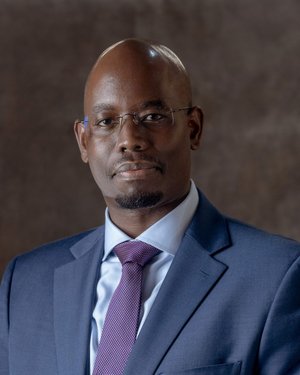
Exclusive interview with Bianca Gichangi, Regional Lead for Africa at the Voluntary Carbon Markets Integrity (VCMI) Initiative and a member of the advisory board of the upcoming Africa’s Green Economy Summit.

Please give us some background about yourself and your role at the Voluntary Carbon Markets Integrity (VCMI) Initiative?

My name is Bianca Gichangi and I’m currently the regional lead for Africa at VCMI. Regarding my background: I’ve worked in the carbon market space for a while, on the policy side, working a lot with governments but also working with the private sector in terms of policy, capacity building and bringing stakeholders up to speed on the different aspects of carbon markets and I’ve also been involved in project development. At VCMI, I work as the Regional Lead for Africa on their access strategy programme, focusing on the African countries but overall on capacity building initiatives on carbon markets.

What was the impetus behind the creation of the VCMI?

The creation of VCMI was driven by an urgent need for credible and trustworthy carbon markets, as we’re moving towards  net zero targets. VCMI is a not-for-profit organisation that has been created to ensure that voluntary carbon markets operate with high integrity, support the goals of the Paris Agreement and brings benefit for people and planet.

It was announced in March of 2021 by the Co-President at the time, Alok Sharma, and has since then been broadly endorsed by companies, NGOs and governments. It is a standard setter on the demand side for the voluntary carbon markets with a claims code of practice, and with our Access Strategies Programme, which supports host countries with incorporating these high integrity VCMs.

The organisation was created over an 18-month consultative process engaging experts and different stakeholders across the board, from companies to governments, our stakeholder forum and expert advisory group in making it a holistic and international standard.

Part of the focus of the organisation is helping companies to make Carbon Integrity Claims? What are these?

The VCMI Carbon Integrity Claims are claims about carbon credits that companies can make to demonstrate their climate achievement and meaningful climate action. Through these claims organisations acknowledge that they have gone above and beyond their science-aligned emission cuts to accelerate global net zero. Companies can make these claims using our VCMI claims code of practice, which provides a universal standard for companies to, first of all, use carbon credits as part of their net zero transition, and second, to make verified claims about this use. This now ensures integrity on the demand side. And this means that companies use carbon credits in addition, not instead of, decarbonisation and make these credible claims.

Are companies reducing emissions fast enough? And do they have the tools to do this?

Well, companies are not reducing emissions fast enough and they are actually falling behind on their science-based targets. In reality, up to 60% of the companies with these science-based targets are falling behind on their Scope 3 emission reduction targets. But we need action right now. So the use of credits would mean faster emission reductions helping to conserve the carbon budget. And it’s better for those working hard to decarbonise, but still falling short of their targets to use credits to take responsibility for their emissions than to renounce their targets altogether.

This would allow them to direct capital to projects that bring emissions down quickly elsewhere. We believe that action is better than inaction. And we find that companies that use credits decarbonise a lot quicker, have more ambitious targets, invest more in decarbonisation efforts and have stronger governance.

Regarding the tools to advance this, VCMI has a Scope 3 claim, which is currently in beta version and will increase urgent climate action while companies transition to net zero. So this claim in beta version requires companies to make science-aligned emission cuts across direct operations under Scope 1 and 2, as well as take responsibility for their value chain emissions, Scope 3, through emission cuts and high-quality carbon credits. There will be guardrails in place to maintain integrity and to ensure that the carbon credits are used in addition and not to delay decarbonisation. It is not a get out of jail free card.

We are also in the process of having a public stakeholder consultation. In the past, we have often consulted with over 150 corporates on sustainability and finance and climate experts to inform this version.

How are you including Indigenous People and local communities in your activities and messaging?

While local communities and indigenous peoples are very active members of carbon markets they should be involved in the process and be empowered to participate all through the carbon markets project cycle. This means they should be involved all the way from inception and designing through verification, maintenance and its governance. It is important to involve them and not only as beneficiaries but also as shareholders of projects.

And voluntary carbon markets can quickly channel the finance to  low- and middle-income countries, directly focusing the finance to where it’s needed most for  Indigenous Peoples and Local communities who do the hard work of preserving 80% of the world’s biodiversity. Our access strategy programme has a toolkit that also goes into detail on how to factor in communities in your process and development of carbon markets frameworks.

Any particular success stories that you can share? 

Yes, in 2023, we ran an early adopters programme to support a group of companies committed to working on making a carbon integrity claim. We now are happy to announce that we have Bain & Company as part of that group, making the first integrity claim, ushering in a new era of high-integrity voluntary carbon markets. And recently in June of 2024, we had Natura Cosmetics also achieve a carbon integrity platinum claim. So this, of course, has set out a high standard for companies to engage in high use of quality carbon credits.

On the access strategy side, we have produced an access strategy toolkit that policymakers can use on how to incorporate this high-integrity voluntary carbon market activities into their climate plans, such as their NDCs or climate prosperity programmes. We are currently working with Peru, and we have provided support to the Kenya government in the form of a secondment. We have worked with the state of Yucatan in Mexico to develop a carbon market strategy and now are in the process of developing a best practice guide for their private sector to engage in voluntary carbon market activities.

This support also extends to case studies that we have done in different sectors. We have done a study on the opportunities for carbon markets in agriculture, blue economy in Latin America and the Caribbean region. So, we fully understand that capacity is required based on the requests that these countries make specific to access strategies programmes and we tailor the support to the request of the country.

How will Africa benefit from voluntary carbon markets?

We stand to benefit significantly from voluntary carbon markets, as it unlocks new carbon finance revenue streams for communities and governments, promoting sustainable practices in agriculture, promoting deployment of low carbon technologies in energy, transport and also attracting investment into a wide variety of projects cutting across different sectors.

It does position Africa to benefit from carbon markets, because previously we have not really seen the benefits translating into the sustainable development that the continent needs. Therefore, engaging in high-integrity carbon markets will enable us to really take advantage of carbon finance that can be used and channelled to where the African countries themselves prioritise this intervention and financing to go.

What are the biggest challenges?

However, governments and development banks say that this is not being ramped up fast enough. Integrity itself, which is really important on both the demand and supply side, having the high quality credits produced on the supply side – which IC-VCM is focused on, and then being used credibly on the demand side – which VCMI is focused on is really important to provide transparency. However, this alone will not drive up the demand, and government intervention is required through policies and regulations that actually promote the use of carbon markets and their uptake. So, we are running out of time, and companies need to act now for the carbon credits to be a part of this action with governments supporting these interventions.

What is your vision in terms of what the green economy could mean for job creation and climate change?

Well, for starters, voluntary carbon markets can drive green growth across various sectors, helping drive system transformations, support infrastructure development and create job opportunities, particularly for the youth. These markets can support sustainable farming practices and reforestation efforts, while also fostering the development of technical skills in emerging sectors such as e-mobility, clean cooking, and renewable energy. By engaging young engineers or youths with technical backgrounds in the local design and implementation of these low-carbon technology projects, we can build a skilled workforce that not only advances green innovation but also ensures that economic benefits are widely shared within communities.

What excites you most about the opportunities that the green economy can have for Africa?

What excites me the most about the opportunities for Africa is the abundance and wealth of resources that we have, and how we can use that as an opportunity and to frame ourselves as a critical part of the solution to global decarbonisation. We have so many rich renewable energy resources, large expanses of arable land, diverse terrestrial and marine ecosystems, critical minerals and a young population that is growing. We really are on the verge of sustainable economic growth, and even speaking about green industrialisation that can be propelled by these resources.

We have so many opportunities coming up, for example, in the e-mobility space, which weren’t there before, especially in the carbon market space, this is something really new and an opportunity for us to decarbonise in terms of the way we travel. And there are opportunities in clean cooking. We’re seeing advanced technologies coming up in terms of biofuels, but also clean cooking using electricity.

So, we are really innovating as we move along, such as with the opportunities of sustainable practices in agriculture and biochar.And of course,  renewable energy can be used to drive green industrialisation. For example, in Eastern Africa, we have a lot of geothermal and that can be used to also support direct air capture. So there are a lot of opportunities in new spaces that we should be able to take advantage of and really use these carbon markets as a way of bringing in finance that will also leverage more financing to contribute to sub-sectors growing. But it is also catalytic in terms of increasing the deployment of these low-carbon technologies. So I’m really excited for us to use these markets, but use them in a new way, from how carbon markets were used, to really propel Africa’s priorities in terms of moving forward in our green growth.

You are a member of the AGES advisory board. What made you decide to become involved in AGES?

Well, joining the advisory board actually aligns perfectly with the passion I have for the green growth that the continent is going to have and the sustainable development on the continent. So I definitely see the summit as a platform to shape the narrative around green economy, the policies that we are developing, the networks and collaborations that leading organisations and countries will come forward in terms of providing lasting solutions for a future where we can transition into sustainable development. So, it’s one of the initiatives that really aligns with the work that I am doing, and it was a natural decision to join.

How important is such an event for the continent?

It’s really important for the continent, because, as mentioned before, it’s really key for us to come together, first of all, to know the progress that we are making, to learn from each other, to understand what our challenges are, but also to celebrate the successes that we are having in terms of driving our climate agendas in our countries and how that is contributing towards us growing. So, it’s really important that we don’t get siloed into what we’re just doing by ourselves. This is an opportunity for us to look at all these different aspects that contribute towards holistic green growth. It’s really important for all different kinds of stakeholders, whether it’s private sector, governments and civil society organisations, to really be a part of this conversation and to really boost the narrative that we can actually have development that is not contributing to the climate crisis.

It’s important for us as Africa to know that, even though we are the most vulnerable countries when it comes to climate impacts and have the least emissions and really have contributed the least in terms of these emissions, that we can consciously choose to develop in a manner that is different from what caused this problem. Of course, we will need a lot of climate finance to make this a reality, but it is crucial that we explore every avenue, use all innovative instruments we can, such as carbon markets as well, to see how we can finance our transition and our development because we need to develop. And it’s important that we do so in a way that is resilient for our people, but at the same time, also reducing emissions. So, it is definitely an important conversation that needs to bring everybody together to continue advancing how Africa can grow in a green and sustainable way.

August is Women’s Month in South Africa, but we celebrate women all over the continent. Do you have a message about the role of women in the energy transition?

My message would be that women need to continue supporting each other. This space, in terms of energy transition is unique, and it is a unique opportunity for women to be empowered, to get into new sectors and new aspects of climate change that were not traditionally there, but are now also an opportunity for them to come in, contribute to policy, contribute to projects that are actually leading to renewable energy, leading to community benefits, and leading to wider knowledge on the subject matter.

And it’s really important for women to be a part of this conversation, and for the women that are in the space to keep encouraging each other and to also keep mentoring younger women to get into this space as well and to really continue working to amplify our voices and the support of the work on the continent as it’s a crucial, crucial time for women to be involved and to become leaders in the space.

Will carbon credits and the private sector save Africa from climate change?

  Image: Freepik
Image: Freepik

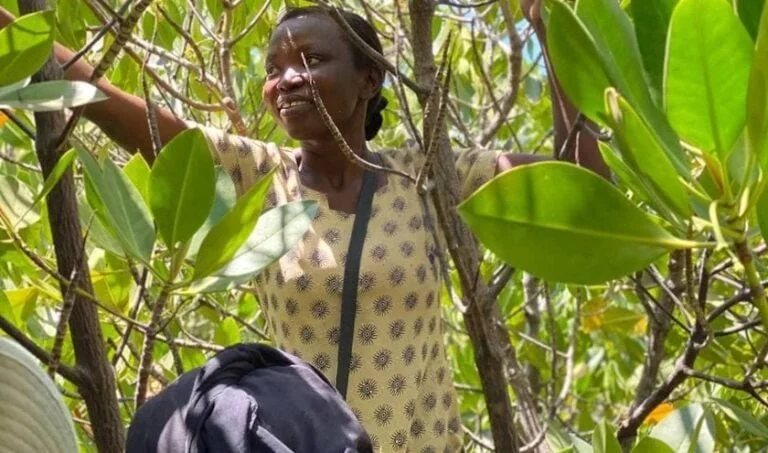
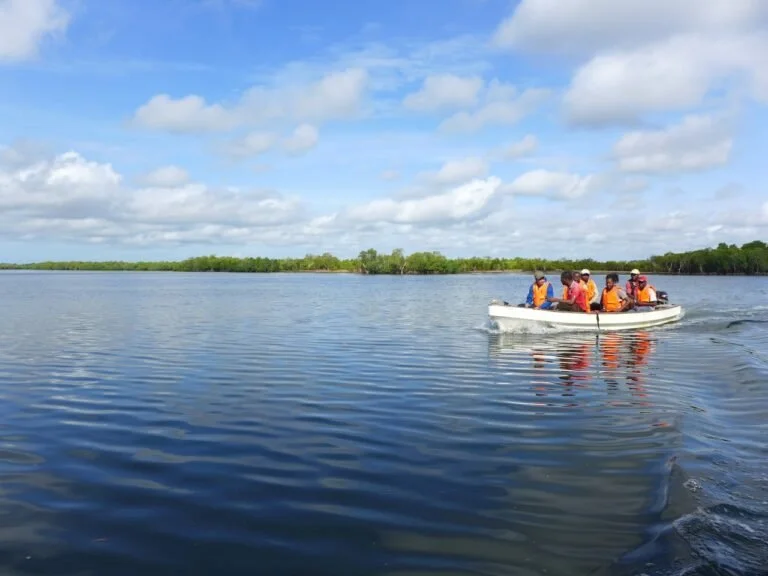
Robin Bartmann’s passion and enthusiasm for mangroves is palpable. “I am fascinated by mangroves,” he admits with a grin. Bartmann is the COO of Vlinder in Kenya, an organisation that restores mangroves to combat climate change, enhance biodiversity and empower communities through fair carbon sharing and sustainable livelihoods. The project is designed to plant 4.2 million mangrove trees, sequestering approximately 911,660 tCO2e over a 30-year crediting period, with potential extensions.

Vlinder (it means butterfly in Dutch) was one of nearly 60 investment-ready start-ups, projects and some multi-million dollar infrastructure developments looking for financial backing at the Investment Pitches at Africa’s Green Economy Summit (AGES) in Cape Town last week. The platforms connected high-impact projects with global investors, offering a dynamic platform to engage and foster real-world investment in Africa’s green economy.

The Papariko Mangrove Project in Kenya is one of Vlinder’s flagship initiatives aimed at restoring 1,500 hectares of degraded mangrove ecosystems across Kwale, Kilifi, and Tana River counties.

Pricing nature

Bartmann was also part of AGES’s Carbon Markets Masterclass, sharing key experience and insight into what it takes to successfully run a successful carbon credit project. “I was excited about the opportunity of pricing nature,” he explained, “83% of global carbon is in the ocean, and mangrove eco-systems remove carbon from the atmosphere at a rate 10 times greater and sequester 3–5 times more carbon than other forests.”

Important learnings in the Papariko project include the following: have at least two local partners and understand that land tenure and carbon rights are different things, understand how to get both. “Kenya is doing  a great job in developing the legislation around this,” stated Bartmann.


   Image: Vlinder
Image: Vlinder
   Image: Vlinder
Image: Vlinder

Gender empowerment is very important in this project said Bartmann: “Women are central to the solution; they are taking leadership roles in managing and implementing the project.” They are using blended finance, and 45% of their carbon credits entail carbon forward contracts. The risks of a mangrove project like Papariko include conflicts over land rights, fluctuating carbon prices, policy changes, extreme weather and pests or diseases.

On Day 2 of the event, the session on sustainable agri practices also featured some fascinating examples of successful, nature-based sustainable agricultural solutions. [Click here for the highlights of AGES Day 2.]

Fundamentally different

“There are real opportunities in this sector. But many clients think they can do spectacularly well. But if you are going to embark in these kinds of opportunities, you need to upskill yourself,” said  Olivia Tuchten, Principal Climate Change Advisor at Promethium Carbon and one of the masterclass facilitators. “Perhaps business models need to be looked at differently. Project developers need to know that the returns are different than from, for example, mines. This is not mining or retail, it is fundamentally different, although there is money to be made and good stuff to be achieved.”

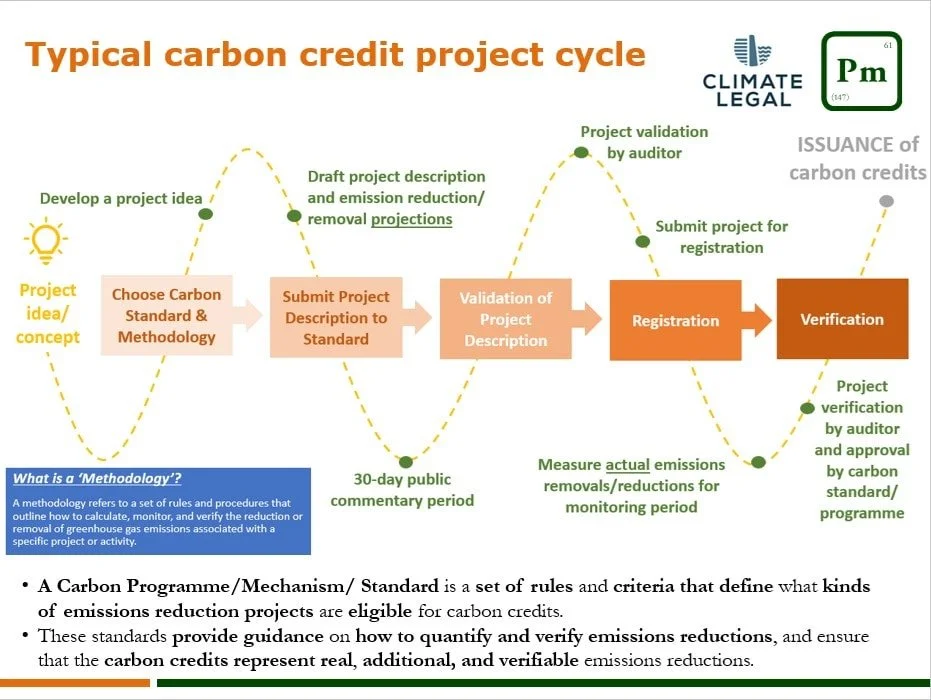
Tuchten took the masterclass attendees through a detailed roadmap of how to apply and qualify for carbon credits: “Many companies often underestimate the audit process. There are many steps needed to assure integrity, and increasingly there is a proliferation of niche carbon standards.” Particularly, she explained that “additionality” has to be demonstrated. This means that the emission reductions must be additional to what would have happened without the project ad that the project should go beyond business-as-usual activities.

   Image: AGES Carbon Markets Masterclass
Image: AGES Carbon Markets Masterclass

We need to do things differently

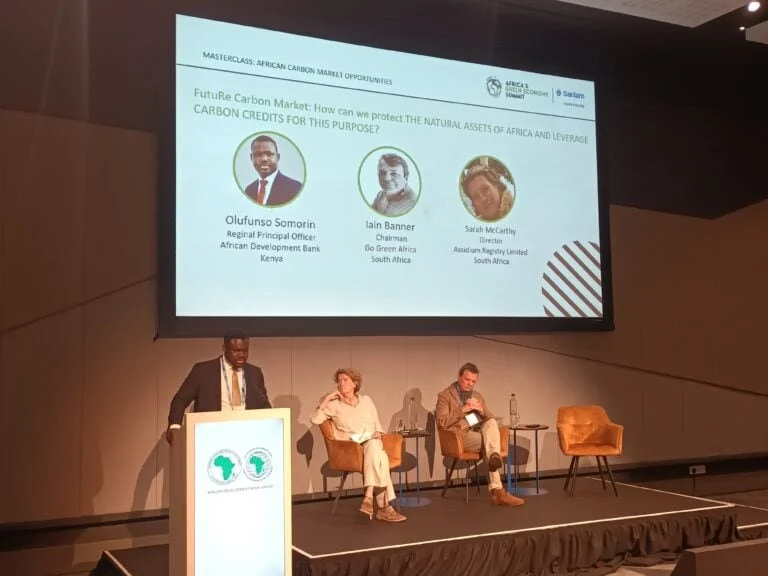
“Nothing compares to the private sector or a market-led approach to climate mitigation,” said Olufunso Somorin, Regional Principal Officer at the African Development Bank (AfDB) in a session on leveraging carbon credits. “However, Africa is still not maximising its potential. We need to do things differently. One of the challenges is that there are many good project developers who have very good ideas, but they don’t have the resources to jumpstart their idea into an investable project.” He reminded the audience that only 17 project developers are largely responsible for most of the carbon projects on the continent.

Somorin announced: “The AfDB is creating the African Carbon Support Facility (ACSF), and we are hoping to start off with a $100 million capitalisation.” Among the goals are supporting countries towards market-creating policy shifts, and the bulk of the funds will provide resources to project developers and assist in validation costs. “The AfDB wants to be able to increase the number of African-owned, African-based and African-led project developments on the ground,” he added.

Where is the private sector?

Common themes during AGES were discussions about derisking not only Africa as an investment destination but also climate finance for the continent, particularly for a sceptical and careful private sector.

During the opening keynote session, Barbara Buchner, Global Managing Director of the Climate Policy Initiative noted that current climate finance covered less than a quarter of what is needed on the continent due to high perceived risk and a lack of bankable projects, adding that only 18% of the money comes from the private sector.

However, on a more hopeful note, during the keynote on the following day, finance giant Sanlam Investments’ CEO Carl Roothman reminded attendees that the current economic climate, which sees so many governments and businesses focus on climate change and green finance, presents a once-in-a-lifetime opportunity for Africa. The company is active in 27 countries on the continent.

“I don’t think you will see in another 150 years the opportunity for access to the global capital and enthusiasm from the rest of the world, to invest in Africa” said Roothman. This enthusiasm, though, does create a responsibility for everyone in Africa, he admonished. Read more.

This is a nascent sector

“Africa has a huge opportunity to monetise the eco-system services that are natural capital systems, but it has got to be bankable” is how Standard Bank’s Lawrence Cole-Morgan, Global Markets: Lead, Carbon Credit Trading explained the careful stance of many banks.

He added that eco-system services such as the Congo basin and biodiversity services are services to the planet that can be monetised. “These natural systems are like infrastructure that we rely on as societies to exist, but as commercial banks we have to do it this within our lane. What we are seeking to do is see how we can fund the upstream production of carbon credits that are a monetisable commodity, a monetisable eco-system service, and fund against them; very much looking like project finance.”

“We are staying in our lane,” he continued, “managing our risks, either through blended finance, insurance or other market mechanisms.” Cole-Morgan added: “This is a nascent sector. If you look back 15 years ago, as banks we were all looking at the renewable sector in the same way. [ ] We learned how to derisk.”

Long-term perspective

“When it comes to developing such projects, it takes a lot of engineering effort to really derisk a project,” said project developer Leon Van Wyk, who is the CEO of Lesedi, a leading African EPCM. He continued: “There is a lot of work to be done between the development stream and the investing stream where the bank needs to provide its ultimate approval. In addition, projects tend to be developed in isolation, and when you look at how many renewable projects are being developed, there is not a lot of regard for grid stability, which needs to be dealt with. Our interconnectivity and grid resilience are not the same as in European markets.”

In addition, van Wyk expressed concern about the short-term nature of many projects seeking carbon credits to off-set their carbon footprint: “It is a quick fix for whatever the problem is that they are facing. And that is not necessarily the right approach in terms of how we solve decarbonisation from a long-term perspective.”

Mixed feelings: data lacking

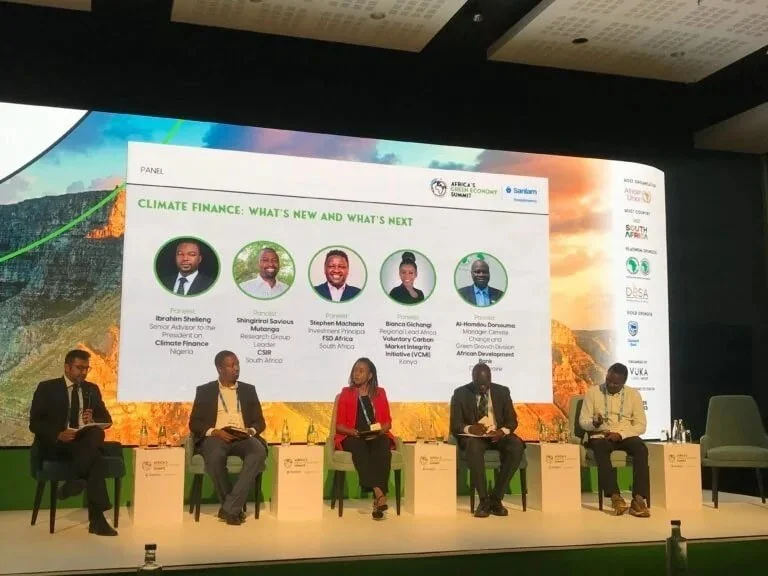
During question time in a panel discussion on “What is new and what’s next in climate finance?” former World Bank sustainability guru Dr John Roome challenged the experts on what he had heard thus far: “I have very mixed feelings. Will this radically change getting private sector into climate finance? Is this the best we can do?” He asked the panel to name the one thing that they think might make the difference. The panel agreed that the lack of big data in the African climate space was a major gap.

“Very little is invested in data, and countries are unable to account for what they have,” said Shingirirai Savious Mutanga, CSIR research group leader, adding: “for me the answer is data. Then we will have the evidence that we need and won’t struggle to build a pipeline.”

Bianca Gichangi, Regional Lead – Africa at Voluntary Carbon Market Integrity Initiative (VCMI) concurred: “Big data has enabled us to make great strides. We need to prioritise it in the $1.3 trillion that is needed.”

For more AGES highlights:
Pre-con day
Day 1
Day 2

  • This article first appeared in the Green Economy Express newsletter, published by Africa’s Green Economy Summit.

“Africa presents probably the greatest growth opportunity within carbon markets”

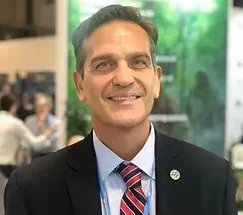
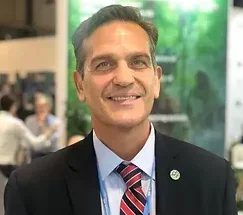
Exclusive interview with Javier Manzanares, co-CEO, Green Climate DAO*: ClimateCoin and the former deputy executive director of the Green Climate Fund. Mr Manzanares is also a member of the advisory board of the upcoming Africa’s Green Economy Summit. 

*DAO (decentralised autonomous organisation)  

Let’s start with some background on you. You have extensive experience as a green climate finance advisor, including with the Green Climate Fund. 

Good day to everyone. Thank you very much for having me. My name is Javier Manzanares. I am the co-CEO of Climate Digital Investment, with ClimateCoin as a flagship brand for the project. 

Regarding my experience, I worked for the Green Climate Fund (GCF) for nearly eight years, initially as a CFO and director of support services. I then became interim executive director on two occasions. My final post during the last four years at the GCF was as deputy executive director. I finished that tenure about a year and a half ago. Since then, I’ve been fully immersed in carbon markets, mostly in voluntary carbon markets. 

I’m also a senior consultant to the World Bank on a project and programme to scale voluntary carbon markets in middle-income countries. We cover about 14 countries: South Africa, Egypt, Kenya, Morocco, Vietnam, Indonesia, India, Colombia, Mexico and Peru, to name a few. I’m also a board member at a programme standard for voluntary carbon markets called BioCarbon Registry. 

Please tell us more about ClimateCoin. 

ClimateCoin is a blockchain-based project. The purpose is to tokenise credible, robust certified carbon credits and to convert them into a digital currency, and the digital currency is ClimateCoin. 

We’ve dedicated the last year to product development. Our first beta testing is available for testing on different social media channels, and we are now also progressing towards our second product development that brings us to a two-way bridge, meaning that you can decide yourself to tokenise those certified carbon credits that you hold on one of the registries and convert them into ClimateCoin. If you decide to go back off-chain, go back into the initial status of your certified carbon credits, you can also do so. 

ClimateCoin has applied for listing on the Spanish Stock Exchange, and we have already filed our proposal with the Comisión Nacional del Mercado de Valores (National Securities Market Commission), and we are ready for the public listing of our governance token, we call it CLIMAT, and we expect that to take place during the month of October. 

Let’s talk about the rising importance of carbon markets in battling climate change. How have carbon markets developed and what is the state of play?    

Both mandatory compliance markets and voluntary carbon markets have already reached very sizable, very relevant figures. All in all, for the year 2022, research indicates that the volume within market carbon markets was nearly $900 billion, which was mostly within the compliance and mandatory carbon markets. However, voluntary carbon markets are definitely progressing and growing rapidly and exponentially and it should have an important role in battling climate change.  

Why carbon markets are growing in importance? I would say that it’s just a logical reason behind the battle against or towards decarbonisation. In order to combat climate change, we need to reduce emissions, we need to decarbonise the entire society. Carbon markets offer an alternative for that process of decarbonisation. Whether it’s because you are avoiding, reducing or removing emissions, carbon markets offer financial instruments and frameworks for that to take place in an orderly manner. 

The carbon markets have developed in in two different ways, the regulated and the compliance one is still a growing market and we see countries adopting, for instance, carbon tax, domestically, and we also see countries that are adopting emission trading asset cap-and-trade systems. This is growing, like I said. A number of countries are joining carbon markets in the compliance or the mandatory stage.  

We also see a market within, which is the voluntary and is growing, albeit with growing pains, if I may say, and growing with a level of fragmentation, growing with the need for more transparency, more liquidity, more transparent price discovery, but growing nevertheless. And, perhaps, it is within that stage of asking out loud for some kind of level of regulation within the voluntary carbon market. In my view, it is taking too long for countries to react.  

You will probably have seen the news in the carbon markets during the last few months the criticism because of the lack of integrity. As a response to that, we have also seen a number of initiatives and frameworks that are trying to provide that level of transparency and integrity in the voluntary carbon market. This is happening, it is also rapidly evolving, and we see initiatives presenting core carbon principles, like the ICVSM (Integrity Council for the Voluntary Carbon Market), and with the work of the BCM Initiative, the International Chamber of Commerce, we also see the Taskforce on Scaling Voluntary Carbon Markets etc. So all of this is adding to providing a greater degree of transparency. However, we’re still missing some global or universal standards setting authority to provide that type of guidance, and in the absence of that, these initiatives and frameworks are providing that element of additional robustness or transparency and integrity into the voluntary carbon markets. 

What opportunities does carbon finance present to Africa? 

Particularly in Africa, we see enormous opportunities for carbon finance. I see it within nature-based solutions, and I also see frameworks and protocols for biodiversity that are coming up very strongly. 

They call it biodiversity credits, protocols on habitat banks, with a purpose for conservation and restoration of nature. Africa presents probably the greatest growth opportunity within carbon markets. In order for that to happen, what we also need to see is countries taking ownership in generating an ecosystem that will support the growth within countries. For this, I’m referring to countries with a certain scale in Africa that should move to ensure that there are domestic standards in the country and domestic players that can provide services of validation and verification.

These domestic players can provide registries: whether it’s a national registry by governmental authority or within the private sector itself that can provide those types of tools. Tools that, all in all, not only present the basis for growth, but also create job opportunities and the capacity that is needed in many of the countries. 

Then, definitely apart from biodiversity credits, nature-based solutions or results-based financing in carbon credits. I also think that Africa presents opportunities in carbon storage, carbon capture and storage and widely in energy, renewable and solar, which still having a lot of room for growth, and being part of that energy transition. It is a transition that is needed in many regions of the world, but particularly in Africa—a just energy transition with the support of the right financing package would bring Africa to the level that is needed within the continent. 

Are there successful examples of carbon market deals that have gone through in the last 12 months? 

There are a lot of deals in the carbon markets that we have seen during the last 12 months. If I were to highlight some of them, I would say that habitat banks present a growth opportunity for many developing countries or emerging economies. This is not only about carbon markets. Carbon markets and carbon reduction cannot be taken in isolation. It has to be taken within pricing nature, and there is also a Taskforce on Nature-related Financial Disclosures now.  

The objective is to understand what the nature-related risks are, the impact, the challenge and the opportunities, and then the market, through all these initiatives, is bringing that badly needed element. So, examples within nature-based solutions within habitat banks have all the necessary elements to ensure that the carbon reduction has to be accompanied by restoration, conservation of nature, and these deals have indeed provided this initial additional element of certainty into a protocol for biodiversity credits. These are the deals that in my opinion are to be highlighted. 

Which innovative finance products have you seen to be effective in this sector? 

Honestly, that remains to be seen. Some of the financial products that we have seen are becoming effective. Others need additional support, maybe from large, multilateral development banks or regional development banks. And in my mind, what I’m referring to right now, is the potential growth and importance of financial instruments like carbon insurance.  

We have seen a number of standards and programmes, and they are playing a very important role in issuing carbon credits. Some of them also play an important role in providing registries, and carbon credit ratings are also coming into the picture, so as to give additional peace of mind in the integrity and quality of these carbon credits. So, in my view, carbon insurance could and should be another innovative finance product. It would definitely give that element of credibility to the investors and buyers.  

Personally, I would like to see a lot more results-based financing in carbon markets, and there is plenty of room for growth in the issuance of partial credit guarantees or similar instruments. That would motivate buyers and investors and provide that element of security during a period of uncertainty that the voluntary current market has gone through and is still going through. If these more innovative financial products could come along, with the support from institutions like IOSCO (International Organization of Securities Commissions) in providing guidance and regulation to the exchanges, that would be ideal.  

And then, in a global and international context, I believe that, in the current volatile markets, we are missing the leadership of international organisations and leadership in terms of standards that all the programmes can follow. And, it would be extremely useful to also have a registry that provides that type of integration. The World Bank has done and is doing quite a bit of work on the Climate Action Data Trust, for instance, to provide the registries and space for integration within a platform. This is the type of initiative that the market is crying out for. 

Getting back to mandatory and voluntary carbon markets, are there certain legal implications that present challenges? 

Particularly, when we talk about legal implications, I would like to refer initially to the voluntary carbon markets, this is in the nascent stage. And referring, for instance, to the work that we are doing with the World Bank in a number of countries. We’re starting from the very, very initial stage, meaning, what’s the legal nature of carbon credits? At the end of the day, countries are sovereign, but we’re now supporting countries in defining the legal nature.  

So, as you can imagine, the implications are tremendous. There are implications in terms of tax treatment, financial disclosure and legal agreements. So, all of this is still being tackled, if I may say. So, without clarity for investors on what the tax implication are for a company, for a financial institution, maintaining a portfolio of carbon credits, if there is no clarity on how to account or what the risk is for the capital of a corporation in maintaining these new assets, the market will definitely take a lot longer to develop and to scale. 

This has been treated differently in the mandatory and compliance markets. I think proof of that is their level of growth and the vast volume of ETS (emissions trading system) markets that they have developed. They have grown quite a bit, and at the end of the day this is also represented in the pricing. There is a price disparity between mandatory and compliance markets, and you see an enormous difference with voluntary carbon markets.

Even when we talk about carbon tax, let’s say, an average price for carbon tax, we go from $5, $6, $7 to $8 or $10. In most of the countries, they are outliers with a much higher rate on carbon tax, but the average would probably be around $7 or $8 a tonne. When you go into ETS markets in Europe, it varies, but an average price for 2023 is €75, €85 a tonne. Like I said, a price disparity.  

Then, we move to the California ETS and the average price is about $40 a tonne. So, the price disparity is not helping either. Still, it gives you an idea of the need for more universal and global frameworks that can provide guidance to countries in general on how to tackle these challenges that we see that, in my view, until such a time that there is some sort of regulation within the carbon markets, will create a bottleneck that will hamper the growth of voluntary carbon markets. 

How important is the principle of ESG to combat climate change? 

ESG is the foundation. I’m not sure if we can call it a principle, foundation or a framework. But it is definitely a good basis for combating climate change. And I mentioned earlier on that we cannot speak about climate change in isolation of the social elements and in isolation of strong governance, and that is what the ESG framework presents. It ensures for those companies that are adopting an ESG framework, that, from those companies’ perspective, from organizations in general, that we tackle all decisions based on the three buckets that could definitely be presented, maybe even more ambitiously, into other frameworks.  

But, if we speak more specifically about ESG, what all of us are trying to do, is that the decisions made within a corporation, within any organization, elements related to the environment are taken into account, elements related to social activities within the company, within the structure and governance of the corporation, and that they have an impact in society.

They also provide the challenges and opportunities in that every decision that a corporation makes has either nature-related risks or they have socially or governance-related risks. So when I speak about climate change, I speak about climate change within the context of our planet, within the context of our society. Again, this is not an isolated problem, this is a problem that has to be integrated within all the necessary responses to our society. And again, ESG is a robust framework that we can use. 

What keeps you excited about this industry? 

What keeps me excited about the industry in the current markets is the level of innovation that carbon markets are presenting within any possible context. Here we talk about blockchain, digital monitoring, reporting and verification. We talk about new technologies in carbon capture and storage or how to use artificial intelligence within carbon markets. So personally, what makes me excited is how the new breakthrough technologies are impacting carbon markets and how they are about to impact carbon markets in the near future with the main purpose of decarbonising the economy.  

So, by bringing in new technology and by reaching a certain level of scale, we will make the usage of that technology a lot more efficient and effective, and what is most relevant, how to put this new technology at the service of emerging and developing economies, so that the transition and the decarbonisation of these least developed, developing and emerging economies is fair and just. And, those polluting and who have contributed the most to the huge level of emissions in the atmosphere, they have to pay the bill, they have to contribute and they have to support others who have not contributed to the levels of emissions that we see nowadays. 

You are a member of the advisory board for the next Africa’s Green Economy Summit in Cape Town in February 2024. How important is such an event for the continent in your view?

I’m honoured to be a member of the advisory board for Africa’s Green Economy Summit. These kinds of events are of great importance as they provide not only that element of visibility that is needed, but also bring experts and the right audience in terms of investors and sponsors and in ensuring that we are all contributing to a green economy.  

And, particularly for Africa, I think these events are even more important, because the level of support, and I say here South-South support, I think is more important than ever. There are some countries in Africa that are taking strong leadership in areas of ESG and areas of green economy and it would be ideal if these countries are also in the knowledge sharing sessions.

So, from the perspective of having investors and potential investors, relevant players, academia, experts in general in green economy, experts in ESG, in circular economy—they bring the right narrative and the right context for all of us to learn. At the end of the day, this industry badly needs more contributions, more adoption of ESG practices and facilitating to provide the right context for investors and financiers to feel comfortable about contributing, participating and investing in in Africa. 

What will be your message at the event next year? 

From my perspective, my message is more about African countries’ ownership. It is essential that African countries believe in themselves to build the right voluntary carbon markets and mandatory carbon markets for that purpose, but that they bring their ecosystem so that the carbon market can complete the stages in a project cycle and that these stages are handled by nationals to the furthest extent possible. So, there is an opportunity for jobs, there is an opportunity for knowledge and that the countries can tackle mandates by themselves.  

So, it is essential, and this is what I would like to summarise as part of my message, it is essential that those countries that are in a position to strengthen their own capacities in the carbon markets provide avenues for domestic growth and new job opportunities. I would like to encourage the countries to do so, and if they have not done it, to start putting measures in place so that the carbon market ecosystem is as strong as possible in each one of the countries. Thank you very much. It was a great pleasure to have this discussion with you today.