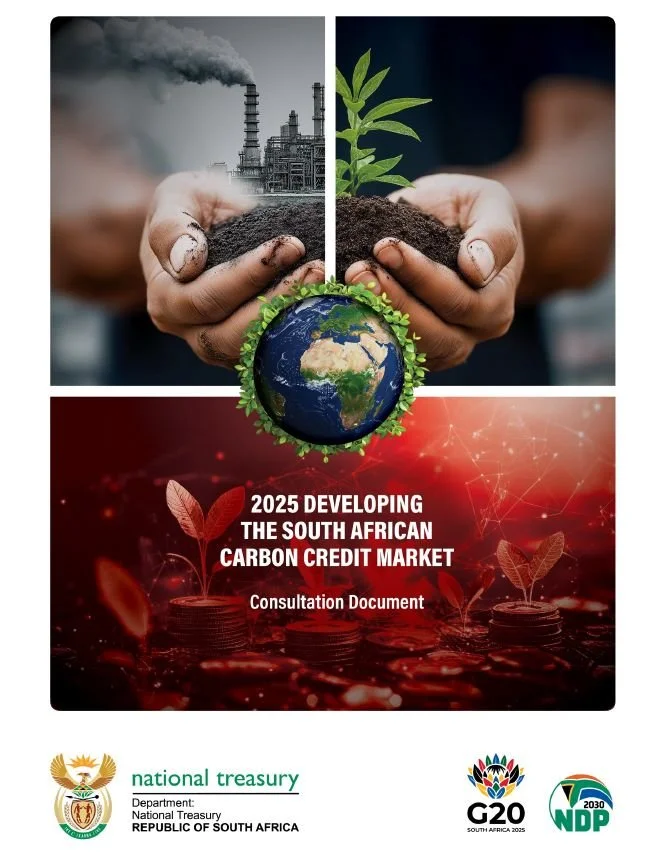
The National Treasury Unpacks South Africa’s Vision for a Stronger Carbon Market

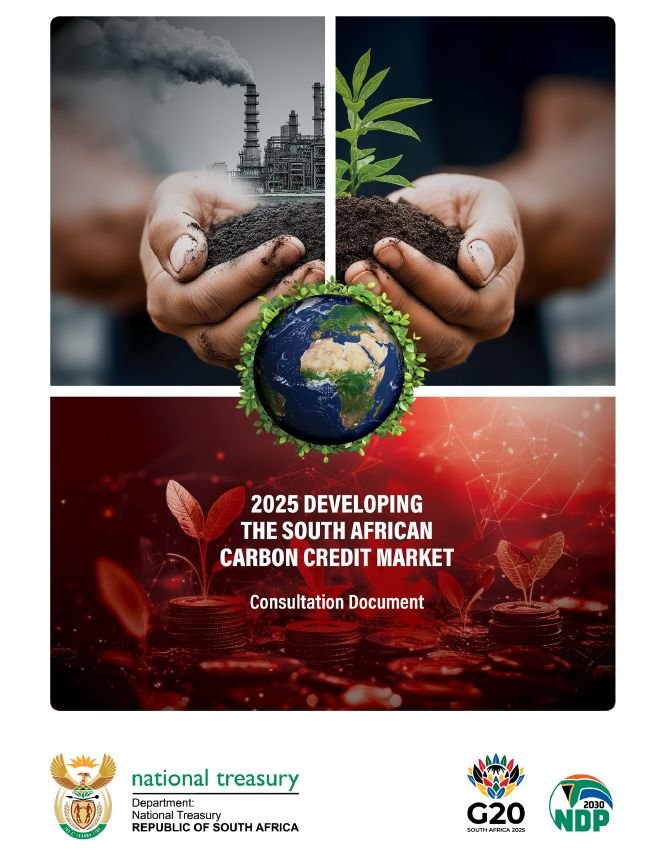
South Africa is strengthening its commitment to a low-carbon future — and this new consultation paper outlines how. Building on the 2025 Budget and the Phase 2 Carbon Tax Discussion Paper, it explores the next steps in advancing a robust carbon tax offset market that supports both business competitiveness and national climate goals. The report highlights the opportunities and challenges shaping South Africa’s carbon market and provides valuable insights into the evolving policy, regulatory, and financial landscape.

Read the full paper to understand how South Africa is charting the path toward a high-integrity, market-based climate solution.

FSD Africa: The Social and Economic Impacts of Carbon Markets

Commissioned by FSD Africa and the UK Foreign, Commonwealth & Development Office (FCDO); authored by Agora Global in collaboration with the Institute of Development Studies, University of Sussex

  Image: FSD Report Cover
Image: FSD Report Cover

DOWNLOAD HERE

This landmark publication presents a comprehensive realist systematic literature review examining carbon market participation on social and economic effects on local communities in low- and middle-income countries (LMICs). Carbon trading, particularly voluntary carbon markets, is gaining prominence in global climate mitigation efforts, raising concerns about its impact on local communities.

The report, based on 52 empirical studies in Africa, Asia, and Latin America, examines the impacts of carbon projects on community livelihoods, highlighting systemic challenges and potential risks. These include delayed payments, lack of inclusion in governance, land tenure inequalities, and increased workload for women, often without commensurate compensation.

The findings reveal a stark reality: while carbon markets hold potential to generate co-benefits alongside emissions reduction, this promise is highly contingent on project design, governance structures, and enabling policy environments. For example, agricultural and clean energy projects demonstrate more substantial positive community impacts than many forest conservation efforts, which may restrict access to vital natural resources and exacerbate social tensions.

The study explores factors enabling carbon markets to foster inclusive development, including transparent benefit-sharing models, high-integrity standards, premium pricing, and community engagement. It also highlights critical knowledge gaps, such as equity outcomes and the scalability of community benefits.

This review provides a balanced perspective on the carbon market’s sustainability, emphasising the need for reimagining carbon projects, particularly in low-income countries, to promote equitable, locally owned development. It is valuable for stakeholders in the carbon market.

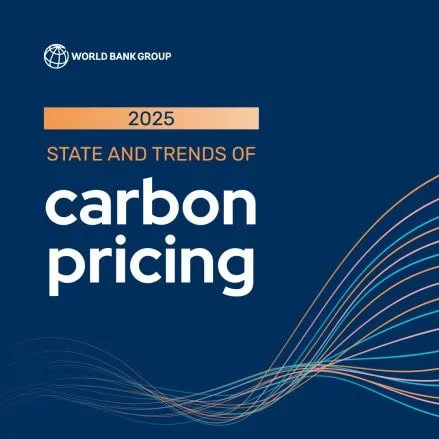
WORLD BANK: State and Trends of Carbon Pricing 2025

The World Bank’s annual State and Trends of Carbon Pricing report is aimed at providing an up-to-date overview of existing and emerging carbon pricing instruments around the world, including international, national, and subnational initiatives. It focuses on identifying key developments relating to all forms of direct carbon pricing – emissions trading systems, carbon taxes, and carbon crediting mechanisms. This year’s report will be the twelfth (in its current format) – building on many decades of World Bank Group’s work in this space.

DOWNLOAD THE REPORT NOW

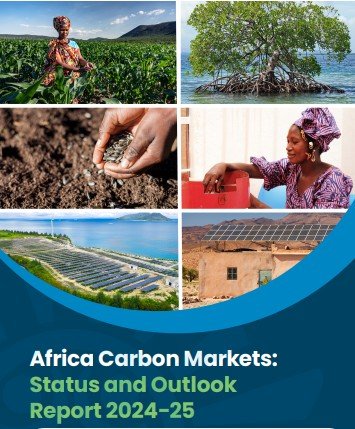
Africa Carbon Markets: Status and Outlook Report 2024-25

The Africa Carbon Markets Initiative (ACMI) is driving the growth of carbon markets in Africa with a focus on integrity, equity, and transparency. In its first year, ACMI has advanced initiatives across the carbon market value chain by engaging diverse stakeholders and collaborating with governments to create supportive policies. The initiative also works with financial institutions to develop de-risking solutions, unlocking private-sector investments for impactful carbon projects across the continent.

In 2024, carbon markets faced significant credibility challenges, with major concerns about overstated emissions reductions in key project categories like deforestation avoidance (REDD+) and cleaner cookstoves. These issues are particularly impactful in Africa, where such projects represent 90% of recent credit supply. Accusations of greenwashing and fears of land loss for carbon credit initiatives have fueled skepticism about their true climate benefits. Transparency and equity questions have further eroded trust, contributing to a global demand drop of 22% and significant price declines. These challenges are shaping the future of Africa’s carbon markets, emphasizing the need for high-integrity, impactful solutions.


Read here