
Carbon Markets Africa Summit: Unlocking Africa’s Carbon Wealth Through Integrity, Action and Investment

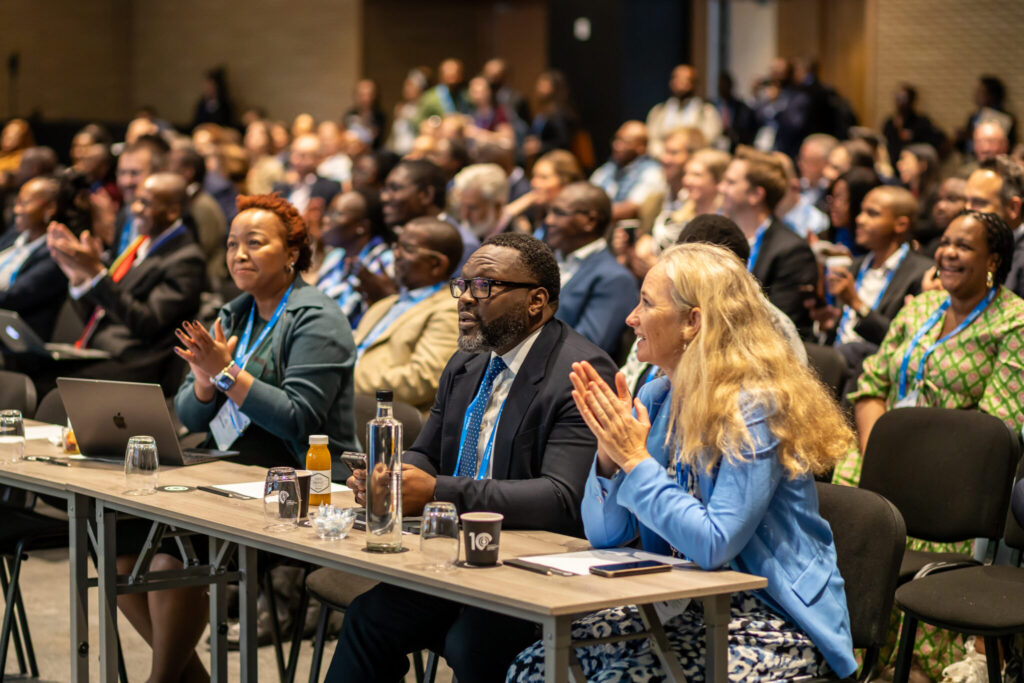
   Image Source: AGES 2025
Image Source: AGES 2025

“There are real opportunities in this sector.”


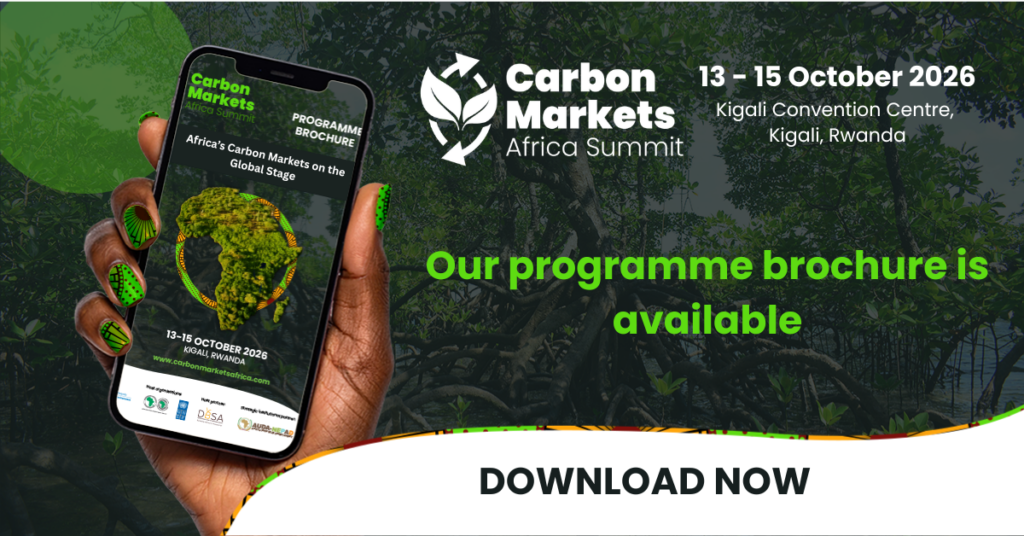
The award-winning VUKA Group has officially launched the Carbon Markets Africa Summit (CMAS), a purpose-driven, high-level continental gathering that will take place from 21 to 23 October 2025 in Johannesburg. Designed as Africa’s flagship platform for carbon finance, CMAS brings together policymakers, investors, standards bodies, developers and corporates to drive practical, inclusive climate action and unlock Africa’s carbon value at scale.

Carbon markets are quickly becoming one of Africa’s most promising opportunities for climate finance and sustainable development. Yet the complexity of validation, verification, regulation and monetisation continues to challenge project developers, financiers and governments alike.

“This isn’t mining or retail. The returns, timelines and requirements are different,” says Olivia Tuchten, Principal Climate Change Advisor at Promethium Carbon. “There’s money to be made and good to be done – but only if stakeholders upskill and understand the process.”

CMAS is Africa’s response – a strategic event focused on building confidence, closing knowledge gaps and accelerating real transactions.


   Image sources: AGES 2025
Image sources: AGES 2025

Strategic Moment: Africa’s Carbon Future and the Global Agenda

The timing of CMAS is particularly significant. With growing global momentum around carbon pricing and the operationalisation of Article 6, the outcomes of the upcoming G20 Leaders’ Summit in November are expected to influence the future architecture of global carbon markets.

As the G20 debates issues like carbon border adjustment mechanisms and international credit standards, Africa must be ready to respond with a united, informed voice. CMAS provides a platform for African stakeholders to strategically align, share technical insights, and sharpen positions – not only for G20, but also in preparation for COP30, where climate finance and carbon market governance will again take centre stage.

“We are in the right place and at the right time today to ensure that Africa benefits from carbon markets,” says Prof Anthony Nyong, Director of Climate Change and Green Growth at the African Development Bank.


A Unique Value Proposition: What Sets CMAS Apart

  • Pan-African Focus with Global Reach: Prioritising African leadership while connecting to international buyers, standards and financiers.

  • Ministerial Roundtable (21 October): A closed-door session convening African environment, climate and finance ministers to align policy priorities and amplify Africa’s voice at COP30 and G20.

  • Deal-Making Platforms: Investor roundtables, project showcases, deep-dive workshops and curated networking designed to convert conversations into transactions.

  • Integrity & Compliance: Navigate voluntary and compliance carbon markets with rigor, exploring Article 6, regional frameworks and global best practice.

  • Project Visibility: Spotlight on investable, Africa-based carbon projects with real climate and community impact.

  • Pre-COP30 Momentum: CMAS will help unify African market positions and technical readiness in the lead-up to multilateral climate finance negotiations.


   Image sources: AGES 2025
Image sources: AGES 2025

Advisory Board: A Multi-Sectoral Powerhouse

To ensure CMAS reflects Africa’s diverse needs and opportunities in carbon markets, an influential advisory board has been convened, including:

  • Andrew Gilder – Director, Climate Legal, South Africa

  • Andrew Ocama – Eastern Africa Alliance on Carbon Markets and Climate Finance, Uganda

  • Bianca Gichangi – Regional Lead – Africa, VCMI, Kenya

  • Brett Stacey – Director, Carbon Zero Verification, United Kingdom

  • Dr Olufunso Somorin – Regional Principal Officer, AfDB, Kenya

  • Heather McEwan – Regional Representative, Verra, South Africa

  • Javier Mazanares – CEO, Allen Manza, Panama

  • Lawrence Cole-Morgan – Carbon Credit Trading Lead, Standard Bank, South Africa

  • Mathis Granjon – Trader, Green Steps, Netherlands

  • Maxime Bayen – Operating Partner, Catalyst Fund, Spain

  • Olivia Tuchten – Promethium Carbon, South Africa

  • Reshma Shah – Lead, Carbon Markets, FSD Africa, Kenya

  • Bernardin Uzayisaba, Carbon Market Programme Specialist, UNDP, South Africa

  • Ibrahim Shelleng, Senior Special Assistant to the President, Government of Nigeria

A Pathway to African Ownership

“Africa is still not maximising its potential. We need to do things differently,” says Olufunso Somorin, AfDB. “One of the challenges is that there are many good project developers who have very good ideas, but they don’t have the resource to jumpstart their idea into an investable project.” Somorin continues: “The AfDB has created the African Carbon Support Facility, and we are hoping to start off with a $100 million capitalisation.” Among the goals are supporting countries towards market-creating policy shifts, and the bulk of the funds will provide resources to project developers and assist in validation costs. “The AfDB wants to increase the number of African-owned, African-based and African-led project developments on the ground,” he adds.

According to Lawrence Cole-Morgan, Standard Bank, “the carbon markets provide Africa with the ability to monetise its significant carbon sequestration potential to fund socio-economic development and badly needed adaptation, while making a meaningful contribution to combatting climate change.”

Meanwhile, Andrew Ocama, Eastern Africa Alliance on Carbon Markets and Climate Finance, is of the opinion that “each country is at a different level of readiness to actively participate in the carbon markets. To the seven Alliance countries, these markets are an important avenue for finance owing to their accountability and the measurability of their outcomes.”

Event Details

📅 21 October – Pre-Summit Day

  • Carbon 101 seminar

  • High-impact dialogue by the Global Trust Project

📅 22–23 October – Main Summit

  • Plenaries

  • Ministerial Roundtable

  • Investor roundtables

  • Hands-on workshops

  • Sector-focused dialogues

  • Deal-making and networking

📍 Location: Johannesburg, South Africa


Organised by VUKA Group

With more than 20 years of experience delivering high-impact B2B events across Africa, VUKA Group is the independent, B-BBEE-compliant force behind platforms like Africa’s Green Economy Summit, Enlit Africa, Smarter Mobility Africa, and DRC Mining Week.


Contact

Tailor-made partnerships: Natalie Kruger
+66 (0) 65 614 8605 | 📧 Natalie.kruger@wearevuka.com

Portfolio Director – Green Economy: Emmanuelle Nicholls
+27 (0) 83 447 8410 | 📧 emmanuelle.nicholls@wearevuka.com

Website: www.carbonmarketsafrica.com

Carbon Markets Africa Summit reveals packed programme featuring continent’s entire carbon markets value chain

“In carbon markets, trust plays a key role”

   Image: AGES 2025
Image: AGES 2025

The upcoming Carbon Markets Africa Summit (CMAS) programme features the continent’s entire carbon markets value chain in what is a compelling combination of successful early carbon market movers, climate-finance-ready projects, regulatory bodies as well as global institutional development organisations and investors. The event is taking place in Johannesburg from 22 to 23 October, with pre-conference sessions on 21 October.

CMAS is dedicated to unlocking Africa’s carbon market potential, incorporating integrity, investment and impact. The United Nations Development Programme (UNDP) and the German Agency for International Cooperation (GIZ) are official supporters of the event.

Shifting global landscape
Day 1’s opening session will focus on the continent’s pivotal opportunity to define its own carbon trajectory, attract meaningful investment and align carbon market growth with the priorities of climate resilience, equity and sustainable development. Speakers already confirmed include:
– Iain Banner, Chairman, South Africa
– Fenella Aouane, Global Green Growth Institute, Luxembourg
– Maxwell Gomera, UNDP
– Javier Manzanares, Allen Manza, Panama
– Caroline Tixier, EU Delegation to South Africa
– Angela Churie Kallhauge, Impact, Environmental Defence Fund, USA


   Image: AGES 2025
Image: AGES 2025

Aligning strategy with global agendas
The session on the “Road to COP30: Aligning Africa’s Carbon Strategy with Global Agendas” will look compare Africa’s carbon strategy with global frameworks such as Article 6. High-level representatives from the GMEX Group, AfDBm Verra and ACMI will be part of this panel discussion.

Carbon market frameworks
As African countries move from climate ambition to implementation, regulatory clarity is becoming the cornerstone of carbon market development. A session titled “Turning Policy into Action,” will explore how national frameworks are evolving post-COP29, what integration of Article 6 looks like on the ground and how public-private collaboration can drive effective execution. Strong representation from across the continent and value chain bodes for an enlightening discussion, including the UNDP, Government of Nigeria, the South African Department of Fisheries, Forestry and the Environment, Zambia’s Ministry of Green Economy and Environment and Uganda Climate Change Department.

The challenges with regards to integrity that carbon markets have faced will be tackled head-on during CMAS. Promethium’s Principal Climate Change Advisor Olivia Tuchten will lead the panel discussion around standards, verification and market oversight with experts from Verra, Gold Standard and Anthesis.

Financing Africa’s carbon pipeline
Day 2 of the packed CMAS programme features investor roundtables in a more intimate setting, aimed at “Connecting Climate Capital with Scalable Carbon Solutions,” during which a select group of carbon market investors and financiers can present their funds, strategies and investment opportunities to both potential capital partners and carbon project developers.

Keynote on investment
Day 2’s keynote session on “Financing Africa’s Carbon Pipeline: Derisking, Scaling and Innovating” will address both sides of the investment equation with participants from Shell Nature Based Solutions, Standard Bank, MIGA, AfDB and South Pole.

Jonathan First, Senior Advisor at Climate Policy Initiative will also unpack the question of how to mobilise private capital for Africa’s carbon markets with several financiers from TransEnergy Global, FSD Africa, the JSE and JP Morgan.

   Image: AGES 2025
Image: AGES 2025

Pre-conference day
The CARBON 101 masterclass will provide investors, policymakers and developers with the necessary insights into the burgeoning business of carbon markets. The expert facilitators in this relatively new field will cover everything from international frameworks, African policy landscapes, credit integrity and investment fundamentals.

“Trust plays a key role”
As part of CMAS 2025’s mission to catalyse high-integrity, African-led carbon markets, Dominic Wilhelm, Executive Director of the Global Trust Project, will also lead a high-impact dialogue working session.

“While the current value of carbon markets as of 2023 is about $950 billion, within the next 10 years, it’s going to be worth $16 trillion,” says Wilhelm. “However, the full value chain of carbon markets is very fragmented, and it’s not transparent. Therefore, the full value chain needs to rapidly come together in a high-level dialogue, in which trust plays a key role to solve some of these challenges.”

VUKA Group
Carbon Markets Africa Summit
is organised by VUKA Group, which has more than 20 years’ experience in serving the business community across Africa.

Event dates and location:
Dates:
21 October: Pre-summit day
22–23 October: Summit
Location: Johannesburg, South Africa

Contact details for Carbon Markets Africa Summit
:
Tailor-made partnerships: Natalie Kruger

Cell: +66 (0) 65 614 8605

Email: natalie.kruger@wearevuka.com

Project Lead: Emmanuelle Nicholls

Cell: +27 83 447 8410

Email: emmanuelle.nicholls@wearevuka.com

Event website: About — Carbon Markets Africa

Carbon credits: “Hard work, grit and determination” required

“Africa currently realises only around 2% of its annual potential of carbon credits.”

– UNECA report, 2022

“I suppose now would be a good time to tell you that this is not where you’re going to get rich quickly,” was the warning issued by Olivia Tuchten, Principal Climate Change Advisor at Promethium Carbon recently while leading a carbon credits roundtable at Enlit Africa in Cape Town.

She added: “Sorry, let me burst that bubble immediately. There are commercial opportunities in this space and opportunities to be profitable, but it takes a lot of hard work, grit and determination. You will find unicorns in this space, but mostly the people who make it, have made it through blood, sweat and tears.”

The roundtable was well-attended with a wide variety of interested attendees whose knowledge of carbon markets varied from being experts, to those who admitted not knowing anything at all, but who were keen to find out whether their work in the energy space (for example, project developers and solar power installers) could qualify for carbon credits.

“So this is a very rules-based system,” Olivia stated, as she explained the extended process of checks and validations by independent parties before a project can be registered in the compliance market.

A long process

During the roundtable, two project developers who are successfully developing carbon projects in South Africa also shared their experiences and advice.

Brigette Nagel, Carbon Project Developer at Anthesis leads the company’s first large-scale renewable energy project to be registered in South Africa and which is on the verge of being commissioned.

Based in the Northern Cape, the development consists of a 250-metre high solar receiver tower that absorbs thermal energy from the sun and then stores this energy in the form of molten salts. The salts are then pumped into a subcritical steam turbine, and that’s how it is converted into electricity, which then feeds into the South African grid. This project can power approximately 200,000 homes, and it can also provide power when the sun’s not shining, and it can store power for up to 12 hours.

“It’s been a long process,” said Brigette, “the registration process with Verra, it’s under VCS, the Voluntary Carbon Standard, has also been quite a long process, but we are almost there and hoping to get it registered.”

Anthesis recently achieved another milestone with its pioneering AgriCarbon carbon farming programme, becoming the first carbon farming initiative in Africa to achieve registration and carbon credit issuance under Verra’s VM0042 Agricultural Land Management methodology. [Read exclusive interview with Brigette Nagel here.]

Money on the table

Dr Marco Lotz of Carbon Disclosure South Africa explained how smaller companies too can get a piece of the carbon pie: “There’s just so much money left on the table for smaller carbon credit projects, which are so difficult to group and actually capitalize on.”

He continued: “I decided to put my money where my mouth is, and in July 2023, I formally started a project for distributed solar installation. So, any solar installation in South Africa smaller than 15 megawatts and that exports less than 50% of its electricity to the grid can participate. The project went through validation with a lot of grace, that was the first audit, and we were registered in November 2024. So for two and a half years, I just kept quiet and did the work, and I did it with my own money.”

He adds: “So now we’ve got this project, and we can say there’s money on the table. If you’ve got a solar installation in South Africa, under certain conditions, we’ll do all the work at risk, and we’ll come back with some money for you.”

Not enough credits to make Sasol happy

Carbon markets expert Olivia Tuchten said the South Africa carbon market is “protected from some of the shocks that happen externally with the geo-politics and broader issues around perhaps pricing. We’ve got a much more contained, regulated carbon tax market.”

She continued: “While there’s also this growing voluntary market, certainly the carbon tax market is a safe place to be. It’s not at the highest of prices, it’s not the easiest market to get into, but it’s got a couple of things that make it very attractive for project development.”

Heavy emitters, such as Sasol or mining, steel or cement companies are allowed to offset their carbon tax liability between 5%–10% percent of South African carbon offsets. “These are carbon credits that already meet all the rules of the carbon programme and the auditors,” Olivia explained, “And that’s amazing, because we have a regulated price for our carbon tax. So, number one, we have a price certainty. Number two, our demand for carbon credits currently far outweighs our supply. So already, the market dynamics are really working in our favour.”

According to Tuchten, Sasol is almost a guaranteed off-taker, although “this will not last forever. But at the moment, we just don’t have enough carbon credits to make Sasol happy.” She estimated what someone can expect to pay for a carbon credit in the South African carbon tax market currently: “We know that Sasol will pay about 80% of the carbon tax rate every year. So at the moment, our South African carbon tax rate is R236, so 80% of that is just under R190.”

The right thing to do

On the role that carbon credits could play to channel finance to climate change-mitigating projects on the continent that are not financially viable yet, Tuchten said “in many ways, it’s the right thing to do. We’re in a climate crisis. Carbon credits represent a flow of finance to projects to make them financially attractive, not necessarily bankable yet, but these projects do need a jump start, which is where carbon credits come in.” [For more in-depth insights, read an exclusive interview with Olivia Tuchten here.]

Image: Carbon credit roundtable attendees at Enlit Africa, May 2025.

This article first appeared in the Green Economy Express newsletter, published by Africa’s Green Economy Summit.

Transforming Wattle into Wealth: Aqualibre Africa’s Innovative Approach to Carbon Credit Generation 

Black Wattle (Acacia mearnsii) might sound like the star of a botanical fairytale, but in reality, it’s more of a prickly villain. This invasive tree species is wreaking havoc on South Africa’s environment, guzzling water, fueling wildfires, and threatening native biodiversity. With over 2% of South Africa’s landmass now under siege, it has become a strategic environmental threat. 

This troublemaker’s story began in February 1858 when it was introduced at the Cape Town Botanic Gardens. Hailed as a timber hero, Black Wattle later became a key resource in South Africa’s tanning industry due to its tannin-rich bark. However, by the 1990s, the rise of cheaper chemical tannins rendered the wattle plantations obsolete, leaving abandoned fields to morph into an ecological nightmare. 

From hero to villain, the Black Wattle’s story is a classic tale of unintended consequences. Yet, Aqualibre Africa is rewriting its narrative, turning this environmental liability into an economic and ecological opportunity. 

Turning Invasion into Innovation 

Faced with South Africa’s wattle infestation, Aqualibre Africa (Pty) Ltd tackled the problem head-on. Led by Benedict Weaver, an Oxford-educated corporate intelligence expert, and Cornelia Gottschalk, a computer scientist passionate about environmental solutions, the Cape Town-based climate-tech company launched an ambitious initiative. 

Supported by the Department of Cooperative Governance and Traditional Affairs (COGTA) and the Community Works Programme (CWP), Aqualibre mobilized local communities as “wattle warriors.” These trained individuals harvest and transport the invasive trees to Aqualibre Africa’s processing sites. There, the wattle is chipped, dried, and transformed into biochar using cutting-edge pyrolysis technology at their pilot project in George. 

Biochar: A Triple Win 

The resulting biochar isn’t ordinary charcoal—it’s a game-changer. Farmers use it to enhance soil health, fruit growers improve yields, and livestock farmers mitigate methane emissions. This process also generates insured, verified carbon credits, offering dual benefits: combating climate change and providing a sustainable income stream. 

Revenue distribution is fair and inclusive: 30% goes to the government, 30% to project originators, and 30% directly to the local community, with an additional 10% funneled into a social responsibility fund for community-driven projects like building schools or community halls. 

A Market-Driven Approach to Carbon Credits 

Aqualibre Africa’s unique model sets it apart: the generation of insured carbon credits from green projects. Collaboration with underwriters ensures that investments remain protected even if projects underperform, attracting more investors to their initiatives. They have established biochar offtake agreements with local and international farmers, tapping into a pipeline of over 3,500 potential clients eager to offset their carbon footprints. 

Partnerships with initiatives like COGTA CWP and events like the Africa Green Economy Summit (AGES) amplify their impact, connecting them with stakeholders and accelerating the scalability of their projects. 

Shaping a Sustainable Tomorrow 

As global regulatory landscapes evolve, South Africa’s carbon tax and international agreements like the Paris Accord push companies towards greener practices. “Our mission at Aqualibre Africa is to bridge the gap between present actions and future sustainability goals,” says Weaver. “We aim to turn invasive species management into an opportunity that benefits the environment and communities alike.” 

By redefining ecological responsibility and resilience, Aqualibre Africa is proving that even the toughest environmental challenges can be transformed into opportunities for growth. Their innovative approach to invasive species management, carbon credit generation, and community empowerment positions them as a leader in the green economy. 

Aqualibre Africa invites stakeholders, partners, and communities to join their mission. Together, they are building a thriving ecosystem that champions environmental integrity, economic opportunity, and social well-being. Through strategic partnerships and innovative practices, they aim to combat climate change while uplifting those who need it most. 

Is regenerative farming key to successful carbon markets?

There is great optimism currently about the future of carbon markets and what these could mean for Africa. The role of regenerative farming in increasing the carbon supply, and therefore the carbon credits for the continent, is also receiving a lot of positive press. The latest: AgriCarbon, Anthesis’ pioneering carbon farming programme recently becoming the first carbon farming initiative in Africa to achieve registration and carbon credit issuance under Verra’s VM0042 Agricultural Land Management Methodology.

This renewed optimism is encouraging since the carbon market crash in 2022, linked to several factors (including the Russian invasion of Ukraine) but also issues related to the quality and integrity of some carbon credits, particularly those from nature-based solutions exposed weaknesses in the market and caused investor concerns. However, such “growing pains” may be par for the course for any nascent sector (think of cryptocurrencies), as an entirely new system of checks and balances have to be developed, tested and adapted, as the market evolves. And evolving it is.

According to the World Bank, carbon pricing revenues reached a record $104 billion in 2023, and there are now 75 carbon pricing instruments in operation worldwide. Over half of the collected revenue was used to fund climate and nature-related programmes.

“Carbon pricing can be one of the most powerful tools to help countries reduce emissions. That’s why it is good to see these instruments expand to new sectors, become more adaptable and complement other measures,” says Axel van Trotsenburg, World Bank Senior Managing Director.

Nature-based solutions in Sub-Saharan Africa

Also in Sub-Saharan Africa, nature-based solutions are gaining momentum. According to a new report from the World Resources Institute and the World Bank, developed in collaboration with the African Development Bank, between 2012 and 2023, the region saw nearly 300 new nature-based resilience projects that collectively secured over $21 billion in funding. And between 2012 and 2021, the number of new projects steadily grew by an average of 15% per year.

While the name may sound technical, nature-based solutions refer to a well-known and intuitive set of approaches that aim to protect, manage and restore natural systems—such as forests or wetlands—to benefit people, nature and the climate simultaneously.

Early carbon market rock stars

Which countries on the continent are doing the right things to prepare for carbon markets?

“We have a number of early movers, rock stars, superstars on the continent who are really paving the way for the development of international carbon markets,” says Olivia Tuchten, Principal Climate Change Advisor at Promethium Carbon in South Africa.

She explains: “For example, Ghana is one of the very first early movers. They have developed a very innovative approach to formalising mainstreaming carbon markets within their economy. Kenya is an enormously important regional hub. That’s where Africa Carbon Markets Initiative (ACMI) is located. The Kenyans historically have a large amount of carbon credit projects that have been registered with well-recognised carbon programmes. So they have a huge wealth of experience and capacity to develop these types of projects.”

She continues: “East African and West African countries have alliances, which are proving incredibly beneficial in sharing information and knowledge. I think regional cooperation in that regard is absolutely key to developing carbon markets on the continent. South Africa, obviously, is also a leader on the continent in terms of carbon markets.” [Read the full interview here.]

AgriCarbon programme

Verra is a carbon credit registry that manages the Verified Carbon Standard (VCS), which is the biggest standard in the carbon market based on market share. It drives finance toward activities that reduce and remove emissions, improve livelihoods, and protect nature.

Anthesis South Africa’s AgriCarbon programme commenced in 2021, and through sustainable agricultural practices adopted by 29 farmers across 17,582 hectares, has issued 39,207 tonnes of carbon credits.

The company’s MD Franz Rentel is rightfully proud of its milestone of become the first carbon farming initiative in Africa to achieve the Verra seal of approval: “Innovation is at the core of Anthesis and this milestone is a testament to our commitment to pioneering sustainable solutions. What was once uncharted territory is now a thriving sector, with projects worldwide building on what we started. This achievement underscores how bold ideas, backed by strategic expertise, can drive real impact and reshape industries for a more sustainable future.”

Future of carbon supply

Africa is poised to become the future of carbon supply, according to the Catalyst Fund’s Ash Berman and Malika Anand, and the continent’s supply of carbon credits cannot get to market fast enough. According to the analysts: “Both the voluntary carbon market (VCM) and compliance markets more than doubled in value between 2020 and 2022 as an increasing number of corporations and governments in the Global North seek to execute voluntary or mandatory Net Zero commitments. In 2022, $2 billion of carbon credits were traded on the VCM, more than doubling since 2020. The volume of credits required globally is expected to increase at least 20x by 2035, with 30 to 40x needed for scenarios consistent with the Paris Agreement on climate change. To harness this opportunity, we need to establish African markets as attractive destinations for private sector investment, and support African innovators to navigate the carbon value chain.”

Africa’s forests

The continent’s forests play an important role in its carbon supply and accreditation. Last month, the International Day of Forests was celebrated globally. A report published the NGO Farm Africa details how smallholder farmers in eastern Kenya are reaping financial and environmental benefits from an agroforestry project that integrates carbon finance with sustainable agriculture.

The report, “Growing green – How agroforestry and carbon markets are transforming farming in eastern Kenya,” details how 21,500+ farmers in Embu and Tharaka Nithi counties have planted trees and adopted climate-smart farming techniques. The farmers have reduced carbon emissions by a total of 24,945 tonnes of carbon dioxide and earned income through the sale of an equivalent number of Carbon Removal Units (CRUs), while contributing to climate change mitigation and soil restoration across 14,175 hectares of land.

This initiative, launched by Farm Africa in 2020 in partnership with Acorn, Rabobank and AGRA, enables farmers to generate revenue from carbon credits while improving biodiversity and agricultural productivity. Eighty per cent of the revenue from carbon credits goes directly to farmers, many of whom have used the earnings to pay school fees, expand farms, and invest in alternative income sources. “Beyond environmental benefits, the initiative has provided a financial lifeline for local communities,” says Mary Nyale, Country Director, Farm Africa, Kenya.

Morocco new force for regenerative agri

The Singapore Centre for African Studies that prepares reports for prospective Asian investors, regards Morocco as another emerging force for regenerative agriculture in Africa. The kingdom has established regenerative agriculture solutions on the basis of carbon reduction and the monetisation of carbon credits that are especially attuned to the needs of African agriculture with its estimated 350-million smallholder farmers. In Morocco, 71% of farmers work on less than 5 hectares.

According to the Singapore Centre for African Studies, Morocco’s African agricultural success story as a major fruit and vegetable exporter to Europe can be attributed to the kingdom’s ten-year initiative, the Green Morocco Plan (Plan Maroc Vert), that has managed to increase the value of agricultural exports by 117% to roughly $3.5 billion and created 342,000 new jobs.

Southern African regenerative farming

In one of our exclusive interviews in this edition of the Green Economy Express, Andrew Ardington, the founder of the Regenerative Agriculture Association of Southern Africa (RegenAg SA), says finance is the biggest hurdle in farmers changing to regenerative agriculture.

“Regenerative agriculture can never become compulsory. It is definitely a carrot solution, not a stick solution. Farmers have to engage with it. They have to believe in it. And they have to work with the natural ecosystem of their farm that cannot be legislated. What can be legislated is incentives. Farmers will do this themselves if they can find the financial partners to help them make the change.”

He explains: “We are in this rather strange situation of a world where everyone is expecting the farmers to invest in this transition. Agriculture constitutes less than 3% of global GDP, and it is a very indebted sector of the global economy. So it’s really in no position to pay for this transition that is required to maintain the planet as a welcoming and habitable place for human beings. So we need to have an in-depth look as a society how to set up the investments with farmers in primary agriculture by 97% of GDP that’s not involved in primary agriculture.” [Read full interview here.]

  • This article first appeared in the Green Economy Express newsletter, published by Africa’s Green Economy Summit.

AGES Pre-Con Highlights: Carbon Markets Masterclass: “There are real opportunities in this sector”

The pre-con day of AGES 2025 got off to a swinging start with the sold-out Masterclass in African Carbon Markets (the venue had to be changed to accommodate extra attendees) on Tuesday, 18 February. Andrew Gilder (Climate Legal) and Olivia Tuchten (Promethium Carbon) proved energetic and engaging facilitators, and throughout the day kept the conversations going, fielding questions from the audience, watching the clock and masterfully navigating the packed programme that featured 12 expert speakers and panellists.

Prof Anthony Nyong, Director of Climate Change and Green Growth, African Development Bank (AfDB) welcomed the attendees saying “The time to act is now. We are in the right place and at the right time today to ensure that Africa benefits from carbon markets.”

The masterclass featured carbon market fundamentals, attendees were encouraged to ask questions throughout, and lively discussions were part and parcel of a fascinating, interactive day.

The audience was also reminded of, and treated to, many examples of Africa’s huge carbon market credit potential, such as the Congo Basin, the second-largest rainforest on the planet, in addition to real-life case studies, including the North Swaka Trust’s community reforestation in northern Zambia, Vlinder’s mangrove reforestation carbon project in Kenya, how South Africa’s innovative Carbon Offset Administration System has already shown substantial results and how West African countries are preparing to take advantage of carbon markets. Ghana was even called “the original rockstar” by the AfDB’s Olufunso Somorin. An inspiring and galvanizing start to the third AGES!

AGES Pitch Programme: $5 billion BGHES latest project to join line-up

The popular AGES Investment Pitch Programme is back this year and will feature not one, but two strategic stages tailored to accommodate varying project ticket sizes and financing structures. The Batoka Gorge Hydro Electric Scheme (BGHES) is the latest project to join the more than 50 SMME and infrastructure project pitches.

Click here to see the list of all the projects featured at AGES 2025!

The first of many networking opportunities!

The AGES 2025 delegates raised a glass to the start of the summit at Urban Umami. The opening drinks were sponsored by DBSA and offered a wonderful way to network before the event.


A new dawn for African carbon markets?

The proverbial dust has not settled on COP29’s agreement on carbon markets, with many questions lingering. The agreement should help countries deliver their climate plans faster and more cost-effectively, and therefore support the progress in reducing global emissions. Several previous COPs were unable to achieve such an agreement. While some critics call COP29’s rubberstamping of Article 6 rushed, other carbon market experts have urged caution over what the decision means for long-running efforts to turn the UN carbon market into a reality, as several key building blocks still need to be agreed on before credits can be traded.

Voluntary carbon markets (VCMs) are marketplaces in which buyers voluntarily purchase and trade in offsets generated from emissions reduction or removal projects and have long been the subject of divisive discussions and debates. Those in favour state that such markets enable companies and other buyers to purchase carbon credits to offset their emissions, that they are essential to increase climate finance and enable companies to reach their net-zero targets. With some analysts estimating a market size of $250 billion by 2050, many developing countries have announced ambitious plans to use credit revenues generated from domestic forests to boost their economies.

However, critics have argued that voluntary agreements are little more than so-called “greenwashing” or “climate washing,” claims that have proven true in certain cases, with trading in credits declining during 2023 and companies growing increasingly concerned over potential reputational risks.

System underprepared

Especially VCMs have experienced several problems and issues of accountability. This includes project developers exaggerating the climate benefits of their initiatives, leading to a drop in demand and collapse in prices. Other challenges include the loss of funds due to administrative costs and intermediary profits that benefit project developers and intermediaries in the Global North. In addition, carbon credit projects may displace local communities in the Global South from their land.

In addition, there is a clear need for globally accepted standards and accredited mechanisms to assist in developing (especially bespoke) deals, avoiding “phantom” credits that do not represent genuine carbon reductions and keeping scammers out. “Bad actors and cowboys and crooks,” is what Go Green Africa’s Iain Banner calls them, people “who saw an opportunity in the early days to take full advantage of a system that was perhaps underprepared for that attack.” [See full interview here.]

African VCM market

“When you look at the very positive messaging that came out of COP29 around some level of conclusions being reached around Article 6.4, we feel these have introduced much needed clarity on internationally traded mitigation option trading rules as well as authorisation pathways and ultimately cooperative approaches to the building of Article 6 markets,” says Paul Muthaura, CEO of the Africa Carbon Markets Initiative (ACMI).

He continues: “Now, that notwithstanding, we remain conscious that demand for credits remains constrained due to the nascent nature of many mechanisms and some of the system challenges we’re seeing around financing and policy alignment. But we’re very hopeful that a sound interplay between the compliance markets under Article 6 and the evolving voluntary carbon market space will allow for some level of convergence as buyers increasingly seek credits with international authorisation as well as high environmental integrity.” [See full interview here.]

Launched at COP27 in Egypt, the Africa Carbon Markets Initiative (ACMI)—spearheaded by the Global Energy Alliance for People and Planet (GEAPP), Sustainable Energy for All (SEforALL) and the United Nations Economic Commission for Africa (UNECA) with support from the UN Climate Change High-Level Champions—aims to expand Africa’s voluntary and compliance carbon markets, enhancing the continent’s contribution to global carbon reduction under the Paris Agreement.

As the VCM market in Africa remains nascent relative to other regions, it is ACMI’s ambition to unlock US$6B in VCM revenue in Africa by 2030. Currently, most credits issued in Africa are from REDD+ (reducing emissions from deforestation and forest degradation), cookstoves, clean water and community boreholes, large scale renewable energy and ARR (afforestation, reforestation and revegetation).

Independent bodies

The global voluntary markets reached US$2B in 2022, primarily driven by Asia (US$765M) and Latin American and Caribbean (US$506M), followed by Africa (US$164M) and North America (US$136M). It is estimated that VCMs need to grow by more than 15 times by 2030. Globally, forestry and land uses’ carbon credits represent more than 40% (the majority) of all credits issued.

Key growth drivers of VCMs include the increasing number of corporate net zero commitments, increased government activity to engage with VCMs and the development of the enabling environment, namely independent standardisation bodies, such as the Voluntary Carbon Markets Integrity (VCMI).

Bianca Gichangi is the Regional Lead for Africa at the VCMI’s access strategy programme and explains how the VCMI’s Carbon Integrity Claims work: “These are claims for carbon credits that companies can make to demonstrate their climate achievement and meaningful climate action. Through these claims organisations acknowledge that they have gone above and beyond their science-aligned emission cuts to accelerate global net zero.”

She continues: “Companies can make these claims using our VCMI claims code of practice, which provides a universal standard for companies to, first of all, use carbon credits as part of their net zero transition, and second, to make verified claims about this use. This now ensures integrity on the demand side. And this means that companies use carbon credits in addition, not instead of, decarbonisation and make these credible claims.” [See full interview here.]

Here is a breakdown of carbon credits issued in Africa by project type: (Source: ACMI)

 Some successful carbon market projects in Africa include:

Nairobi carbon market auction: In June 2023, Nairobi, Kenya hosted the world’s largest carbon credit auction, selling over 2.2 million tons of carbon credits. The auction included projects like clean cookstoves in Kenya and Rwanda, and renewable energy projects in Egypt and South Africa.

Gabon: In October 2022, Gabon verified over 90 million tons of carbon credits under the UN-led REDD+ programme.

Durban landfill gas-to-electricity project: This World Bank project in South Africa added three megawatts of electricity to the Durban municipality and issued about 181,000 carbon credits.

Simoshi social enterprise in Uganda: This project installs cleaner cooking technology in schools, which has improved health and reduced firewood use.

Other countries in Africa with successful carbon market projects include Malawi, Mozambique, Togo, Nigeria, Burundi and Rwanda.

  • A masterclass on African carbon market opportunities will take place on 18 February, as part of the pre-conference of the upcoming Africa’s Green Economy Summit. This intensive, one-day training workshop will be presented by Andrew Gilder, Director at Climate Legal and Olivia Tuchten, Principal Climate Change Advisor at Promethium Carbon. Deepen your understanding of carbon finance, learn from practical examples and discover how to leverage carbon market opportunities to support sustainable development and climate action. Click here for more information and to book.

– This article first appeared in the GREEN ECONOMY EXPRESS, issued by Africa’s Green Economy Summit.


Will carbon credits and the private sector save Africa from climate change?

  Image: Freepik
Image: Freepik

Robin Bartmann’s passion and enthusiasm for mangroves is palpable. “I am fascinated by mangroves,” he admits with a grin. Bartmann is the COO of Vlinder in Kenya, an organisation that restores mangroves to combat climate change, enhance biodiversity and empower communities through fair carbon sharing and sustainable livelihoods. The project is designed to plant 4.2 million mangrove trees, sequestering approximately 911,660 tCO2e over a 30-year crediting period, with potential extensions.

Vlinder (it means butterfly in Dutch) was one of nearly 60 investment-ready start-ups, projects and some multi-million dollar infrastructure developments looking for financial backing at the Investment Pitches at Africa’s Green Economy Summit (AGES) in Cape Town last week. The platforms connected high-impact projects with global investors, offering a dynamic platform to engage and foster real-world investment in Africa’s green economy.

The Papariko Mangrove Project in Kenya is one of Vlinder’s flagship initiatives aimed at restoring 1,500 hectares of degraded mangrove ecosystems across Kwale, Kilifi, and Tana River counties.

Pricing nature

Bartmann was also part of AGES’s Carbon Markets Masterclass, sharing key experience and insight into what it takes to successfully run a successful carbon credit project. “I was excited about the opportunity of pricing nature,” he explained, “83% of global carbon is in the ocean, and mangrove eco-systems remove carbon from the atmosphere at a rate 10 times greater and sequester 3–5 times more carbon than other forests.”

Important learnings in the Papariko project include the following: have at least two local partners and understand that land tenure and carbon rights are different things, understand how to get both. “Kenya is doing  a great job in developing the legislation around this,” stated Bartmann.


   Image: Vlinder
Image: Vlinder
   Image: Vlinder
Image: Vlinder

Gender empowerment is very important in this project said Bartmann: “Women are central to the solution; they are taking leadership roles in managing and implementing the project.” They are using blended finance, and 45% of their carbon credits entail carbon forward contracts. The risks of a mangrove project like Papariko include conflicts over land rights, fluctuating carbon prices, policy changes, extreme weather and pests or diseases.

On Day 2 of the event, the session on sustainable agri practices also featured some fascinating examples of successful, nature-based sustainable agricultural solutions. [Click here for the highlights of AGES Day 2.]

Fundamentally different

“There are real opportunities in this sector. But many clients think they can do spectacularly well. But if you are going to embark in these kinds of opportunities, you need to upskill yourself,” said  Olivia Tuchten, Principal Climate Change Advisor at Promethium Carbon and one of the masterclass facilitators. “Perhaps business models need to be looked at differently. Project developers need to know that the returns are different than from, for example, mines. This is not mining or retail, it is fundamentally different, although there is money to be made and good stuff to be achieved.”

Tuchten took the masterclass attendees through a detailed roadmap of how to apply and qualify for carbon credits: “Many companies often underestimate the audit process. There are many steps needed to assure integrity, and increasingly there is a proliferation of niche carbon standards.” Particularly, she explained that “additionality” has to be demonstrated. This means that the emission reductions must be additional to what would have happened without the project ad that the project should go beyond business-as-usual activities.

   Image: AGES Carbon Markets Masterclass
Image: AGES Carbon Markets Masterclass

We need to do things differently

“Nothing compares to the private sector or a market-led approach to climate mitigation,” said Olufunso Somorin, Regional Principal Officer at the African Development Bank (AfDB) in a session on leveraging carbon credits. “However, Africa is still not maximising its potential. We need to do things differently. One of the challenges is that there are many good project developers who have very good ideas, but they don’t have the resources to jumpstart their idea into an investable project.” He reminded the audience that only 17 project developers are largely responsible for most of the carbon projects on the continent.

Somorin announced: “The AfDB is creating the African Carbon Support Facility (ACSF), and we are hoping to start off with a $100 million capitalisation.” Among the goals are supporting countries towards market-creating policy shifts, and the bulk of the funds will provide resources to project developers and assist in validation costs. “The AfDB wants to be able to increase the number of African-owned, African-based and African-led project developments on the ground,” he added.

Where is the private sector?

Common themes during AGES were discussions about derisking not only Africa as an investment destination but also climate finance for the continent, particularly for a sceptical and careful private sector.

During the opening keynote session, Barbara Buchner, Global Managing Director of the Climate Policy Initiative noted that current climate finance covered less than a quarter of what is needed on the continent due to high perceived risk and a lack of bankable projects, adding that only 18% of the money comes from the private sector.

However, on a more hopeful note, during the keynote on the following day, finance giant Sanlam Investments’ CEO Carl Roothman reminded attendees that the current economic climate, which sees so many governments and businesses focus on climate change and green finance, presents a once-in-a-lifetime opportunity for Africa. The company is active in 27 countries on the continent.

“I don’t think you will see in another 150 years the opportunity for access to the global capital and enthusiasm from the rest of the world, to invest in Africa” said Roothman. This enthusiasm, though, does create a responsibility for everyone in Africa, he admonished. Read more.

This is a nascent sector

“Africa has a huge opportunity to monetise the eco-system services that are natural capital systems, but it has got to be bankable” is how Standard Bank’s Lawrence Cole-Morgan, Global Markets: Lead, Carbon Credit Trading explained the careful stance of many banks.

He added that eco-system services such as the Congo basin and biodiversity services are services to the planet that can be monetised. “These natural systems are like infrastructure that we rely on as societies to exist, but as commercial banks we have to do it this within our lane. What we are seeking to do is see how we can fund the upstream production of carbon credits that are a monetisable commodity, a monetisable eco-system service, and fund against them; very much looking like project finance.”

“We are staying in our lane,” he continued, “managing our risks, either through blended finance, insurance or other market mechanisms.” Cole-Morgan added: “This is a nascent sector. If you look back 15 years ago, as banks we were all looking at the renewable sector in the same way. [ ] We learned how to derisk.”

Long-term perspective

“When it comes to developing such projects, it takes a lot of engineering effort to really derisk a project,” said project developer Leon Van Wyk, who is the CEO of Lesedi, a leading African EPCM. He continued: “There is a lot of work to be done between the development stream and the investing stream where the bank needs to provide its ultimate approval. In addition, projects tend to be developed in isolation, and when you look at how many renewable projects are being developed, there is not a lot of regard for grid stability, which needs to be dealt with. Our interconnectivity and grid resilience are not the same as in European markets.”

In addition, van Wyk expressed concern about the short-term nature of many projects seeking carbon credits to off-set their carbon footprint: “It is a quick fix for whatever the problem is that they are facing. And that is not necessarily the right approach in terms of how we solve decarbonisation from a long-term perspective.”

Mixed feelings: data lacking

During question time in a panel discussion on “What is new and what’s next in climate finance?” former World Bank sustainability guru Dr John Roome challenged the experts on what he had heard thus far: “I have very mixed feelings. Will this radically change getting private sector into climate finance? Is this the best we can do?” He asked the panel to name the one thing that they think might make the difference. The panel agreed that the lack of big data in the African climate space was a major gap.

“Very little is invested in data, and countries are unable to account for what they have,” said Shingirirai Savious Mutanga, CSIR research group leader, adding: “for me the answer is data. Then we will have the evidence that we need and won’t struggle to build a pipeline.”

Bianca Gichangi, Regional Lead – Africa at Voluntary Carbon Market Integrity Initiative (VCMI) concurred: “Big data has enabled us to make great strides. We need to prioritise it in the $1.3 trillion that is needed.”

For more AGES highlights:
Pre-con day
Day 1
Day 2

  • This article first appeared in the Green Economy Express newsletter, published by Africa’s Green Economy Summit.