
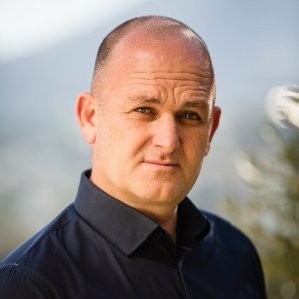
Exclusive interview with Carl Reynolds, Founder and CEO of Kudos One, an ESG assessment and advisory firm operating across Africa, the UK, and Europe, and the Founder and Director of 1000 SMEs NPC, an industry-led initiative driving sustainable business development.
Interview Summary:
Carl Reynolds outlines how his firm evolved from ESG due diligence in private equity to a global assessment tool now used by auditors in 22 countries. He emphasises ESG as a value case, enhancing efficiency, resilience, access to capital and community trust, illustrated by Cashbuild’s success through social licence to operate.
The 1000 SMEs project seeks to mobilise small businesses, which drive 80% of Africa’s economy, towards sustainability, framing it as a systems change initiative with long-term societal benefits. Partnering with corporates such as Old Mutual and advocacy groups like Protect the West Coast, the project aims to embed ESG in supply chains and mining communities, fostering responsible growth. Reynolds stresses that ESG is not about compliance reports but about redefining success to include positive societal impact and resilience for future generations.
Thank you for joining us. Let’s start with some background on you and Kudos One.
Thank you for having me. Just as a bit of background: Back in 2014, we were called Kudos Africa, and we started an ESG due diligence company that primarily focused on the private equity industry, and we were doing ESG due diligence work for private equity investors across Africa. And then, in short, when COVID came along, we were able to take our learnings and our methodologies and condense them into a very simple online tool, which we then pivoted to the auditing industry. This tool allowed us to grow our business into an ESG assessment tool for auditors globally. Six of the top 10 global auditing firms now use us in 22 countries around the world, Europe, the EU, UK and mostly Africa. And that’s how Kudos One started.
Kudos One has always focused on ESG as a value case. We definitely make sure that companies are engaging with these interventions, not from a compliance basis, although that’s obviously a key focus. But we always focus on the value case, particularly because we would like to address the SME sector where there are less regulatory requirements and a lot more questions for companies to focus on their businesses rather than some vague ESG requirements.
Let’s talk about the business case for ESG.
The business case for ESG has been a core focus of ours for a long time. And it’s actually very simple. I always think of ESG as the human side of business. And in that regard, I’ve always thought that we might have to redefine what success means. At the moment, we look at a spreadsheet and there’s a number at the bottom of the spreadsheet that tells you how successful your company is. But that doesn’t say anything about the story of a company, how it impacts society or how it impacts the environment. And ESG really is just a mechanism. It’s never been a silver bullet. It’s just a mechanism for us to make our companies a little bit more human and take into consideration broader society other than just those factors that are listed on your spreadsheet.
As a value case, proper ESG engagement does a number of things. It enhances efficiencies. It builds resilience. It addresses real needs inside corporates. It builds productivity and strength within your client base and within your employee base. It builds access to capital. It builds access to investors. It’s an ever-evolving framework of themes and KPIs that just add value to the bottom line.
I’ll tell you a quick story about that. If you’re South African and you’re watching this, you probably know a company called Cashbuild. And I had the very good fortune of working with Pat Goldrick, who took over Cashbuild when they had two little hardware stores in South Africa. And they quickly grew over the next 15 years from when I worked with them into an organisation worth $7 billion with branches right across Africa, employing 5,000 people at one point. And most of this was done because Pat had this very clear understanding of social licence to operate; they were a hardware store and they operated in very economically sensitive areas. But Pat always understood when they opened a new branch, he understood the need for social licence to operate. So they always did the simple things like supporting the local soccer club or donating uniforms to the local schools and stuff. But those are easy kinds of CSI things. Pat went further than that. If they needed a delivery service for a local store, they didn’t just bring in delivery drivers. They looked in those little communities to find out who was doing deliveries, who was driving. And he didn’t employ them. He set them up as individual contractors, contracting for Cashbuild. If you needed a piece of glass cut to a specific size, there was a guy in the corner of the store who would cut your glass. But he operated as his own entity. And Pat helped build those little businesses.
The net result of all these tiny initiatives was that, yes, they were a successful company delivering a much-needed product and an economically sensitive community. But if any of their competitors wanted to open a branch in those areas they were definitely on the back foot because the community was invested in Cashbuild. That is social licence to operate. Now, I’m talking 15, 20 years ago, maybe even more. And this was a time when ESG wasn’t really a thing; there were no frameworks or names around any of this stuff. That was just a man who understood the idea of running a business that has positive impact in the community. And now finally, we’re able to take that kind of thinking, put names to it and put stories and methodologies to it. And that’s how I understand ESG.
So, that is a great example of how simple, first-ESG principles are applied to build a really amazingly successful company from a financial perspective, but also from a societal perspective.
Tell us more about the Kudos One SMEs project.
The background to the 1000 SMEs project is that, as I’ve stated, we’ve been doing our work as Kudos One for a number of years, helping private equity firms and companies all over the world address their ESG requirements. Because we’ve been doing it for so long, we’re in a very fortunate position where we can see how those interventions have a very real value impact on these companies.
Since 2014, some of our private equity clients actually use the ESG engagement as their value proposition. For example, buy a company at X amount and sell it in five years’ time at three times value X and the ESG engagement is largely responsible for that increase in value. So that’s the kind of premise.
In the listed sector, there is massive capability and resources around ESG availability. If you’re a listed entity, you have regulatory requirements to do it and a number of other requirements to report on your ESG or sustainability activities, and there’s a massive industry of support around that. However, if you look at Africa, consider that up to 80% of the economic activity is conducted by SMEs. SMEs don’t have regulatory requirements to comply to ESG standards. They have very little pressure externally, and they have almost zero capability or interest if they’re running small businesses. If you add in a new layer of responsibility and cost to that business it’s a non-starter. And if we don’t switch on the need from SMEs to become more sustainable or ESG-aware, we have absolutely no chance of achieving any of our societal goals, such as the SDGs or the Paris Climate Accord.
None of those things are even remotely possible unless we mobilise the SME community towards more responsible business. And that’s a very real risk. But also because we’ve been doing this so long and we’ve seen the real benefits, we know that these companies can really benefit from a proper ESG strategy. And that feels like a missed opportunity.
And so early last year, we started thinking, how can we scale the work we do into those sectors of the economy that don’t currently engage effectively? And we decided to create the Kudos Foundation; it is largely an advocacy arm of Kudos One. And the first project under the Kudos Foundation is the 1000 SMEs project. And the thinking there was really a tipping point. How can we kickstart the sustainability journey of 1000 SMEs in a localised economy to create a tipping point of sustainable or responsible business? And that’s really the thinking behind it.
Now, please allow me to go down a little rabbit hole quickly. The 1000 SMEs project is really a systems change project. We find that particularly when it comes to impact investors or impact teams, systems change was the one that made the most sense to us because no single issue exists in a vacuum. Everything is connected. And if you want to make any positive contribution or impact through any project, you need to look at the much bigger picture.
So, I’ve been doing a lot of research with MIT at the Dark Matters Lab, where they do really interesting work around systems change. And I’ll quickly list some examples here. If you think about projects like the High Line in New York, that largely left alone high-rise railway lines that for years were just an eyesore for New York, and how they’ve redeveloped that into a massive, beautiful park area.
The original developers of that project lost their money and had no chance of making any return on that investment. However, if you consider the impact that that project has had on New York, you can see that there’s a much larger societal benefit to that particular project. So the system wasn’t really working: New York needed that, there was no financial case for it. But today, you can’t argue that apart from the social and environmental benefits of that project, that there hasn’t been a financial benefit as well.
Similarly, the Channel Tunnel in the UK. The original investors to the Channel Tunnel had no chance of making money. The second round of investors were also under huge pressure. But no one can argue that Channel Tunnel hasn’t been exorbitantly financially beneficial to both Europe and the UK.
Even things like AI, the business case and model for the companies currently delivering AI are hugely discussed at the moment. And I don’t believe that there is a way that those companies can deliver the returns they’re promising. However, no one can argue that AI is not a massive societal benefit. Obviously, there are challenges and huge opportunities, but it’s not going anywhere. The business case for it and those first-round investors, whether they survive in and around for a long time, that remains a question.
So when you think about all these few examples I’ve spoken about, we need to change the way that we address issues in society. Looking at them in a purely financial case is no longer just possible.
The 1000 SMEs case, for example, what we’re building is we, there’s a cost involved in kickstarting the sustainability journey of a 1000 companies, right? And we need to solve that problem. But if you look five, 10, 15, 20 years into the future, by creating a responsible business economy that exists in our society, the benefits will be felt for generations. It’s a new way of doing business. It’s planting the seeds for responsible business that we will reap the benefits of 20 years from now. That’s a little bit of a rabbit hole I’ve gone down, but that hopefully explains the reasoning behind the 1000 SMEs project. And from there, you can extrapolate what some of our goals and missions will be.
Tell us more about the companies you partner with. Are there specific sectors that are more inclined to include ESG in their business strategies?
So our next challenge was how do we reach a 1000 SMEs that are ready for interaction with us? And not because there aren’t enough SMEs, South Africa has over 36,000 registered SMEs, but we obviously needed to find funding for this work. And in that regard, we’ve partnered with a number of corporates and civil organisations to find companies that are ready to engage with us and where we can exercise some real impact.
And we’ve been fairly lucky. We have some of South Africa’s bigger corporates, such as Old Mutual, Hollard and SA Breweries, as partners. And what we do is we access those 1000 SMEs via their supply chains. And they were also able to address needs from the corporates’ perspectives and give them line of sight into ESG risks and opportunities within their supply chains. And we’ve been doing a lot of learning. We’ve even learned stuff that we weren’t anticipating about identifying risks in those supply chains and identifying really nice opportunities.
A quick example: In the Old Mutual supply chain, for example, we identified that up to 84% of their SMEs in their supply chain were really keen to have an ESG strategy or at least a direction to go into as far as ESG is concerned. Less than 30% of them, I think it was 24%, had any interaction, whether it was a policy, a board mandate or anything like that to do with ESG, which is really interesting to me. That means that there’s at least a 50% let’s call it an aspirational gap among these companies who really want to engage but have no idea where to start. There are no frameworks, no resources or anything like that. And Old Mutual, being the sponsor, who have a very clear mandate to bring sustainability into their supply chain, regulated by the JSC, suddenly they have an opportunity here to address what has been identified as a very real opportunity in their supply chain to help these companies achieve something that they’ve said they want to. So that’s just one little example. There are many more.
The partners that we work with have grown a little bit since then as well. For example: Along the West Coast of the Western Cape, there is a growing problem as far as mining is concerned. Rare earth minerals deposits have been identified up there. For a long time there have obviously been diamonds, but now there are also things like phosphates and other rare earth minerals used in the EV battery industry or cell phones. Some of the world’s biggest deposits have been discovered up there and the South African Department of Minerals does not have the capacity to police those licence applications.
The net result is, in this year alone, we’ve had 54 applications for mining licences on the West Coast, and we’ve had 54 licences granted. So, there is zero oversight. And we’re ending up with some very strange mining practices, unpoliced SLPs (social and labour plans) that are just not being delivered upon and a growing discord between the communities along the West Coast and the industry there itself. There’s an organisation called Protect the West Coast, who are an amazing group of surfers and lawyers who have agreed to fulfil the role that the Department of Mining and Rural should be performing. So they will object to every licensing application and they will evaluate it on its merits and make recommendations to the department. And they’ve been incredibly successful. In fact, they’ve made a little documentary which has been nominated and won at the Cannes Documentary Festival.
So the 1000 SMEs project have partnered with Protect the West Coast recently and we’ve taken a proposal to the mining industry, saying we see this growing discord between yourselves and the communities where you’re operating. Instead of having this adversarial position, we really feel that we have an opportunity to grow together. The fact that the mining industry is going to grow is indisputable. The communities are feeling disenfranchised, and you’re able to address that need while also mining responsibly.
In South Africa, fortunately, we have some incredible examples to draw from. The Royal Bafokeng community up at Impala Platinum (now Impala Bafokeng) is one of the nicest global examples of how the mining industry and the communities that they affect have been working together. The Royal Bafokeng have an investment fund for their own community of in excess of $4 billion. And interestingly, only half is invested in the mining sector now. So they’re looking at a situation where the benefits from those mining activities extend way beyond life of mine.
So those examples aside, we feel like on the West Coast of South Africa, with that growing discord, we actually have an opportunity now to address that. And in a nutshell, what we’re doing is every one of those mines is looking at the companies within in their supply chains and seeing how they can help them grow and become more responsible, sustainable companies over the next 10, 15 years. And we’ll obviously be helping with that. But the net result we’re hoping is that you have the upliftment of an entire community and region as opposed to just a couple of mines and shareholders to that mining industry.
So that’s a really exciting example of how something as simple as an ESG engagement at an SME level can actually be leveraged into a systems change project. And we’re at the infancy of that project. In fact, it only kicks off in a couple of weeks’ time. But the groundwork that’s been laid already is so exciting. We’re really excited to see what we can do with the rest of that.
What are investors looking for when assessing a company’s ESG performance?
I think this is part of a much bigger issue of broader stakeholders. Any business has a number of stakeholders, whether it’s the investors or their bankers or their shareholders or the communities that are affected by that business. And every one of those stakeholders has a slightly different lens through which they’re going to view the ESG performance of a particular company.
From an investor perspective, if you’re looking at a potential investment and you’re wondering how this company performs on a number of ESG data, there are a number of things that they’re interested in. First, they want to know that you are compliant with regulations. Second, understanding the investor landscape is also interesting, because the money that they use to invest comes from somewhere and that money always has reporting requirements. If you are funded as an investor by a development finance institute or the IFC or the World Bank or anything like that, their money comes with reporting requirements. They can’t know that they’ve, even at arm’s length, invested in companies that are doing dodgy things. So investors will want to know that you’re compliant with regulations and also that you are doing positive work and not doing negative work on a number of issues, whether it’s gender-based investing or whether it’s carbon related or a number of things.
But this lens idea is very important to understand. And it’s also why designing a single ESG framework or methodology that is replicable across industries and regions has always been so difficult because not only is each industry different, each region is different, also every stakeholder has a different set of needs from the ESG performance of a company. And it’s obviously the challenge, but it’s also the thing that makes our work very exciting.
As Kudos, we’ve taken a slightly different outlook where we focus less on the frameworks and the reporting requirements. I’ve always viewed those as a way of reporting how you’re performing, not the thing itself. And unfortunately, I feel that the ESG or sustainability industry has largely become about writing reports and losing the fact that those reports are actually just reporting on what you’re doing in the first place. Why are we here in the first place? We’re here because we want to build a better world. And that to me is the thing, not the reports that you do afterwards.
Another example, that is sometimes ignored, is that employees of companies are a massively overlooked resource. In three of the top universities in the world, whether it’s Harvard or Oxford, a recent study showed that that traditionally “dirty” industries pay a massive premium to attract the best talent. So if you’re an oil company, for example, the salaries you have to pay have to be so much higher than at purpose-driven companies. The top talent today want to work for purpose-driven companies. So there’s a broad range of reasons why ESG is really important in those companies.
Finally, in your view, what are the biggest EST challenges facing industries on the continent today?
It’s obviously a broad picture. In Africa, for example, there are a number of ESG themes that really represent some challenges for us. But the challenges also include not just what those themes are, but also how they’re addressed and what the challenges are there.
Africa is in a difficult position because we will feel the effects of climate change more than anyone else in the world and sooner and harder. And we’re proportionally the smallest contributor to those climate change issues by a long way. So that is one of our big challenges, the climate change effects. But also we have very real opportunities in that respect because Africa has the natural resources it does, we’re able to innovate how those climate challenges are addressed. And I’m thinking, for example, your big carbon sequestration products or projects. We also have the fastest growing middle class in the world at the moment. So there we also have the opportunity to look at how we address societal challenges like gender parity, education and employment statistics on a gender-base are a massive opportunity for us as well, particularly when you consider how the diaspora of Africa has expanded into the rest of the world.
The other challenge, obviously, as I mentioned earlier, is that SMEs don’t have the capacity or the understanding or the knowledge of how to address any of these ESG challenges. So, companies like ourselves and a number of others out there are making it easier. Technology certainly is making it a lot easier to engage with ESG, but before any of that happens, it’s important for people to understand the value of it. It’s not a compliance-driven exercise. It’s a way of making companies more human, a way of defining or redefining what success means in a company. Not a number, but the impact that you have on broader society. And that’s the vision we’ve always wanted to take forward.