
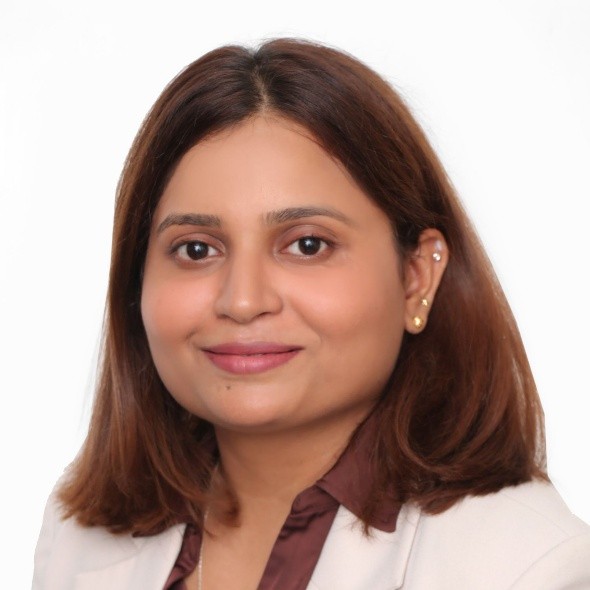
Exclusive interview with Shikha Sharma, Industries & Environment and Business Assurance, Global Technical Lead – Offsets and Removals, Climate Solutions, SGS (Société Générale de Surveillance SA). SGS is a returning gold sponsor of the upcoming Carbon Markets Africa Summit from 13 to 15 October in Kigali.
Interview Summary:
Shikha Sharma of SGS highlights Africa’s potential to become a defining force in global carbon markets if integrity and governance are embedded from the outset. She explains that investors are increasingly cautious, demanding evidence rather than promises, and that successful projects combine transparency, community engagement and long‑term viability.
Ghana, Kenya, Rwanda and Zambia are cited as countries making progress under Article 6.2. Sharma stresses that carbon credits must be the outcome, not the objective, with community benefits central to success. She concludes that Africa, with its natural assets and growing local expertise, can shape global market standards.
Welcome back to CMAS! This year’s summit theme is “Unlocking Africa’s Carbon Value: Integrity, Investment, Impact.” We often hear that investment is the greatest challenge. In your view, what are the projects that succeed in attracting the investment they need doing right?
I’m glad to be attending CMAS again this year.
I do think access to capital is one of the biggest challenges today—but not because the money isn’t there. The money exists. The problem is that investors have become far more cautious.
Over the past few years, we’ve seen growing concerns around greenwashing, increasing scrutiny of carbon credits, fragmented markets with different standards and rules, and, in many cases, companies not being recognised or rewarded for investing in climate action. All of this has made investors more reluctant to commit capital.
They’re no longer buying a good story—they’re buying evidence. You can’t add integrity at the end of a project—it has to be built in from day one. The projects that attract investment are those that combine robust governance, transparency, community engagement and long-term viability. That’s what investors are looking for today.
Building on that, which countries across the continent are taking the right steps to prepare for a credible, investable carbon pipeline?
It is difficult to compare because every country is starting from a different place. I would say that countries that are making real progress under Article 6.2 are leading the way. Ghana has been one of the first countries to put bilateral carbon market agreements into practice. Kenya is also moving quickly, with a clear policy direction and several international partnerships. Rwanda has created a strong environment for carbon markets and is hosting the event, and Zambia is making good progress as well and we have a project there.
Ultimately, every country has unique opportunities, and continued collaboration between governments, project developers, investors, and independent assurance providers will be essential for a credible carbon project pipeline.
SGS is a returning gold sponsor of the Carbon Markets Africa Summit. What was the first edition like last year, and what motivated you to partner again?
Last year’s summit demonstrated that Africa is no longer simply participating in carbon markets—it is actively shaping its own future.
In Johannesburg, discussions were practical, collaborative, and solutions-focused, bringing together various stakeholders, policymakers, project developers, investors, standards organisations and technical experts. We saw genuine interest around developing high-quality projects and creating frameworks that prioritise integrity and sustainable development.
Returning as a gold sponsor reflects SGS’s long-term commitment to supporting the growth of credible carbon markets in Africa. We see enormous potential across the continent, and events like CMAS provide a platform for sharing knowledge, strengthening partnerships and supporting the development of projects that deliver real climate and community benefits.
This year, the event is hosted by Rwanda’s Ministry of Environment. How significant is this choice of host country?
I actually think it’s symbolic. Hosting the summit here sends a message that Rwanda and by large Africa wants to lead the conversation—not simply follow standards developed elsewhere.
The future of carbon markets shouldn’t just be designed in other continents such as Europe or North America. It should be shaped by the countries that are actually hosting some of the world’s most important climate solutions.
What will be SGS’s key message at the summit this year?
Our message is simple: integrity creates value and SGS is on the table when you need to be sure of both.. integrity and value.
How does SGS support local expertise and institutions to build Africa’s own verification capacity?
Building local capacity is essential for carbon markets and for us as SGS, because we do have a local presence in quite a lot of African countries with on ground resources. We work closely with local experts to build competencies in greenhouse gas accounting, validation, verification and international carbon standards.
Where possible, we also utilise local technical experts who understand national contexts while ensuring they meet internationally recognised competence requirements.
Developing local capacity not only improves efficiency and helps reduce project costs, but it also makes sense for SGS to leverage our strong network of local experts and resources.
And how do you ensure that certified projects deliver tangible benefits to communities, not just carbon credits?
I see it quite simply: If communities don’t benefit, the project is unlikely to succeed in the long run. Carbon credits should be the outcome, not the objective. The best projects improve livelihoods, protect biodiversity, create jobs, expand access to clean energy and strengthen resilience to climate change. As a validation verification body, our role is to independently verify that the project is implemented in line with the applicable standard and that the claimed impacts are supported by credible evidence—we don’t create the outcomes, but we help ensure that the claims made about them can be trusted.
Looking ahead five years, what role do you envision Africa playing in the global carbon market landscape?
I genuinely think Africa could become the defining force in global carbon markets. The continent has extraordinary natural assets—if Africa gets governance right, invests in local capabilities, and keeps integrity at the centre, it won’t just supply the market—it will influence how the market operates globally.
About SGS:
SGS is the world’s leading testing, inspection and certification company. We operate a network of over 2,500 laboratories and business facilities across 115 countries, supported by a team of over 100,000 dedicated professionals. With more than 145 years of service excellence, we combine the precision and accuracy that define Swiss companies to help organizations achieve the highest standards of quality, compliance and sustainability.
Our brand promise – when you need to be sure – underscores our commitment to trust, integrity and reliability, enabling businesses to thrive with confidence. We proudly deliver our expert services through the SGS name and a portfolio of trusted specialized brands, including Applied Technical Services, Brightsight, Bluesign and Nutrasource.
SGS is publicly traded on the SIX Swiss Exchange under the ticker symbol SGSN (ISIN CH1256740924, Reuters SGSN.S, Bloomberg SGSN SW).