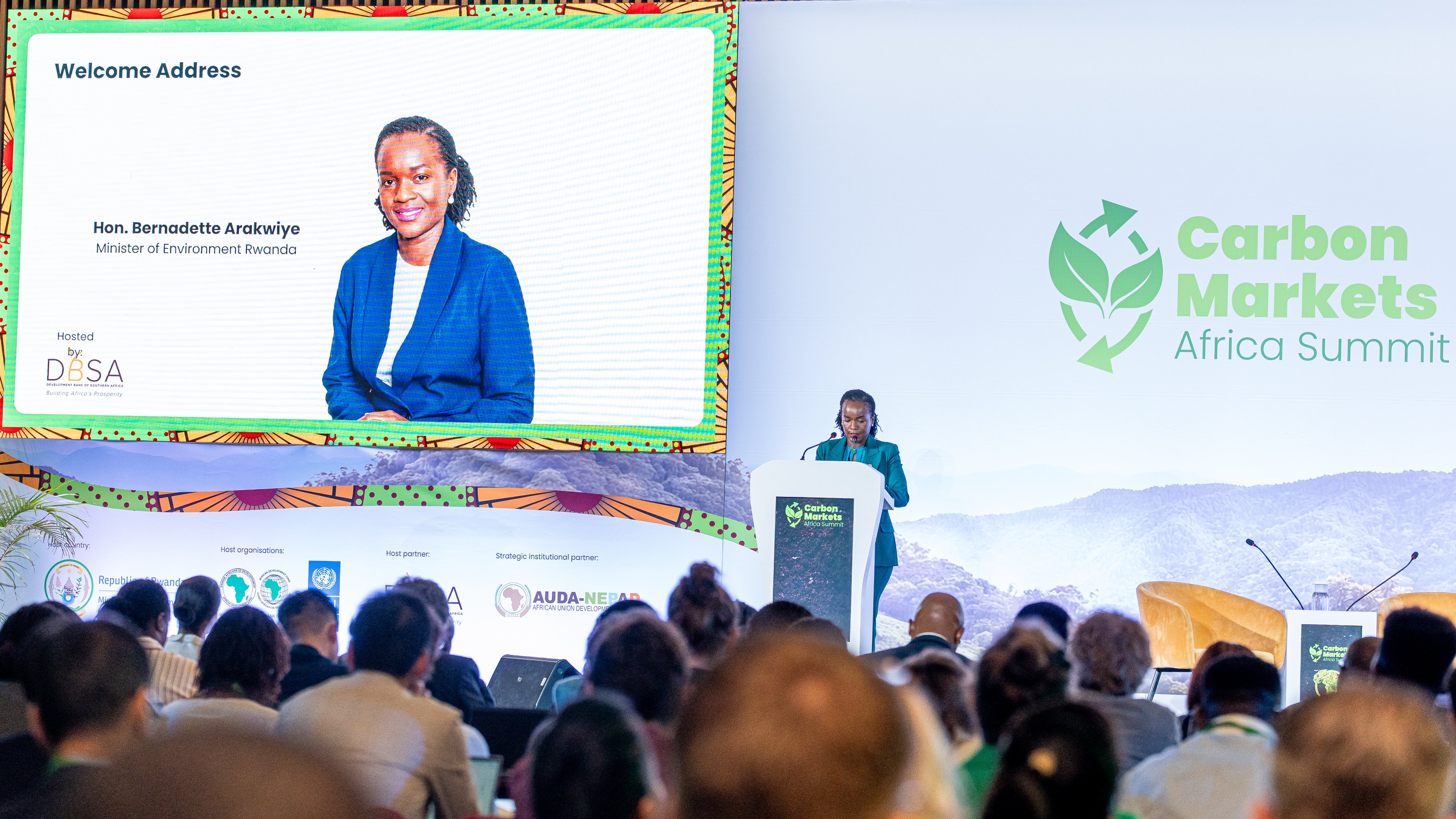
Rwanda is strengthening its national carbon market framework to reduce project approval delays, attract climate investment and ensure communities benefit from revenue generated through carbon credit trading.
Minister of Environment Dr Bernadette Arakwiye said the country had established a national framework to guide carbon projects from registration to the issuance of carbon credits, with clearly defined procedures and institutional responsibilities.
She made the remarks during a press conference following the official opening of the Carbon Markets Africa Summit.
“In Rwanda, we’ve worked on bringing parity to this process. We have established a national framework, a national carbon market framework to really find these processes,” Arakwiye said.
She explained that the framework guides project developers through the entire process while providing opportunities to obtain feedback and technical assistance to prevent unnecessary delays.
“By having a clear national framework and by having all these steps defined, by clarifying which institution is responsible for what, where do you go for what service for the West, we believe this has helped us in streamlining the process,” she said.
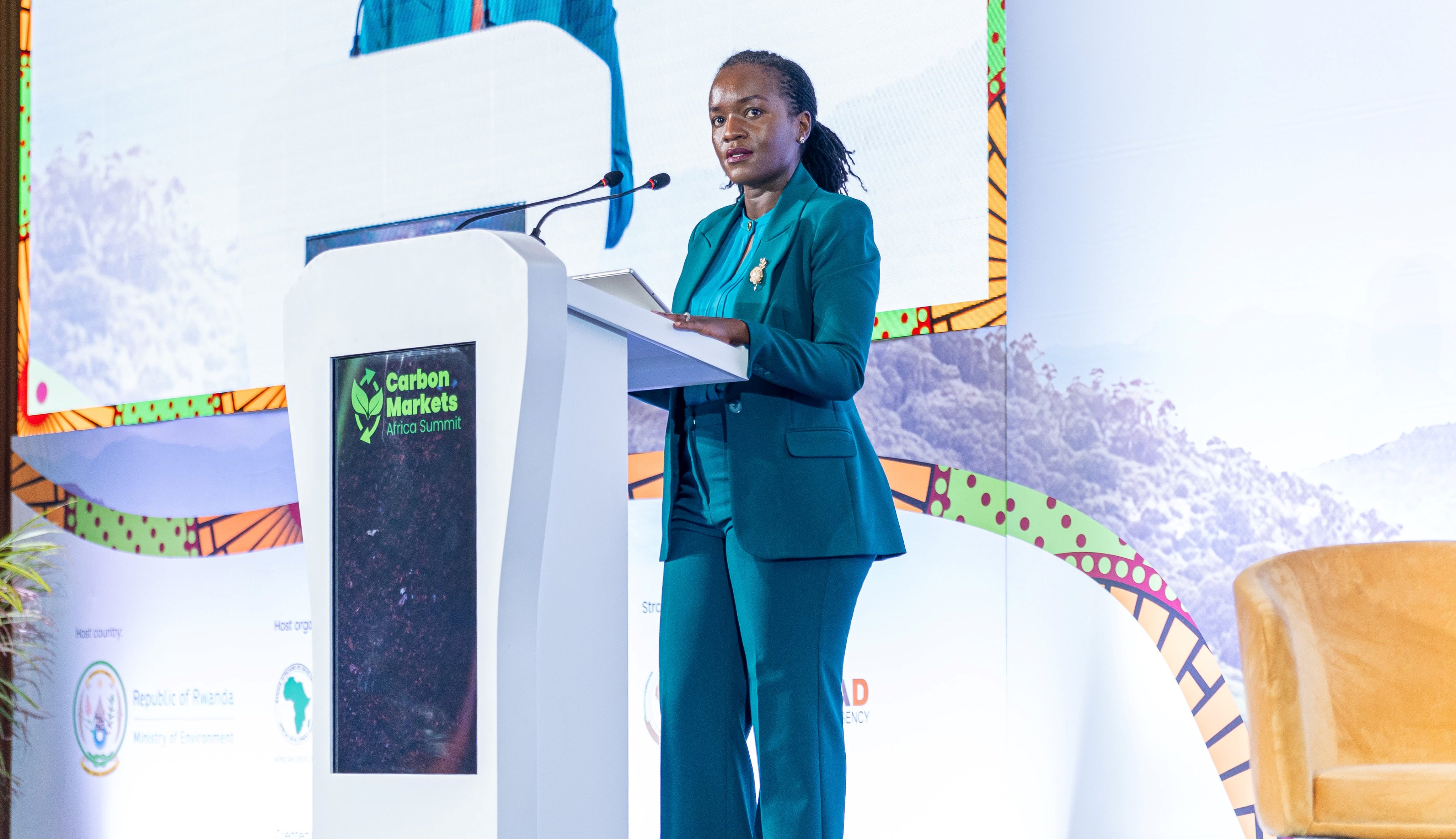
Rwanda’s Minister of Environment, Dr Arakwiye Bernadette
The minister added that Rwanda was aware of the challenges associated with developing carbon markets and was committed to improving the system as experience grows.
“We are also aware that this is a new and developing field and we learn as we go,” she said.
Rwanda sees carbon markets as a potential source of financing for its climate commitments while pursuing its ambition to become a low-carbon, climate-resilient economy.
Arakwiye said the country’s Nationally Determined Contribution (NDC) provides the foundation for identifying interventions that can reduce greenhouse gas emissions without compromising development.
She identified sustainable landscape management, climate-smart agriculture and climate-resilient infrastructure as the country’s three priority areas for climate action.
The interventions include landscape restoration, improved irrigation, better post-harvest management, resilient infrastructure and improved waste management.
The minister also highlighted opportunities in solar energy and electric mobility, which can help reduce emissions while supporting economic transformation.
“There are opportunities in solar energy, opportunities in electric mobility,” she said.
Rwanda’s NDC 3.0 targets a 53 per cent reduction in greenhouse gas emissions compared with a business-as-usual scenario, while the financing required for the country’s climate interventions was estimated at $12 billion during the briefing.
Communities to benefit from carbon revenue
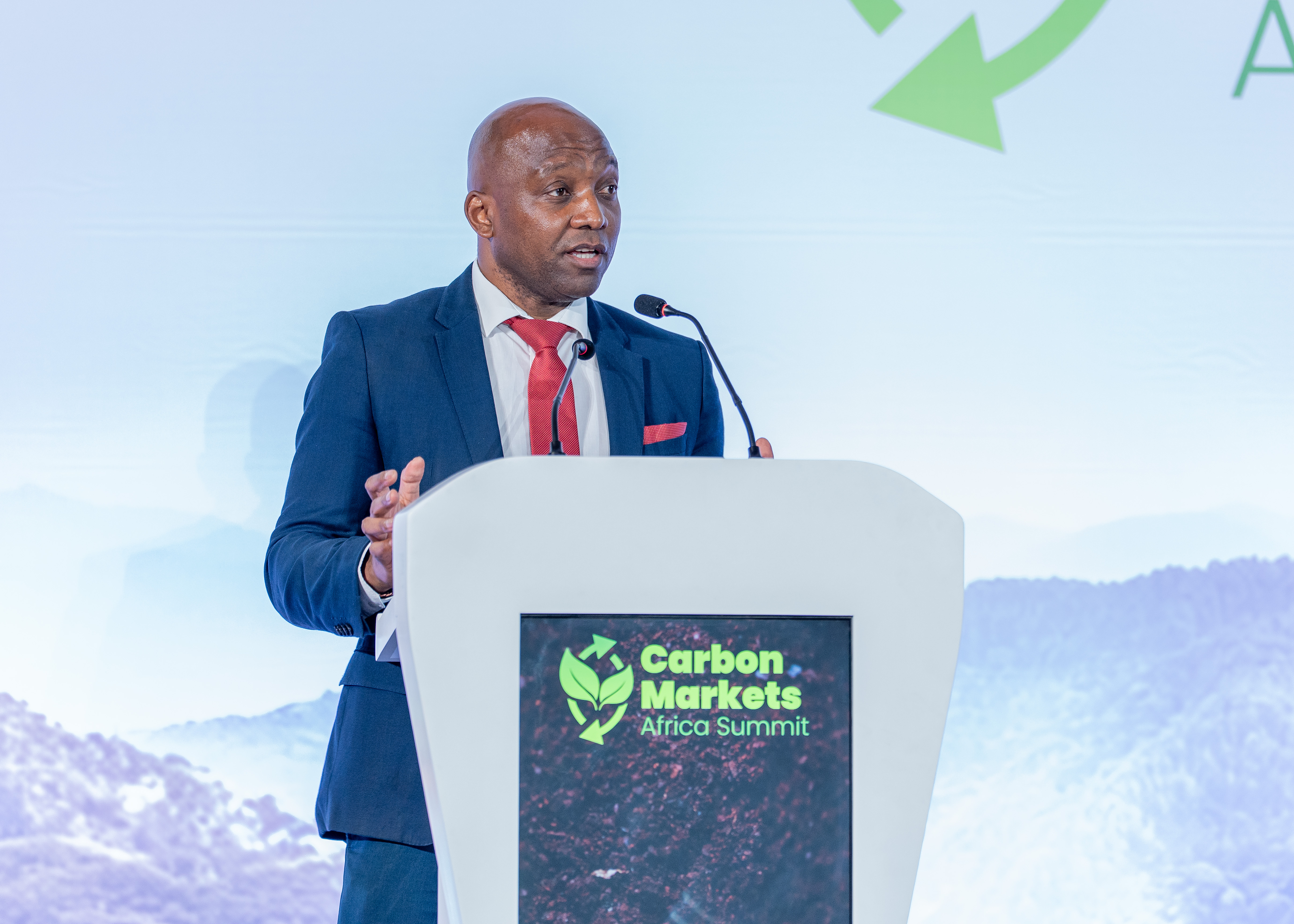
Maxwell Gomera, UNDP Resident Representative in South Africa and Director of the UNDP Africa Sustainable Finance Hub
Ensuring that carbon markets deliver tangible benefits to communities was another major issue discussed during the press conference.
Maxwell Gomera, UNDP Resident Representative in South Africa and Director of the UNDP Africa Sustainable Finance Hub, said carbon markets should address the needs of people who contribute to protecting forests and other natural resources.
He illustrated the issue by asking what carbon was worth to a woman standing in front of a forest she helped protect.
“In these conversations, it is possible to forget what we are trying to do. We are trying to reduce emissions and to fight climate change,” Gomera said.
He emphasised that climate projects should combine scientific integrity with appropriate financing and clear arrangements governing who receives the income generated.
“We need to find the finance to be able to do the project preparation, the capacity, and things like that,” he said, calling on international partners to work with African countries.
Arakwiye said Rwanda had incorporated revenue-sharing provisions into its national carbon market framework, particularly for land-based projects involving forests and community participation.
She disclosed that approximately 30 per cent of revenue from relevant projects was designated for communities.
The minister said the proportion had been determined after examining market conditions and Rwanda’s national context, with the aim of ensuring that communities receive meaningful benefits while projects remain financially viable.
AfDB calls for investment aligned with national priorities
The African Development Bank representative said the institution was supporting African countries through financing, technical assistance and policy development to strengthen carbon markets.
He highlighted a $100 million carbon programme facility intended to support project preparation, upstream initiatives and investors, alongside efforts to address governance challenges.
The bank also supports countries in strengthening the policies, regulations and measurement, reporting and verification systems needed for credible carbon trading.
However, he warned against developing projects without ensuring that they align with national development strategies.
“We rush to develop projects. And those projects we develop, whether they are in energy, do not have the blessing of the energy. We start with the blessing of the environment,” he said.
He stressed that countries must take time to ensure projects are properly aligned with their priorities before advancing to implementation and carbon credit sales.
Rwanda strengthens safeguards for carbon trading
Rwanda is also working to safeguard the integrity of international carbon trading under Article 6.2 of the Paris Agreement, including through cooperation with Singapore.
Rwanda’s lead negotiator said the two countries had established criteria for eligible projects and a joint committee to protect the integrity of carbon credit transactions.
The measures are intended to prevent double counting and ensure that carbon credit transfers do not undermine Rwanda’s emissions-reduction commitments.
Gomera said countries needed more coordinated approval procedures, clear requirements and predictable timelines to make carbon markets more attractive to investors.
“Faster approval, however, must still be credible approval,” he said.
He added that protecting the integrity of carbon markets should not mean leaving applications unanswered.